





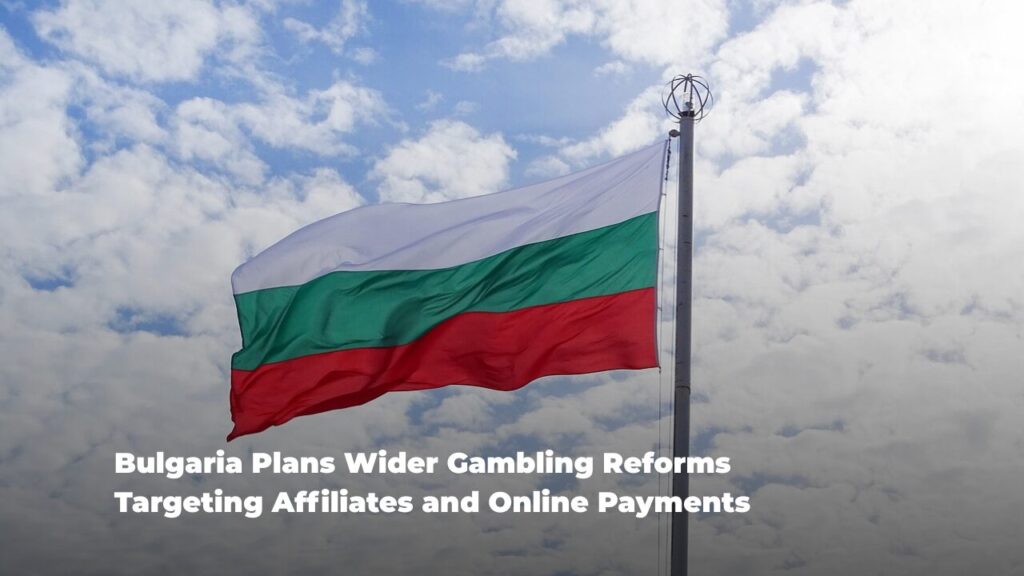
Bulgaria is preparing a review of its gambling laws aimed at reducing illegal activity and disrupting the network that allows unlicensed operators to reach players. The Ministry of Finance is driving the policy process, while Parliament will approve the changes.
The National Revenue Agency will lead to practical enforcement. Political attention has focused on the size of the unregulated market. Deputy Finance Minister Lyudmila Petkova cited an estimate suggesting that around 40% of gambling activity in Bulgaria may sit within the shadow economy or outside the licensed sector.
No detailed methodology was provided, making the estimate difficult to verify. However, Petkova used it to argue against tax increases that could weaken licensed operators and push more customers towards illegal platforms.
Proposals to extend advertising restrictions and raise gambling taxes were rejected. The government currently prioritises improving tax collection and enforcing market boundaries instead of increasing the burden on licensed companies.
Affiliate marketers could face direct regulatory obligations
One of the proposals linked to the 2026 Budget concerns affiliates, including comparison websites, review portals, content businesses and other digital intermediaries that direct customers to gambling operators for commission.
Affiliates play a major role in online acquisition. Their rankings, bonus pages, odds comparisons, search content and advertising campaigns can determine which operators gain visibility.
Regulatory attention has traditionally focused on companies that directly provide gambling services. Bulgaria now appears ready to extend responsibility across the acquisition chain.
The proposed regime would place obligations on affiliates promoting gambling operators. It could also apply to businesses based outside Bulgaria, with foreign entities potentially required to appoint a local representative to manage relationships with authorities and courts. Its impact will depend on the wording approved by Parliament, the implementation date and supporting guidance.
Affiliates may need stronger checks on the licences, brands and domains they promote. This could make them responsible for directing consumers towards authorised operators, although the precise standards remain undefined.
Payment controls would create another barrier for offshore operators
The second major area of reform concerns payments to unauthorised gambling businesses. Measures under discussion would seek to stop transactions between Bulgarian customers and illegal operators, adding a financial barrier to the website restrictions already used by authorities.
The NRA maintains lists of websites connected to licensed operators and portals offering gambling without authorisation. When a court order is granted under the Gambling Act, internet service providers must block access to the listed website.
Payment restrictions could make those controls more effective by limiting an operator’s ability to receive funds even when it launches replacement domains or avoids access blocks. Implementation will require clear rules identifying which payment providers are covered and how transactions should be detected and stopped.
Banks, payment processors and other intermediaries will need current operator lists, consistent identification criteria and rapid procedures for handling disputed or incorrectly blocked payments.
Without technical standards, intermediaries could receive obligations difficult to apply consistently.
Bulgaria aims to disrupt acquisition and revenue at source
Extending controls to affiliates and payment providers would target two services that offshore operators depend on: customer acquisition and access to funds. The approach could prove more effective than repeatedly blocking individual domains, which operators based outside the country can replace quickly.
It also creates risks if responsibilities are not clearly divided between the Ministry of Finance, Parliament, the NRA, courts, internet providers and financial institutions. The review gives Bulgaria an opportunity to build a coordinated framework that supports licensed businesses while making the illegal market harder to access and monetise.
For the European sector, the reforms will test whether governments can tackle offshore gambling by restricting its supporting infrastructure rather than concentrating enforcement solely on operator websites.
Expert Opinion
Bulgaria’s proposed approach recognises that illegal gambling is supported by a wider commercial system. Regulating affiliates could improve market accountability, but the rules must define the checks expected from publishers and comparison sites. Payment blocking is another enforcement approach from Bulgarian authorities.
Explore more:
 Share
Share


 203 views