







Key Points
- Over 1,300 union members went on strike at Encore Boston Harbour on 5 September 2026 without any indication of when negotiations will resume.
- Wynn Resorts claims wages and benefits for its union employees increased by 36.8%, whereas revenues increased only 1.9%, but the unions argue that they still earn less than similar hotel employees in Boston.
- Unlike other Atlantic City casinos, all of which managed to escape a potential summer strike due to securing one-year agreements, this case demonstrates an entirely different way of dealing with the same problem faced by the whole industry.
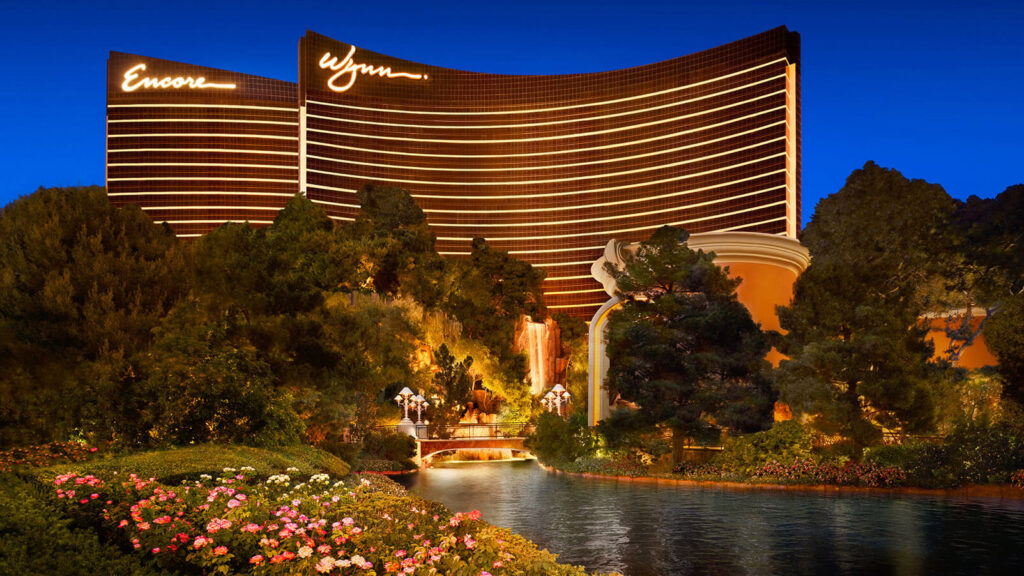
And what can be said about such a strike being organised by the housekeepers, chefs, bartenders, and slot attendants of the only five-star casino in New England during the Labour Day weekend? This is precisely what took place on 5 September 2026 when more than 1,300 employees of the Encore Boston Harbour in Everett went on strike, gathering outside the gates of the casino at 7 a.m. with handmade signs, drumming, chanting, and even a Teamster tractor-trailer honking its horn around the block. The agreement between Wynn Resorts expired on 31 August, but no resolution to the negotiations that were close to reaching no results whatsoever according to the unions was found.
These workers, who are organised in UNITE HERE Local 26 and Teamsters Local 25, include just about every role required to make a luxury resort run: housekeepers, chefs, servers, bar staff, slot attendants, valets, cage attendants, warehouse workers, and ground staff. They had authorised their strike by vote, with over a 95% approval rate, on 20 August. Carlos Aramayo, UNITE HERE Local 26 president, said in an interview with GBH News that his members had been negotiating for six months.
What Workers Are Actually Asking For?
The union demands are specific, and specificity matters here. Workers are pushing for wage increases of $10 per hour over three years for non-tipped employees and $5 per hour for tipped workers, bringing their pay in line with other unionised hotels in the Boston area. Currently, hourly wages range from $15 to $32, according to the union. Beyond pay, both unions are also pressing to preserve job security protections and healthcare benefits from the previous contract, including a provision that guarantees staff a minimum number of working hours. Workers say Encore is attempting to eliminate that protection entirely, though the casino has denied this.
The phrase that cut through cleanest came from Laura Moye, executive vice president of Local 26: “There is no reason why workers at a five-star casino should make less than workers at a Hampton Inn.” Seth Ogilvie, communications director for UNITE HERE Local 26, added that most workers cannot even afford to live in Boston or Everett on their current wages, forced to commute in from the suburbs while Wynn’s profits flow elsewhere.
Wynn’s Counter and Why It Creates More Questions Than It Answers
Wynn Resorts is not running from the fight. The company has published a fact sheet arguing that any agreement must be financially grounded, and its numbers are not trivial. Union wages and benefits at Encore grew 36.8% over the past four years, while revenue grew just 1.9%, and consumer prices in Boston rose 8.5% over the same period. The company also states that the average compensation and benefits package for union-represented employees exceeds $95,000 per year, more than the average job in Boston.
But here is where it gets complicated. The same resort that claims it cannot sustain higher wages generated $847 million in revenue in 2025, making it by far the largest casino in Massachusetts since its opening in 2019. Telling workers that an $847 million operation cannot meet the wage standard of downtown Boston hotels is a credibility stretch, and union leaders have been leaning on that gap deliberately at every press opportunity.
Statement from Wynn has been the same ever since: “We remain committed to reaching consensus on a solution that is balanced, fiscally responsible and job protecting for the future.” President of Teamsters Local 25, Thomas G. Mari had nothing to say but the truth: “Where there is disrespect to those who help bring the profit to a business, then we bring them to their knees. We do not break our own lines.”
Encore’s Financials Tell a More Complicated Story
The strike happened at a time when the numbers of Encore itself were weakening. Revenues for Q2 2026 were recorded at $209.3 million against $215.7 million in revenues for Q2 2025. A drop in the table games win rate by 12%, which fell from 21.3% to 18.1% on a year-to-year comparison basis, led to a drop in casino revenues by 6%. From SEC filings by Wynn, it appears that the main competitive challenge for Encore is competition from casinos in Connecticut and Rhode Island.
Parent company Wynn Resorts, by contrast, reported operating revenues of $1.86 billion in Q2 2026, up from $1.74 billion a year earlier, with net income more than doubling to $140.1 million. Record EBITDAR in Las Vegas and strong Macau performance held the group together. A parent company doubling its net income while a subsidiary pleads financial constraint in labour talks is precisely the story that union representatives will keep telling, and they have the earnings releases to back it up.
Atlantic City Avoided This. Boston Did Not
It is also important to consider the difference with Atlantic City. All nine casinos in Atlantic City were able to reach a new agreement this summer without any strikes at all. The problem was that UNITE HERE Local 54 agreed to enter into one-year agreements instead of three years because of the uncertainty created by the future opening of casinos in New York City and the emerging Internet gaming in New Jersey.
Encore skipped that option. Negotiations started in April, went into the summertime, and ended with nothing signed on the dotted line, nor any plans for returning to the negotiating table anytime soon. Speaking to the picket-line strikers during the holiday weekend, Everett Mayor Robert J. Van Campen stated bluntly: “When Encore came to Everett many years ago, the promise was real jobs and decent pay. My hope is that these parties can get back to the table and get this done so these folks can get back to work.”
Expert Analysis
Here is the uncomfortable truth that most coverage of this strike is tiptoeing around. Wynn Resorts built its entire brand identity on the claim that exceptional service requires exceptional staff, and that well-compensated, empowered employees are not a cost, they are the product. CEO Craig Billings said as much when discussing Wynn’s global results. Yet in Boston, the company’s negotiating position has been to argue that its five-star workforce should accept wages that, by the workers’ own account and backed by union wage surveys, fall below what a mid-tier hotel chain pays in the same city.
We find that contradiction harder to dismiss than most industry analysts seem to. Wynn’s 36.8% labour cost growth figure is real, but it is also the result of a company that kept pay suppressed for years and is now framing the catch-up as unsustainable. Meanwhile, Encore is the fourth highest-grossing casino in the US outside Nevada, according to the American Gaming Association, and its parent just posted record monthly EBITDAR in Las Vegas. At what revenue figure does “financially sustainable” actually kick in? That is the question sitting unanswered on the picket line, and no fact sheet from management has come close to answering it.
Explore more:
 Share
Share


 215 views