





Key Points
- Teleprompter operator for Mr. Trump since 2016, Gabriel Perez, is negotiating his settlement with CFTC after earning over $100,000 from Trump’s speeches using Kalshi’s “Mentions” product.
- Abnormal trading activities were detected by Kalshi’s surveillance in March 2026, and more than $90,000 of his earnings were frozen before he could retrieve them.
- The White House announced Perez’s removal on unpaid administrative leave and that he would not be coming back to work. Trump referred to this as “deeply unfortunate and frankly a disgrace.”
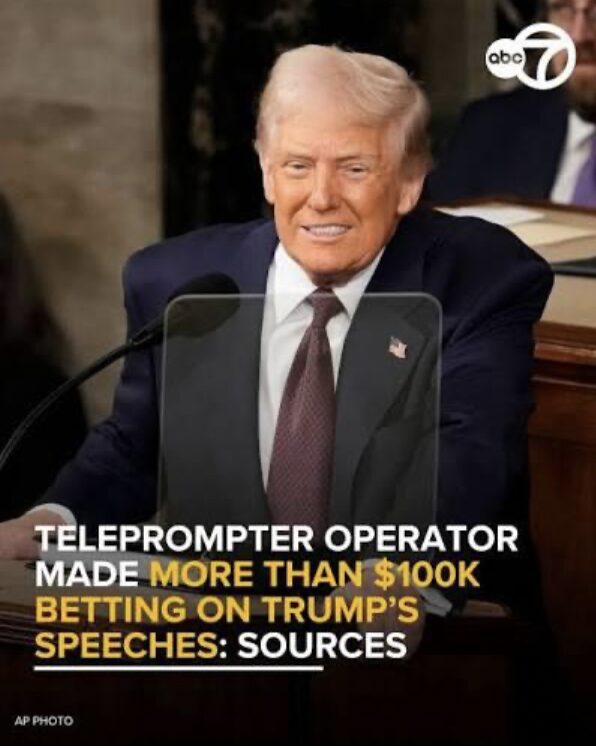
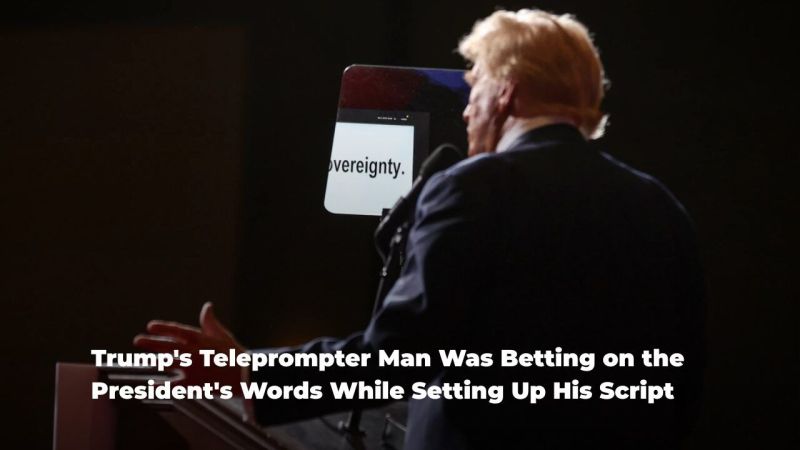
The man who loaded Donald Trump’s words onto the teleprompter screen before every major speech was quietly placing bets on what those words would say. The White House confirmed on 16 July 2026 that one of Trump’s teleprompter operators had been placed on unpaid administrative leave after federal investigators began scrutinising his trades on the prediction market platform Kalshi. White House Press Secretary Karoline Leavitt confirmed the decision directly: the suspension came on the president’s own orders.
Trump, told about the situation before Leavitt’s Thursday briefing, did not hold back. “He believes it’s deeply unfortunate and frankly a disgrace,” Leavitt told reporters. She stressed that White House staff operate under clear constraints: “There are very strict ethical guidelines here at the White House that explicitly state not to do this.”
The Operator Who Saw the Script First
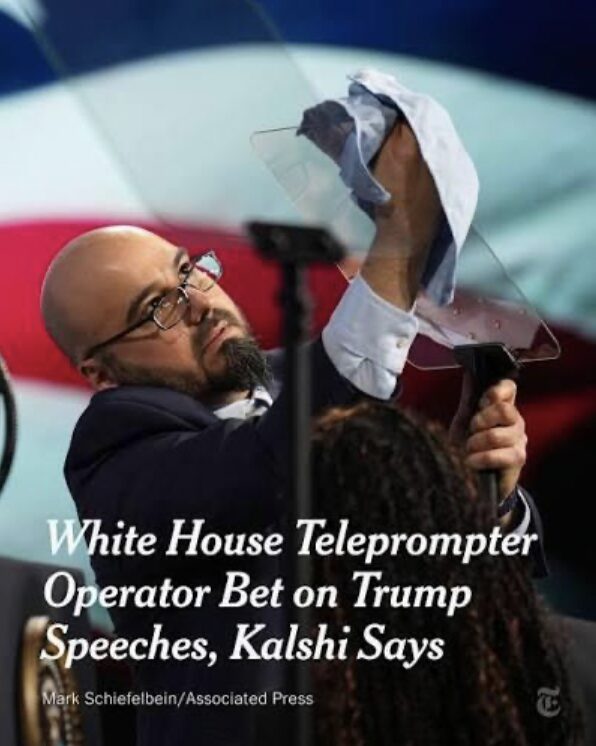
Reports from ABC News pointed to Gabriel Perez in the role of technical assistant. He took charge of Trump’s teleprompter starting with the 2016 presidential campaign. Perez generated income above 100,000 USD by betting inside Kalshi’s Mentions market. Participants there trade contracts based on the appearance of words or phrases in speeches. Surveillance teams at the platform detected unusual patterns in the trades. Contact followed with the Commodity Futures Trading Commission. Settlement talks now involve Perez and the regulator.
ABC News received information from sources aware of the case on the settlement negotiations. The agreement calls for Perez to repay winnings and cease comparable trading activities ahead. A separate source mentioned by CNN estimated the total at more than $90,000. The platform Kalshi acted to freeze the account before Perez completed any withdrawal. Records from the government indicate Perez served as deputy assistant to the president. His role included technical adviser and carried an annual salary of $175,000.
The “Mentions” market at the centre of the investigation lets traders buy contracts tied to whether certain words or phrases will be spoken during scheduled public events, including presidential addresses. Kalshi’s surveillance team spotted the irregularity and referred the matter to the CFTC. “Our surveillance team promptly flagged and referred these trades to the CFTC, and we are cooperating and assisting regulators,” said Robert DeNault, Kalshi’s head of enforcement, in a statement provided to ABC News.
Bets Placed Across More Than a Dozen Speeches
CFTC investigators tracked the bets across more than a dozen speeches over roughly three months, per ABC News. The list spans a December primetime address, Trump’s January remarks at the World Economic Forum in Davos, a Medal of Honor ceremony in March, and the February State of the Union. That last event, delivered to a joint session of Congress, represents one of the highest-profile occasions on the presidential calendar.
What made Perez’s position particularly consequential was his place in the speech preparation process. Sources told ABC News he typically reviewed the final version of Trump’s prepared remarks, sometimes incorporating last-minute edits from the president. Investigators also found instances where Perez cancelled active bets mid-speech, apparently responding in real time when Trump veered off script and skipped the phrase he had wagered on. Trump himself has acknowledged this habit: “You know, when you go up here, you take a big chance, especially me because I go off teleprompter about 80% of the time,” he said in January during remarks to the Detroit Economic Club, another speech federal investigators believe was among those Perez bet on.
Perez sat for a formal interview with CFTC investigators and acknowledged some of the trades, ABC News sources said. The CFTC subsequently alerted federal prosecutors in Manhattan, who reviewed the matter but declined to open a criminal investigation. Regulators have since signalled a preference for a civil settlement, with proposed terms including a full profit disgorgement and a ban on future trades of the same type.
The Broader Picture: Prediction Markets Under Pressure
The Perez case does not sit in isolation. The Department of Justice has already brought what prosecutors describe as the first insider trading cases tied to prediction markets. In April 2026, US Army Special Forces master sergeant Gannon Ken Van Dyke was charged in connection with trades on Polymarket related to the American military operation that captured Venezuelan President Nicolás Maduro, with prosecutors alleging he made more than $400,000 from those bets. A month later, Google’s employee, Michelle Spagnuolo was charged by the US Federal Prosecutors for fraud because of the contracts that were made on Polymarket using insider information from Google’s “Year in Search” lists.
Kalshi has moved to tighten controls throughout 2026. In March, it introduced new surveillance tools and industry guardrails alongside competitor Polymarket, partly in response to proposed Senate legislation that threatened to restrict prediction market operations. By April, Kalshi had suspended three political candidates who violated rules against betting on their own electoral outcomes. In June, it began mandating employment disclosures for users trading on sensitive contracts and launched a whistleblower portal, though investigators note Perez’s trades were reportedly flagged in March, before those new requirements were in place. Federal authorities were also separately examining whether former Republican congressman George Santos placed bets on Kalshi related to his own State of the Union attendance.
Despite the scrutiny, both Kalshi and Polymarket have retained significant institutional support. CFTC chair Michael Selig has stated publicly that he would support Kalshi in any state-level legal challenges, arguing that federal law takes precedence. Separately, Donald Trump Jr has served as a Kalshi adviser since January 2025, a role he took on after the platform correctly forecast his father’s 2024 election win.
Expert Analysis
The Perez case pulls together two separate fault lines that Washington has been watching for months: the integrity of what happens inside the White House, and whether prediction markets can police access to non-public information before it becomes leverage. Perez reportedly had the final version of the president’s remarks before the speech was delivered, which puts him in a category far more sensitive than a market trader with a hunch. What makes the CFTC’s handling notable is that investigators moved swiftly to freeze the account and open settlement talks, all before any charges were filed. The decision by Manhattan federal prosecutors not to pursue a criminal case narrows the exposure to a civil outcome, but the reputational damage extends well beyond Perez. For Kalshi, the episode is a stress test of its surveillance infrastructure and its ability to self-police before regulators are forced to act. For the White House, it raises questions about what other non-public information flows through the hands of technical staff who rarely attract scrutiny.
 Share
Share


 179 views