



Key Points
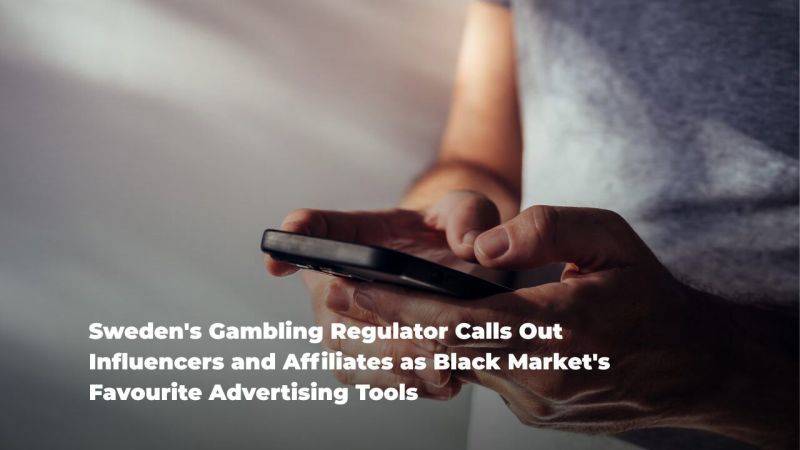
- The Swedish gambling regulatory body has released a comprehensive map regarding the promotional activities of the unlicensed entities targeting Swedish consumers, naming affiliate link farms, Twitch, Kick, TikTok, Snapchat, Meta, X, and Telegram as their key advertising platforms.
- The first-ever criminal conviction related to unlicensed gambling activities due to economic offences has been passed, as an influencer got 22 months in prison in March 2026.
- Amendments to Spelpaus self-exclusion rules will come into force starting from 1 August 2026, when marketing criteria and unique IDs will be introduced.
Affiliate Networks and ‘Link Farms’ Named as the Black Market’s Primary Route In
The Swedish gambling supervisory agency, Spelinspektionen, issued an extensive report regarding marketing activities of unlicensed gambling services on Monday, 21 July 2026. The report contains an exhaustive mapping of the channels through which unlicensed gambling operators market themselves to the Swedish public. Affiliate networks form the largest category here.
The regulator found that so-called ‘link farms’ diverted search traffic toward unlicensed casinos at scale. Many of these affiliate domains cycled rapidly, serving thousands of Swedish IP addresses before going dark and surfacing again under new registrations. Some brand-specific affiliate landing pages used Swedish .se domains to project local legitimacy, then redirected users to English-language gambling sites, quietly masking the operators’ actual jurisdictions.
The pattern is deliberate. By rotating domains and presenting .se addresses, unlicensed operators can stay one step ahead of domain blacklists while still pulling in Swedish players.
Livestreaming platforms compounded the problem. Twitch and Kick both featured prominently in the report as venues where influencers distributed affiliate links and promotional codes for unlicensed operators. Leaderboards and giveaway integrations were noted as common mechanics used to drive engagement. Twitch has moved to ban several unlicensed gambling sites, but Kick absorbed much of that displaced activity, drawing influencers previously removed from Twitch’s platform. Some have since pivoted to international audiences or shifted their content to other platforms, finding new reach beyond Swedish enforcement’s direct line of sight.
Social Media, Deepfakes, and Telegram: How the Black Market Adapted
Social media formed the next layer of the problem. Meta, TikTok, Snapchat, and X were all flagged as channels carrying affiliate links, sponsored posts, and promotions that failed to disclose commercial relationships. English-language comedy and influencer accounts that had recently begun producing Swedish-language content drew specific attention from the regulator. The concern is clear: building a Swedish-language audience and then inserting gambling referrals is a strategy with a specific target.
More unsettling was Spelinspektionen’s identification of deepfakes. Fabricated video content featuring Swedish public figures was used to falsely endorse gambling advertisements. It is a tactic that exploits trust rather than just reach.
The report also documented display advertising on Swedish websites, sometimes hidden behind paywalls or timed to appear only at specific hours. Spelinspektionen warned that programmatic advertising tools and AI-based systems were being used to slip past publisher blacklists and disguise the true nature of campaigns.
Telegram channels added another dimension. Encrypted and semi-private, these groups disseminated affiliate links and organised giveaways outside the visibility of conventional monitoring. SMS campaigns promoting unlicensed gambling appeared repeatedly on the regulator’s tip line; notably, many were directed at individuals already registered on Spelpaus, Sweden’s national self-exclusion programme.
Esports also featured. Skin-betting sites and crypto-casino sponsors had actively engaged young audiences through tournament sponsorships, and Swedish visits to skin-betting sites reportedly climbed in periods following major eSports event sponsorship deals.
Spelpaus Tightened as Unlicensed Operators Target Self-Excluded Players
The fact that Spelpaus registrants were receiving SMS gambling promotions from unlicensed operators sits uncomfortably alongside a regulatory update already in motion. New technical requirements for Spelpaus will come into force on 1 August 2026. These were decided on 23 April and published on 29 April. The updated framework introduces marketing-related checks, tighter verification procedures, and unique Actor IDs and API Keys for each licensed operator.
Under the new rules, operators must query the self-exclusion register before sending any direct marketing, during new player registration, and at the point of login. The responsibility remains with the licence holder, even where technical checks are delegated to third-party providers.
Spelpaus itself was updated in 2023 to expand access to information on gambling problems and give players the option to extend their self-exclusion period. That update was part of a broader effort following the 2019 gambling regulatory reform that first established the register. The August 2026 changes represent the most significant technical overhaul since.
Sweden’s First Criminal Sentence for Unlicensed Gambling Promotion
Spelinspektionen’s enforcement picture is not only administrative. In the report, it was noted that a conviction was issued in March 2026 where a Swedish influencer had been sentenced to 22 months in prison due to economic offences related to unlicensed gambling promotion. This is the first criminal penalty ever imposed in Sweden in relation to the promotion of online gambling. According to the regulator, in 2025, several cases relating to influencer promotions and banner advertisements were launched, and the offending advertisements were stopped when the action was taken.
Under Sweden’s Gambling Act, promoting gambling without a licence is a criminal offence.
EU and UK Pressure Signals a Harder Line Is Coming
The timing of the report is pointed. The EU Digital Fairness Act that is currently making its way through the EU legislative process is anticipated to become effective towards the end of 2026. Its contents include tougher regulation of targeted advertising as well as influencer marketing. Gambling sits squarely within the affected categories. If enacted as currently framed, the DFA would layer another compliance obligation on top of Sweden’s existing national framework.
Sweden is by no means unique in Europe in viewing influencer promotion of gambling as an increasing concern. In April 2026, a cross-party group of UK MPs and peers released a report calling for wide-ranging changes to gambling advertisement regulation, including targeted steps to address influencer promotion and content marketing. This report from Parliament was based on research which found that 79% of children in the UK had remembered seeing gambling advertisements on television, mobile applications, and social media.
The latest report from the Swedish gambling regulator, with its criminal conviction, its proof of targeting self-excluded players, and its example of deepfake endorsement, provides additional information to the increasingly European-wide discussion of whether or not existing enforcement frameworks are enough to control this adaptive and technologically-savvy black market.
Expert Analysis
Spelinspektionen’s report does more than catalogue platforms. It serves as a demonstration of how a black market has been established, which is adept at taking advantage of the structures involved in modern digital advertising, ranging from affiliate domain rotation, AI-driven programmatic advertising, all the way up to deepfake creation and encrypted messaging apps. The imprisonment for 22 months of an influencer in March 2026 indicates that Sweden is ready to pursue criminal liability, not merely administrative action. The August 2026 Spelpaus changes address operator-side compliance but cannot alone stop unlicensed SMS campaigns targeting self-excluded individuals. The EU Digital Fairness Act, when it arrives, may close some gaps on the influencer side. What Spelinspektionen’s report makes plain is that the gap between the tools available to the black market and the tools available to the regulator remains wide, and closing it will require coordination far beyond any single national authority.
 Share
Share


 150 views