Key Points
- Reports of youth online gambling rose 74% in the second month of South Korea’s voluntary reporting programme, with 806 total cases logged between May and mid-July 2026.
- Cases include a 14-year-old who withdrew KRW30 million from a parent’s bank account and an 18-year-old paying 200% annual interest to illegal lenders.
- Proposed AML changes could require casinos to record data on patrons buying even a single KRW1,000 chip, with Kangwon Land estimating an annual revenue loss of approximately KRW330 billion.

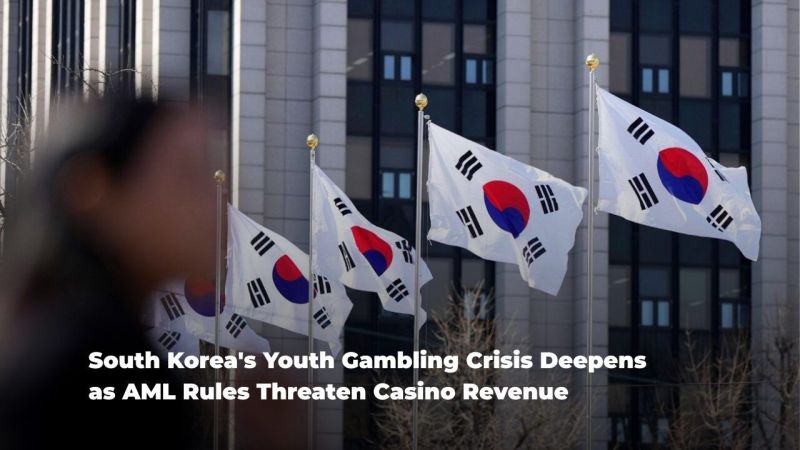
South Korea is confronting two gambling crises at once. Neither is small. Youth online gambling reports jumped 74 per cent in the second month of a nationwide voluntary reporting campaign, according to Korean National Police Agency data cited by Yonhap News Agency. At the same time, the country’s Financial Intelligence Unit is pushing anti-money laundering reforms so sweeping that casino operators warn they could gut nearly a fifth of annual gaming revenue.
Both issues are moving fast. Neither shows signs of slowing.
Youth Gambling Reports Surge 74% in a Single Month
Police received 512 reports of youth online gambling during the second month of the initiative, up sharply from 294 in month one. During the period between 18 May and mid-July, there were 806 reported cases. Of these, 629 were reported by young gamblers themselves, while 177 were filed by their parents or guardians.
The figures speak volumes. More important still are the stories behind them.
One case was of an 18-year-old who reportedly borrowed KRW5 million (roughly US$3,400) from over ten lenders of illegal status to support his online gambling addiction. These loans had annual interest rates of 200%, after which the teen claimed threats and illegal debt collection against him. There was one more incident where a 14-year-old had apparently invested KRW 26 million (about US $17,700) in the gambling site and had even loaned KRW 2 million (US $1,400) from 41 of his classmates. The last information the police received was that a 14-year-old had withdrawn KRW 30 million (US $20,400) from his father’s bank account for gambling.
Debt, theft, family breakdown. The pattern repeats.
A Reporting Programme with Limits, and a Crisis with None
The Youth Cyber Gambling Voluntary Reporting Program targets youths under 19 years old and their parents. The youth may be referred to programs dealing with gambling addiction and mental illness. Authorities plan to run the initiative until 31 August, with submissions accepted through South Korea’s 117 school violence reporting and counselling service.
One high school in Gangwon Province accounted for 48 cases alone, the highest from any single school since the campaign launched, according to the Korea JoongAng Daily. Another 20 students self-reported at a nearby Gangwon school. Teenagers who self-reported spent an average of KRW3 million over 12 months; the highest individual amount was KRW60 million.
The programme captures those willing to come forward. The full scale of youth online gambling in South Korea is likely much wider.
Years of Warnings, a Crisis That Kept Growing
The issue of teenagers suffering from gambling addiction in South Korea has only grown over time. There are record numbers of 4,144 teenage gamblers who have been under treatment at the Korea Problem Gambling Agency in 2024, as stated by the lawmakers, when in 2020 there were only 1,286 teenagers suffering from such an issue. There have been record numbers of juvenile arrests due to gambling-related criminal actions. There has been a fourfold rise in the cost of treatment from KRW113.9 million in 2022 to KRW436.87 million in 2024, as claimed by lawmaker Seo Young-seok.
According to Rep. Cho Gye-won of the ruling Democratic Party of Korea, teenage gambling is “a great social threat” which results in crime, damages the family and upsets society. Seo was even tougher, stating that “Without timely action, teenage gambling addiction will remain a threat to our social fabric.”
Around 4.3 per cent of students in grades four through twelve admitted to gambling, with nearly one in five saying they gambled regularly in the past six months, according to government survey data.
Casino Industry Faces a Different Kind of Pressure
While youth welfare dominates the headlines, South Korea’s casino sector is watching a regulatory proposal that could reshape its entire business model. Industry sources told GGRAsia that proposed amendments to the Act on Reporting and Using Specified Financial Transaction Information could require casinos to record personal and transaction details for every patron, regardless of wagering amounts. Under this framework, operators would have to keep records for all customers buying even one KRW1,000 chip, the smallest denomination available on the gaming floor.
Currently, the regulation applies to cases where the amount of the buy-in is KRW10 million ($6,800). Kangwon Land, which operates the sole casino that Koreans can enter in South Korea, currently maintains an internal standard of KRW3 million ($2,000). The proposed changes would go far beyond both.
South Korea first introduced casino currency transaction reporting in 2006, when the threshold was set at KRW50 million. It has been reduced four times since, reaching its current level of KRW10 million in 2019. The proposed rules would effectively eliminate any threshold at all.
Kangwon Land Puts a Number on the Damage
A Kangwon Land representative told GGRAsia that the proposed amendments would require operators to maintain records covering dates of visits, gaming activity, chip transactions, and cash movements, all of which could be provided to KoFIU on request. A survey of 1,000 casino patrons conducted by the company found that around 20 per cent would be unlikely to return if personal and financial information had to be submitted regardless of transaction size.
This loss would result in the reduction of gross gaming revenue by 19.64 per cent. In relation to Kangwon Land’s financial performance for 2025, this means the loss in revenues amounts to roughly KRW330 billion a year.
Kangwon Land communities are watching. Local media reports suggest annual contributions to the Abandoned Mine Area Development Fund, which typically total around KRW180 billion, could fall to approximately KRW130 billion if casino revenue drops. Dividend distributions tied to casino operations could fall by nearly 50 per cent. Local groups are now petitioning KoFIU to reconsider the proposed amendments.

Expert Analysis
South Korea is at a junction where there are pressures on either side from social policy and economic considerations. The 74 per cent increase in cases of gambling among the youths in just one month illustrates the gravity of the situation and also the effectiveness of a programme that encourages youth to report problems. The real test will be whether those referrals translate into lasting intervention rather than administrative throughput.
On the AML side, the proposed framework is not unreasonable on its merits; requiring universal patron identification aligns with financial crime standards applied in other regulated jurisdictions. The problem is sequencing. Imposing near-total data collection on a casino sector that already generates community-level economic dependencies, without calibrated transition measures, risks creating collateral damage well beyond the gaming floor. KoFIU has the data from Kangwon Land’s survey. What happens next depends on whether regulators treat that data as a reason to proceed carefully, or a reason to proceed anyway.
 Share
Share


 134 views