




Key Points
- The GRA Act came into force on 1 December 2025, but the subsidiary legislation for issuing licenses has still not been notified in the gazette.
- Sri Lanka banned 24 leading gambling websites in August 2026 and now blocks a total of 122 gambling websites, but all the traffic from those is still untaxed and unregulated.
- The land-based sector absorbed a doubled casino entry levy and an 18 per cent gross collections tax, while online operators have no legal path to register with Inland Revenue.
Sri Lanka now has a gambling authority with a chairman, a legal mandate, and a formal existence under law. What it does not have is the ability to licence a single operator. Nine months after the Gambling Regulatory Authority Act took effect on 1 December 2025, the subsidiary regulations required to open any licensing process have still not been gazetted. The regulator is real. The market is growing. The space between those two facts is where billions of rupees in informal gambling activity is quietly settling in.
Gamblers Found a Loophole Before the Regulator Found Its Footing
The informal gambling method has taken over the whole of Sri Lanka in no time. People are gambling on number patterns related to the official lottery draw, with individuals betting over LKR 100,000 ($304) in some cases. The government had warned about how rural gambling has transformed into lucrative gambling activities carried out via mobile devices, social media, and unregulated payment channels. Dr Dharshana Weerakoon, Chairman of Global Cooperation Private Limited, believes that the situation isn’t really a criminal issue but a problem of demand, where the formal gambling industry hasn’t been able to cater to such demand. “Increasing levels of gambling mean that there is actual demand for gambling even when it occurs in an unregulated and unofficial manner,” he told SiGMA News. This statement hits on a matter which is seldom admitted by officials: that in case the legal market remains closed, the informal market won’t wait.
According to market intelligence compiled by Blask for the Sri Lanka iGaming market, the Blask Index tracking estimated user activity stood at 657,500 in February 2026, slipped to 566,300 in March, recovered to 624,400 in April, then declined steadily to 498,600 in June and 434,200 in July. Blask data also shows traditional sports account for 30 per cent of the market, with lottery and esports each at 20 per cent, and 55 per cent of the player base aged between 25 and 44; working-age adults, spending, on unregulated platforms.
The Act Is Live – The Licensing Route Is Not
Stephen Crystal, Founder and CEO of SCCG Management, described the current situation without softening it. “The regulator exists and cannot licence anyone. The Act already took effect on 1 December 2025,” he told SiGMA News. “There’s a chairman and an acting director general. But the subsidiary regulations have never been gazetted, so no application can be processed.” Without those regulations published, operators seeking to enter the legal market have no application to file. Consumers using offshore platforms cannot be directed toward licensed alternatives, because no licensed online alternatives exist, and Inland Revenue cannot collect from an industry that has no route to register.
The issue had been pointed out by the Parliament’s Committee on Public Finance, where the chairman of COPF, Harsha de Silva has stated that more than 40 different payment channels are currently being used for facilitating gambling activities on the Internet in Sri Lanka. Mr. de Silva further requested Parliamentarians to pass pending legislation regarding anti-money laundering and terrorist financing, claiming that stopping the operators from doing transactions is more important than stopping them from using their web addresses. The GRA was itself delayed from beginning operations, which were to start on 30 June 2026.
Blocking Sites Without Anywhere to Send the Players
Sri Lanka has not been sitting around with regard to enforcement. The government has asked the telecommunications operators to block 24 international gambling sites, including Bet365, Stake, Betway, 1xBet, and Betfair, in August 2026 according to the Gambling Regulatory Authority Act No. 17 of 2025, taking the total number of blocked sites to 122. The analysis by Crystal with regard to these blocks is spot on: “Blocking inhibits casual access but does not drive anyone to the taxed environment, because such an environment has not yet been created.” Each block takes a gambler to an informal intermediary, another offshore site, or a social-media-based payment system. As stated by Weerakoon, mobile phones, offshore platforms, and informal intermediaries make enforcement increasingly difficult every month. “One of the largest regulatory gaps is the pace at which gambling activities are evolving as compared to the regulatory system intended to govern it,” he explained. The blocks are genuine; the issue is that they address visibility rather than tax or consumer protection.
The Sector That Invested Is Paying the Price
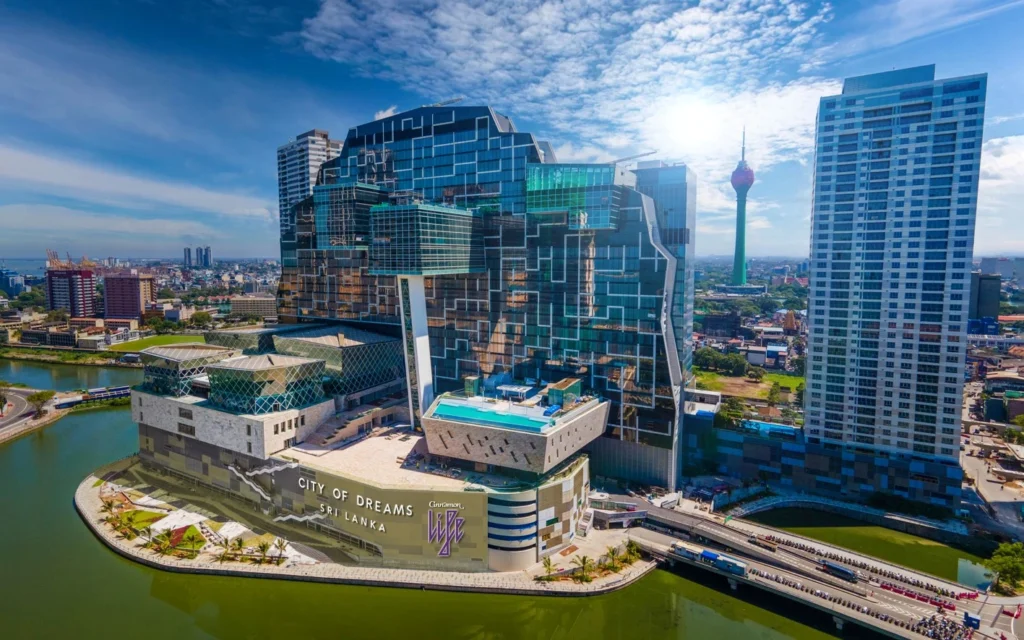
While the operators in the online gambling industry await a licensing channel that has not yet materialised, the licensed operators have had to contend with increasing costs. There has been a doubling of the cost of entry into the casinos to $100 and an increase in the rate of taxation to 18 per cent. The City of Dreams Sri Lanka, which is the first-ever $1.2 billion integrated resort developed by John Keells Holdings and Melco Resorts, was inaugurated in Colombo in August 2025 and marked the biggest ever private investment in Sri Lanka, and it has a casino license that runs for 20 years and is held by Melco, courtesy of the Sri Lankan Government. It is a huge investment whose regulatory environment is yet to be put in place. As pointed out by Crystal, there is no online casino operator licensed by Inland Revenue since there is no channel through which they can be licensed.
Sri Lanka Has Watched This Film Before
The current delay is not without precedent, and that is what makes it harder to excuse. Sri Lanka’s Casino Business (Regulation) Act was certified in December 2010, yet licensing regulations under that Act were not published until August 2022; nearly 12 years of casino operations ran without a proper licensing framework in place. Crystal drew that comparison directly, warning that the GRA risks the same structural drift. The pattern is consistent: Sri Lanka passes the legislation, builds the institution, then pauses on the operational rules that make the institution work. What changes each time is how much the informal market has grown during the gap.
Expert Analysis: The Regulator Is Not the Problem – The Sequence Is
We think the way this situation is being framed publicly misses something important. Sri Lanka is not failing to regulate gambling because of a lack of political commitment; the Cabinet approved the framework, Parliament passed the Act, and the government spent real political capital on building the GRA. The failure is sequential: the headline institution arrived before the operational infrastructure. That ordering has a cost that compounds monthly. Every week the licensing window stays shut, the 40-plus payment channels de Silva identified in parliament are not sitting idle; they are being used, refined, and embedded into informal networks that will not dissolve when regulations eventually arrive. Blocking 122 platforms sounds like enforcement, but practically it is enforcement without a destination. Suppressing a platform without offering a regulated alternative does not protect a Sri Lankan player; it redirects them. The government cannot credibly project $250 million in annual gaming revenue and simultaneously maintain a domestic market where not one online operator can legally apply for a licence. That contradiction is not a detail. The subsidiary regulations need to be gazetted, the licensing process needs to open, and Sri Lanka needs to stop treating the operational step as the afterthought that follows the symbolic one.
 Share
Share


 198 views