







Key Points
- The Nevada Gaming Commission has approved a $7.2 million AML fine on the Venetian on 20 August 2026, making it the fourth Strip fine connected with illegal bookmaker Mathew Bowyer, totalling up to $34 million in fines.
- Most of the malpractice occurred in 2019-2021 when Las Vegas Sands owned the property, however, Apollo Global Management has paid the fine following its February 2022 purchase.
- Two commission members stepped aside, regulators recognised five mitigating circumstances associated with the period of time when Sands owned the property, while the former owner declined to comment.
Apollo Signs the Cheque – Sands Is Nowhere to Be Found
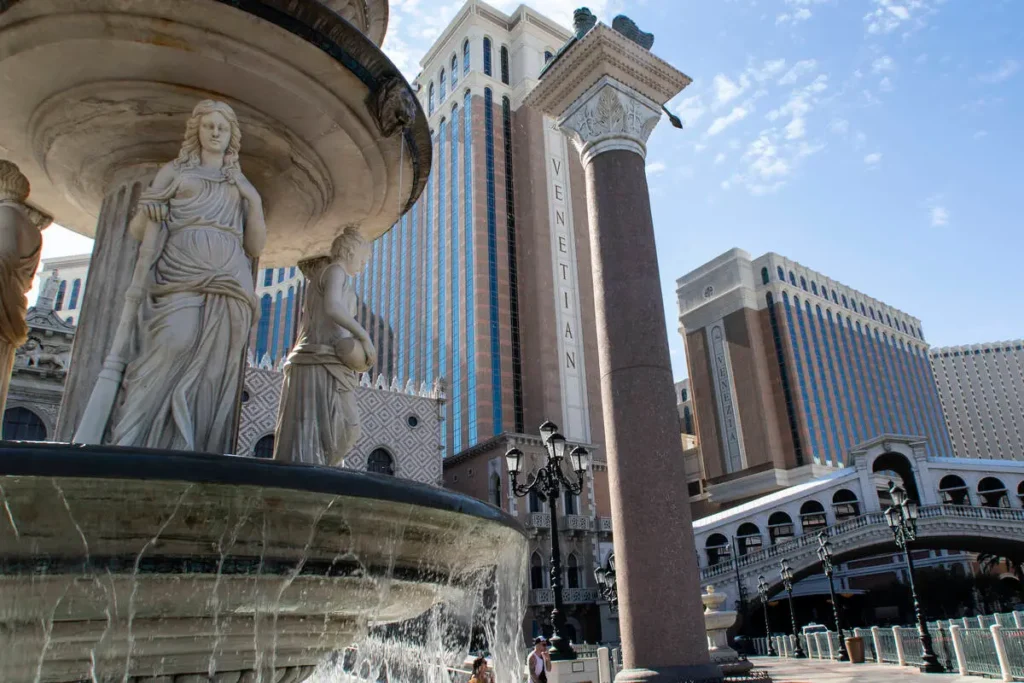
Four Strip casinos in Las Vegas. Four distinct cases of failure. One convicted sports bettor who breezed right through all four without being stopped. In a move on 20 August 2026, the Nevada Gaming Commission imposed a fine of $7.2 million on the Venetian Resort Las Vegas for violations of money laundering rules.
Resorts World Las Vegas paid $10.5 million in March 2025, MGM Resorts paid $8.5 million in April 2025, and Caesars paid $7.8 million in November 2025. Nevada’s total tied to convicted bookmaker Mathew Bowyer now sits at $34 million across four operators. Each property failed to verify where his money came from. Each compliance team missed signals that were, by regulators’ own account, not subtle. What separates the Venetian case from the rest is a question the hearing room could not cleanly answer: the company running the casino when most of the violations happened is no longer a Nevada licensee.
What the Investigators Actually Found?
The complaint made by the Nevada Gaming Control Board reveals a pattern that began developing since 2019. Bowyer has been visiting the Venetian approximately 30 times from 2019 to 2021, where he deposited around $22.3 million and incurred a loss of around $3.6 million. The $7.2 million penalty imposed on him is twice the amount of his losses, unlike the triple amount charged from Caesars.
The most striking detail came from Senior Deputy Attorney General Mike Somps. He told commissioners a casino host already knew Bowyer was running an illegal bookmaking operation. How? Because, in Somps’ words, Bowyer “told him.” The host still did not report it. Bowyer had declared an annual income of between $500,000 and $1 million, claiming ownership of a landscaping business. When investigators checked, that company’s annual sales came to no more than approximately $94,000. A casino processing millions in deposits from a client whose business turns over less than $100,000 a year did not escalate the matter.
Somps gave five reasons the board recommended leniency: no culture of non-compliance, no federal investigation, violations limited to Bowyer, the compliance department had no knowledge of his bookmaking, and no senior executive was found to have known. That fifth point is where things get complicated, because the senior executive running the property during that period is now a Nevada Gaming Commission commissioner.
George Markantonis served as president and COO of the Venetian from 2015 through Apollo’s 2022 acquisition. He recused himself from Thursday’s vote. So did Commissioner Richard Schonfeld, a criminal defence attorney representing “an individual in a related investigation.” The remaining three commissioners approved the settlement without dissent. Las Vegas Sands, owner of the property during almost all of the violations, did not respond to any request for comment.
Apollo Bought the Casino – It Also Bought the Liability
When Apollo Global Management completed its $6.25 billion acquisition of the Venetian in February 2022, standard deal terms required it to absorb existing liabilities. That clause is why Apollo now pays for violations it barely participated in. Of the $3.6 million Bowyer lost at the Venetian, fewer than $100,000 came from the period after Apollo took control.
Venetian attorney Greg Brower, a former Nevada state senator, told commissioners the current ownership operates differently. “Since assuming ownership and control, the current licensee has done its very best to meet all of its state and federal legal and regulatory obligations, including its federal anti-money laundering obligations under the Bank Secrecy Act,” Brower said. CEO Patrick Nichols was direct: management today will not retain players “if we have doubts on where money is coming from.” Brower previously served as chief compliance officer at Wynn Resorts, which in September 2024 reached a $130 million non-prosecution agreement with the US Department of Justice over unlicensed foreign bettor allegations, plus a separate $5.5 million Nevada AML settlement.
The Fines Keep Coming – So Does the Frustration
Nevada’s approach across all four Bowyer cases followed the same script: negotiate, approve a fine as a multiple of losses, attach remediation conditions, and vote unanimously. Former commissioner Rosa Solis-Rainey, who cast the only dissenting vote in the Caesars case, told Casino Reports this month that the fines have not “addressed the scope of what [casinos] allowed to occur sufficiently.”
As per the agreement reached on Thursday, the Venetian would be required to sustain or enhance its AML compliance personnel for a minimum period of two years, complete its training sessions in person within 60 days, designate an AML officer and sign up to FinCEN’s section 314(b) information sharing program. Control Board Chair Mike Dreitzer stated that the requirements could soon become applicable to all licensees in Nevada.
The history of Las Vegas Sands at this property makes the broader picture harder to ignore. Sands paid $47.4 million to federal authorities in 2013 for failing to file Suspicious Activity Reports about a high-roller connected to drug trafficking at the same Venetian. Same company, same property, another round of red flags missed. Then it sold, and Apollo inherited the asset and the bill.
Commissioner Brian Krolicki made his frustration clear. “I suspect the folks I really want to have in front of me are not in front of me today,” he said, with no ambiguity about who he meant, before adding: “But if previous management might be here, I may have a different opinion about that.” Commission Chair Jennifer Togliatti said her instinct is to respect a negotiated settlement once the Control Board has completed its investigation. Dreitzer confirmed the fine “fell in line with the appropriate reflection of severity for this case compared to others.”
Expert Analysis: The Fine Is Settled – The Real Question Is Not
Here is what keeps nagging at us: $34 million paid, two commissioners recused, and not one person from the company that presided over the worst of it in that hearing room. How does that happen?
We think the honest answer is that Nevada’s two-tier structure was not designed for a situation where the responsible party has already sold and left. The Control Board investigates current licence holders. The Gaming Commission votes on what they pay. When the ownership group most directly tied to the conduct is no longer in the room, the system reaches the edge of what it can do, and stops.
What troubles us more is the pattern underneath. Sands paid $47.4 million federally in 2013 for AML failures at the same Venetian, ran the property eight more years, and the programme failed again. Sands sold, Apollo absorbed the liability by contract, and Nevada collected its fine from a company responsible for roughly $100,000 of a $3.6 million problem. That is not accountability finding the right target; it is a liability clause doing what liability clauses do.
Dreitzer’s push for mandatory FinCEN 314(b) participation is, in our view, the most useful thing to come from this entire enforcement wave. Requiring every Nevada licensee to share information federally would make it far harder for someone like Bowyer to move between properties undetected. But that rule applies from the day it passes. It does nothing for the decade on the record, and nothing to answer the question Krolicki asked out loud that nobody in the room could answer: where are the people who actually let this happen?
Explore more:
 Share
Share


 314 views