





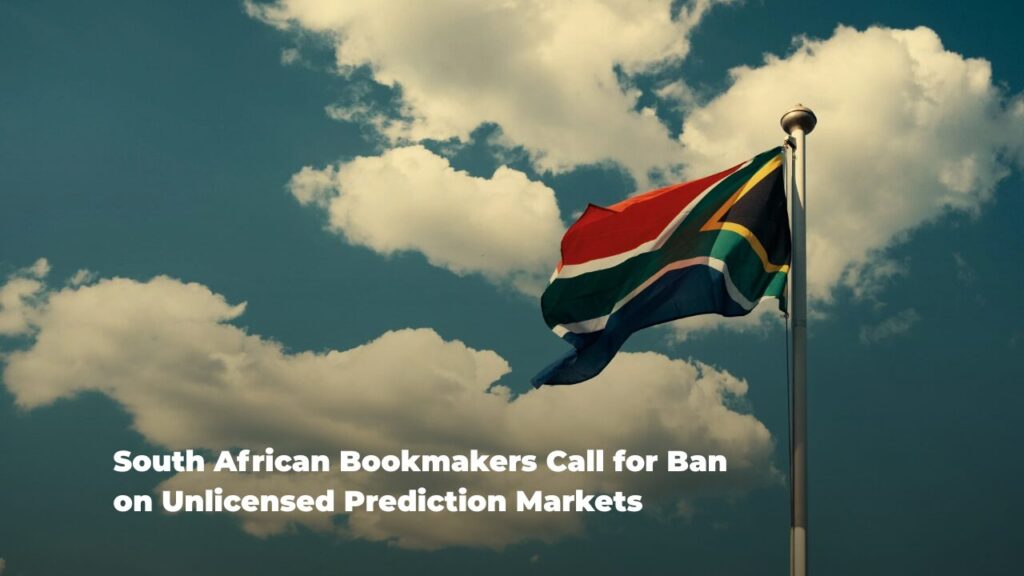
The South African Bookmakers Association is demanding the ban of unlicensed prediction markets over concerns about sporting integrity, anti-money laundering controls, consumer protection and lost tax revenue.
On Monday, SABA warned about the “emergence and growth” of prediction market platforms operating in South Africa without a dedicated framework. The trade body cited a News24 report from 19 July claiming more than R700,000 had been wagered on Johannesburg’s next mayor through Polymarket.
SABA argues that prediction markets should be treated like betting exchanges and should not avoid gambling rules by describing their products as forecasting tools. Approval should follow a review of gambling laws, financial market legislation and integrity requirements. Until then, SABA believes prediction markets should be treated as illegal gambling.
Integrity and Licensing Gaps Create Regulatory Concerns
SABA cited an April study by the International Federation of Horseracing Authorities, which described prediction markets as a “significant and emerging challenge for sports integrity”. The study warned that customers can profit from underperformance, increasing manipulation risks.
“These concerns become particularly acute when prediction markets extend beyond sports into political elections, legislative decisions, public appointments, regulatory outcomes and financial events,” SABA added.
Furthermore, the body believes South Africa lacks systems to identify manipulation, creating “a substantial regulatory blind spot”. SABA also questioned the North West Gambling Board’s betting exchange licence, arguing that existing legislation does not “expressly authorise” that category.
Prediction markets resemble exchanges because they facilitate peer-to-peer transactions rather than accepting betting risk. “There is a legitimate question as to whether existing gambling legislation authorises such activities at all,” SABA declared.
AML, Consumer Protection and Tax Issues Remain Unresolved
The association warned that prediction markets may create money laundering risks by processing large volumes of peer-to-peer transactions across multiple jurisdictions.
“Where offshore prediction market operators are involved, South African authorities may have little practical ability to obtain transactional information or enforce compliance obligations,” SABA outlined.
SABA also noted that these platforms are not subject to the same responsible gambling measures as licensed bookmakers, including self-exclusion requirements and advertising restrictions.
“Without a dedicated framework, substantial gambling-related revenues leave South Africa without generating meaningful tax contributions or supporting local economic development,” the association added.
“Until South African Gambling Regulators have enacted a comprehensive legal framework addressing licensing, integrity monitoring, consumer protection, anti-money laundering compliance and taxation, SABA submits that betting prediction markets cannot and should not be authorised to operate in South Africa and should be treated as exchange-style betting products falling outside the scope of the current legislative framework,” the association warned.
Expert Opinion
The South African Bookmaker Association has voiced concerns over the rise of unlicensed prediction markets within the country. Hence, it is calling for the ban of such platforms to protect sporting integrity and consumers, while eyeing the increased risk of money laundering.
 Share
Share


 190 views