





Key Points
- A server breach aimed at Amatic Industries pushed several slot games into failure, lifting win rates and letting players gain payouts that do not match normal play.
- The fault ran from 6 pm to 11:30 pm CEST on April 17, bringing confusion on offshore sites such as Vodka.Bet and Vavada, where some users took funds while others met account blocks or freezes.
- Specialists say the case shows rising security threats in offshore betting areas, where weak rules and unclear law make such platforms easy marks for attackers.
A rise in large payouts across many online slot titles caused concern on April 17, after a server breach broke the usual game logic. It first felt like luck, yet that feeling did not last long. Soon after, the issue grew into a major system fault, showing weak points inside backend systems that run offshore gaming services.
A Fault That Should Not Be There
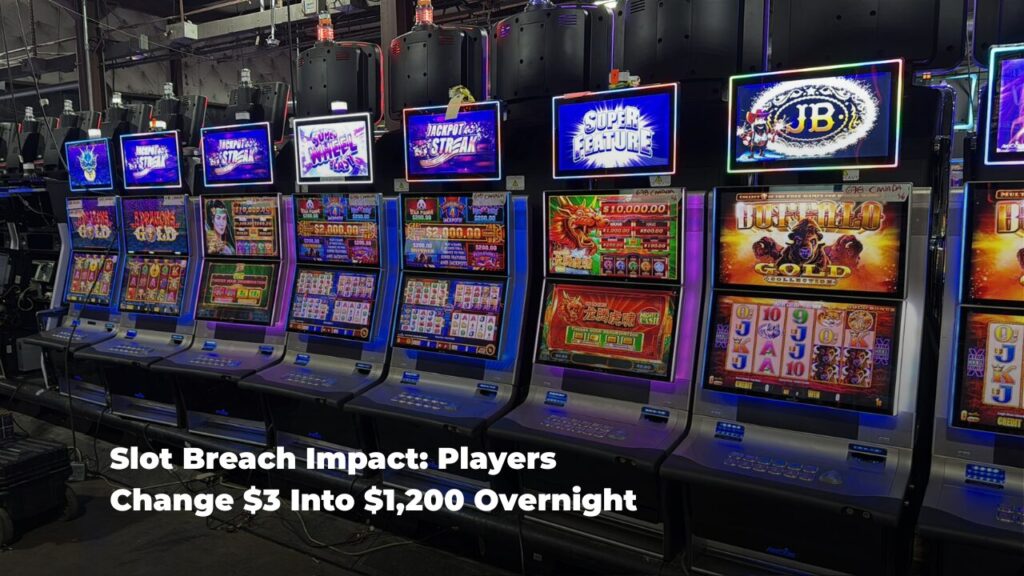
Around 6 pm CEST on April 17, an odd change started inside the server system running games from Amatic Industries. The change did not show clearly at first, though players sensed it right away. Known games such as Book of Aztec, Lucky Joker 10, Lucky Joker 10 Extra Gifts, Lucky Joker 10 Cashspins, and Lucky Joker 20 began to act outside normal limits. Wins appeared too often, at a rate far from expected slot maths. Reports said payouts came close to every third spin. This pattern did not match the chance. It signalled a system breakdown. The source linked back to a cyber breach inside the server setup used by Slotegrator clients.
“Free Money” Until It Stopped
Once users saw the pattern, their behaviour changed fast. Careful bets turned into heavy spinning, as many tested the limits of the fault. Results showed a strong impact. One user changed a $3.50 bet into $1,200 in a short time. Such a return does not appear in usual play, even in rare moments. Still, the outcome did not match for all. Some users withdrew large funds without delay. Others faced account locks or bans as operators tried to reduce loss. The same actions gave different results. Timing and platform response shaped the final outcome.
Platforms Face Strain
The fault put offshore platforms like Vodka.Bet and Vavada under stress. These services run in loose rule systems, giving both speed and risk. They adjust fast in normal times, yet fail to hold strong protection when systems break. Users shared reports on Russian forums, showing both quick withdrawals and blocked accounts without reason. The gap did not seem random. It showed a lack of readiness for such a breach.
Official Response and Its Gap
Slotegrator issued a response and explained its stance. The firm said the fault came from Amatic’s side, within the server system running the games. It stated: “Slotegrator always prioritises transparency and close cooperation with all partners. In such cases, we give full technical help and support for the investigation; however, only the game owner can give final results after full analysis.” The reply showed support, yet also a limit. Aggregators depend on providers to find and fix root issues. That link slows response when systems fail.
Why Do Attackers Choose This Sector?
The case goes beyond one fault. It shows why such attacks happen. Security expert Joseph Steinberg shared a clear view: “I wouldn’t even say soft targets, they’re almost ideal targets. They’ve got a lot of money, easy to move, because that’s what they do.” His point highlights the money flow in cybercrime. Offshore casinos move large funds fast, across regions with weak legal links. That setup lowers risk for attackers while raising gain.
He added: “If you target somebody already seen as unclear in the Western world, where victims lack safe law support, chances of escape rise much higher.” In such a space, uncertainty works for attackers.
When Systems Fail Faster Than Fixes
The fault ended at 11:30 pm CEST, about five and a half hours after the start. That short time still exposed a deep system weakness. Digital systems move funds in milliseconds. Even a small delay in response can cause a large impact. Each minute brought more payouts, more withdrawals, and rising losses for operators. The fix stopped further loss, yet could not undo past actions.
Expert View: Impact on Industry
The case shows an imbalance between system speed and security strength in iGaming. Operators now face unstable cost risk, where one breach leads to large payouts. Some react by freezing accounts, which affects user trust.
Pressure rises to use real-time detection tools that spot payout changes at once, not hours later. On a wider level, the event shows how linked systems increase risk. A weak point in one-layer spreads across providers, aggregators, and casinos.
This shift changes market play. Platforms with stronger systems and faster response gain ground. At the same time, demand grows for firms that focus on gaming security, mainly those offering threat prediction and cross-system checks.
Smaller offshore platforms face a higher risk due to low resources for upgrades. Meanwhile, users who withdrew funds during the fault saw gains, while others faced locked accounts during withdrawal.
Explore more:
 Share
Share


 323 views