







Key Points
- Nine Mecca Bingo venues closed in FY26, leaving 41 clubs; Harris says “around 40 venues is about right” under the current tax regime.
- Rank’s full-year underlying operating profit rose 21% to £78.6m, closing in on the group’s £100m medium-term target.
- The Social Market Foundation has proposed doubling machine gaming duty from 20% to 40%; Harris warns it would trigger further closures within 12 months.
Nine bingo halls closed. A casino in Reading is struggling to survive. An elusive profit objective. And a looming taxation plan that would render everything else irrelevant. On 13 August 2026, Richard Harris reported his first full-year performance as CEO of Rank Group, and while the bottom line numbers reflected an improvement story, it was what lay beneath the surface that was really revealing.
Underlying operating profit climbed 21% to £78.6m. Net gaming revenues rose 6% to £834m. The dividend was lifted 35% to 3.5p per share. By any standard reading, those are strong results. But Harris spent much of the earnings call explaining closures, mapping a revised route to £100m, and issuing a pointed warning about machine gaming duty that most outlets buried or missed entirely.
How Harris Got Here, and Why the Timing Matters?
Harris spent six months in the role on an interim basis after John O’Reilly retired in January 2026 following seven and a half years as chief executive. The board ran a formal search process, and in July unanimously confirmed Harris as permanent CEO. He had joined Rank as CFO in May 2022, having previously held senior roles at Foxtons, Marks & Spencer, and Laird.
He inherited a business already mid-restructure. UK remote gaming duty rising from 21% to 40% from April 2026 was squeezing digital profitability and pushing the £100m operating profit target out by a year. His first annual results were always going to be about how well he managed that pressure, and the nine Mecca closures are the most visible answer.
Why Nine Venues Had to Go?
Eight closures came in a concentrated wave during June 2026. Mecca Bingo Scarborough had already shut in November 2025, bringing the FY26 total to nine. Harris described each decision as a five-year cash generation test, not a short-term cost cut.
“In those cases, over the next five years, I didn’t see a path to positive cash generation,” he told analysts. “In most cases, they had quite significant property liabilities or lease events or something that made it quite difficult to see cash generation being particularly strong in that five-year time period.”
The shuttered venues had generated £12.6m of revenue in 2025/26 before closing; roughly 1.5% of group net revenue and nearly 9% of Mecca’s segment total. Harris was direct: “These clubs were either loss-making or not commercially viable, so we took the difficult decision to close.”
What most coverage missed is the structural reason these decisions landed now. With remote gaming duty at 40%, digital is contributing less profit than Rank once projected, placing greater weight on every retail venue. Clubs that were once borderline became clearly unviable once digital could no longer carry underperformance elsewhere. Harris confirmed the cull is, for now, done: “Around 40 venues is about right” in the current tax environment, and the group is “happy to invest” in those that remain.
What the Mecca Numbers Actually Show?
Strip out the closed venues and the segment’s performance is sharper than it first appears. Revenue grew 4% year-on-year in both Q4 and across the full financial year. Mecca’s underlying operating profit more than doubled, from £4.3m in 2024/25 to £8.9m in 2025/26, a 107% rise, driven largely by the abolition of bingo duty.
Gaming machines now account for 42% of Mecca’s net revenue. Bingo fills the seats; machines generate the margin. Tablet-based play accounts for around 80% of bingo revenues across Mecca venues. The group opened a new social gaming lounge at Mecca Stockton during the year, part of a broader push to give the retained estate a platform for fresh investment.
The Grosvenor Reading Problem
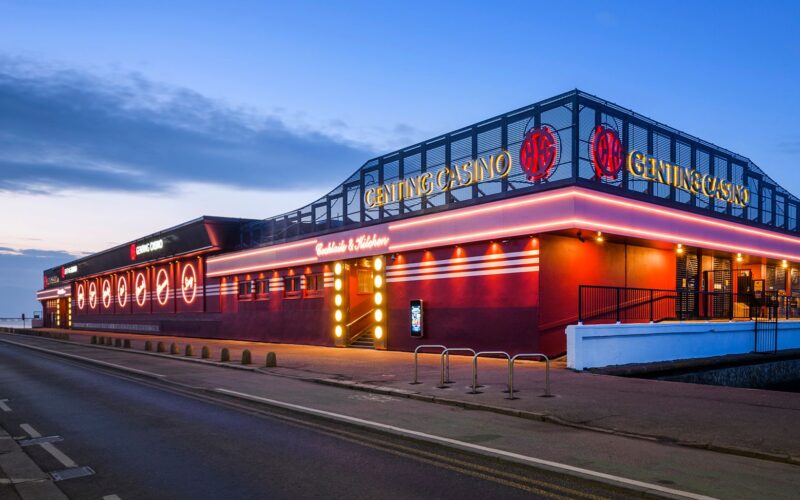
Rank’s retail consolidation did not stop at Mecca. Employees at Grosvenor Casino Reading Central were notified in July that a formal consultation on its future had begun. The venue has accumulated losses of £2.3m over six years, posted an operating loss of £500,000 in the last financial year, and faces a further projected £400,000 loss if it continues operating. Revenue is running 19% below budget; operating costs have risen 2% over eight years against a 20% revenue decline over the same period.
Rank has said it is considering ways of ensuring the venue’s “long-term sustainability.” Nothing has yet been decided, and in their letter to staff, Rank stressed that no redundancies could be confirmed until the consultation had concluded. Reading Central is one of two Grosvenor Casinos in the town, while the other has suffered no problems.
Harris addressed the wider Grosvenor estate without commenting on Reading directly. He confirmed 850 gaming machines had been rolled out across 37 locations in H1, growing the estate by 65%, with Grosvenor revenues up 5% for the year. Machine estates of this scale, he noted, typically take two to three years to reach maturity.
The £100m Target Has a New Route Map
Rank has reiterated its ambition to reach at least £100m in operating profit, but the path to it has changed. Digital will contribute less than originally projected. Interim CFO Cliff Baty confirmed that approximately £35m of additional RGD costs are expected in FY27, with around £20m offset through reduced marketing spend and supplier renegotiations. Grosvenor’s machine rollout and Mecca’s exit from bingo duty are now carrying the growth.
Harris told analysts that a material number of additional machines beyond the 850 already installed is not required to reach the target. FY27 capital expenditure is guided at around £40m, down from £50.2m in FY26. Early FY27 trading is encouraging: revenues were up 8% in the first six weeks, with Grosvenor gaming machines up 15% and digital up 10%.
The Tax Risk That Could Undo It All
Every figure in these results is conditional on one external variable: machine gaming duty. The Social Market Foundation published a report in late June 2026 proposing to double MGD from 20% to 40% on Category B electronic gaming machines in casinos, betting shops, and adult gaming centres. The SMF projects the change would generate between £275m and £458m in additional annual revenue. The Betting and Gaming Council has called the proposal “damaging policy.” Advisory firm Regulus Partners has estimated it could close up to 70% of UK betting shops and 90% of adult gaming centres.
For Rank, those projections are not abstract. Gaming machines account for 42% of Mecca’s revenue and around 44% of group revenues across all venue businesses. Rank paid more than £225m in taxes and duties in FY26. Harris left no ambiguity: “Any increase to the rate will further impact venue viability across both Grosvenor and Mecca and will lead to a reduction in tax receipts within 12 months.”
The Grosvenor Reading consultation, still unresolved, is a live illustration of what that warning means in practice.
Expert Analysis
Harris’s first year as permanent CEO produced a tighter estate, a credible route to £100m, and a clear logic behind every difficult decision taken. The FY26 results also quietly confirmed something significant: the original expectation that Rank would “greatly exceed” the £100m target has been set aside. Digital is doing less; machines are doing more. That shift makes Rank more dependent on a stable MGD rate than at any point in recent history. The SMF’s proposal sits before an October budget, with a government that has already raised remote gaming duty to 40%. If MGD follows the same trajectory, the nine closures of FY26 will not be read as the conclusion of Rank’s restructuring. They will look like the opening chapter.
Explore more:
 Share
Share


 237 views