





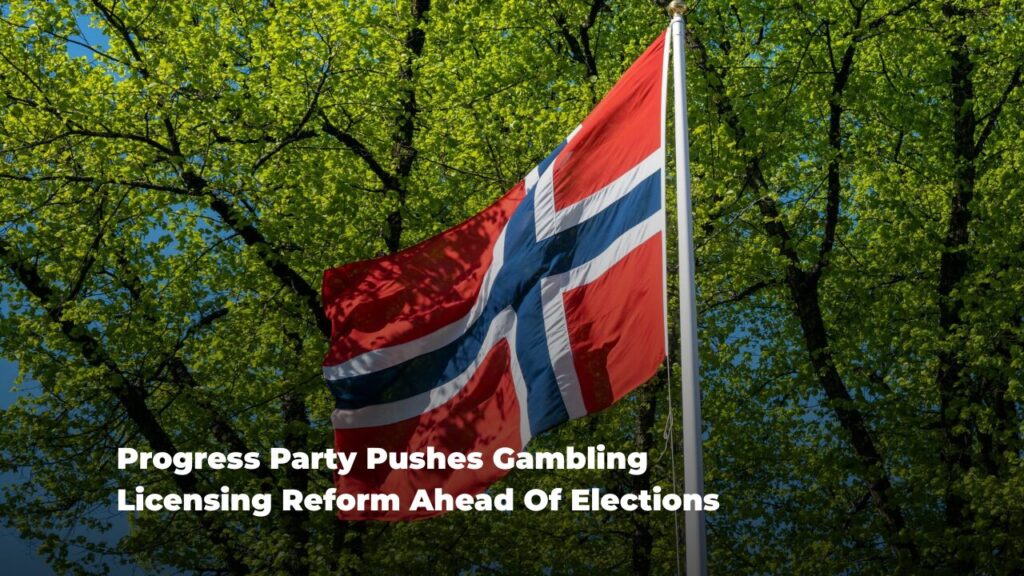
Norway’s gambling monopoly could face its biggest challenge in years after senior Progress Party politician Himanshu Gulati renewed calls to switch to a licensing model.
Speaking at the annual Spillkonferansen gambling conference, Gulati said replacing the current monopoly system would become one of the party’s most important cultural policy priorities if re-elected.
“I have for many years said internally in my party that when there is a change of government, the licence model in the gambling field must be the most important cultural political issue for the Progress Party,” Gulati said.
The Progress Party has advocated for gambling reform for several years and formally called for the end of the monopoly system in 2021. The party argues that a regulated licensing framework would provide more transparency and improve the country’s ability to compete with offshore operators.
Although Norway’s Labour Party retained power following the 2025 general election, the Progress Party solidified its position in parliament. Labour secured 53 seats with 28.2% of the vote, while the Progress Party won 48 seats and 24% of the national vote.
Previous Deregulation Efforts Used To Support Reform Argument
Gulati used several examples from Norway’s recent political history to support his case for gambling reform. He pointed to previous Progress Party initiatives that legalised cash poker, removed restrictions preventing professional athletes from competing locally, and ended Norway’s ban on Segways.
According to Gulati, these reforms demonstrated how outdated policies can eventually be replaced when lawmakers focus on practical outcomes. “Some of the current rules and restrictions are, in my opinion, contrary to all common sense,” he said.
He also argued that gambling policy discussions should be based on evidence. In his view, questions about gambling harm, market performance and the gambling revenue allocation deserve a balanced public debate.
Gulati noted that Norway is increasingly isolated in Europe as other jurisdictions move away from monopoly structures. Finland is preparing to launch its liberalised online gambling market in 2027 and has received licence applications from dozens of operators.
Offshore Competition Raises Questions About Monopoly Effectiveness
A major theme of Gulati’s speech was whether Norway’s monopoly model is capable of delivering its original objectives. “The question is whether the model we have had for all these years still generates the most money for the purpose,” Gulati asked.
The monopoly system has traditionally been defended on the basis that gambling revenue supports sports organisations, community programmes and cultural activities. However, offshore competition has increased scrutiny around channelisation rates and player migration to unlicensed operators.
Recent issues involving state-owned operator Norsk Tipping have also intensified the debate. There was regulatory attention after a technical error resulted in incorrect lottery payouts and a separate Eurojackpot incident exposed weaknesses in internal controls.
Reports highlighting operational shortcomings and platform performance concerns have further contributed to questions about whether the current model should be maintained.
Problem Gambling And Match-Fixing Remain Central Concerns
Despite advocating market reform, Gulati stressed that stronger consumer protection measures must remain a priority regardless of the regulatory model adopted.
“Regardless of where one stands politically on gambling policy, even if one wants total prohibition, we must agree that the work to combat problematic gambling behaviour must be coordinated and consistent.”
His comments come shortly after Norway unveiled a four-year national action plan focused on preventing and treating gambling-related harm. The conference also addressed concerns around match-fixing and sports integrity.
Gulati argued that stronger regulatory tools and improved cooperation would help authorities identify suspicious activity effectively and improve deterrence efforts.
As offshore competition grows and neighbouring countries pursue regulatory reform, gambling policy is becoming a more prominent political issue in Norway.
Himanshu Gulati, a senior Progressive Party member, has called for reforms in Norway’s gambling sector, if his party is elected into power. Currently operating as a monopoly, he suggests that the market should be transitioned to a licensing model. Gulati believes this will result in a more transparent and diversified industry with massive growth potential.
Further updates on regulatory developments will be available in the Regulation Section.
 Share
Share


 229 views