






Key Points
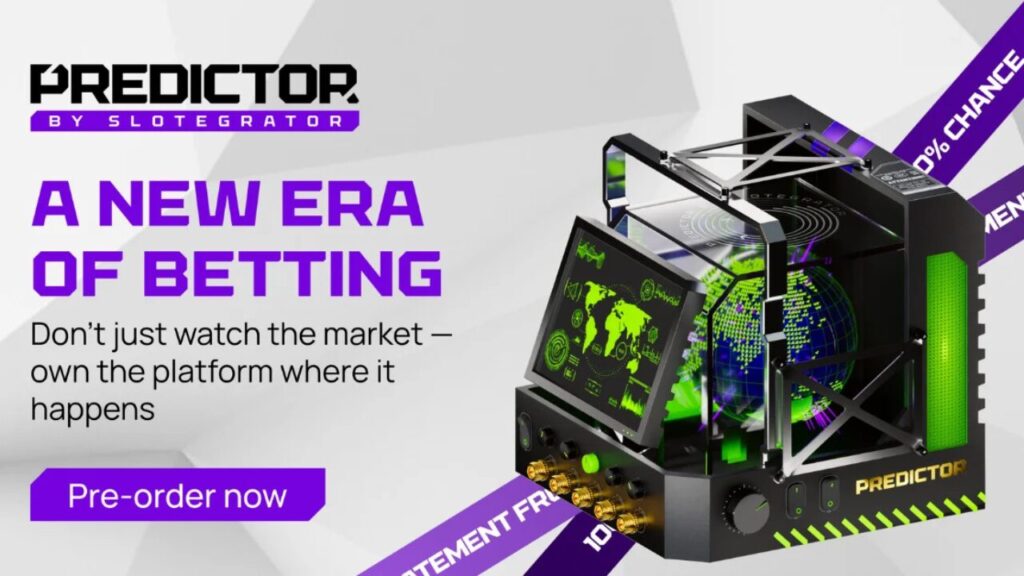
- Slotegrator launched Predictor, a P2P prediction market engine available for pre-order, letting operators provide binary event betting with automatic odds movement and commission-based revenue.
- The platform works through an AMM/LMSR protocol where user activity controls odds movement, reflecting the “wisdom of the crowd” used by Polymarket and Kalshi.
- Predictor targets sportsbooks trying to recover users while helping casinos improve retention through event-driven betting experiences.
What if the biggest movement inside betting already started while many operators still look somewhere else? Most people may believe competition creates the main pressure, yet another shift is already changing the market underneath them. Player behaviour keeps evolving, and that movement now starts reshaping how the iGaming sector functions.
Prediction Betting Moves Fast, Operators Now Face New Pressure
Slotegrator launched Predictor, a P2P prediction market engine available for pre-order, allowing operators to offer binary event betting where odds update automatically while producing commission-based revenue without direct risk. At the same time, the system operates through an AMM/LMSR protocol, meaning user activity shapes pricing directly, matching the “wisdom of the crowd” model already visible on Polymarket and Kalshi, which processes billions in weekly betting volume.
As this process continues, Predictor positions itself as a recovery tool for sportsbooks losing users, while also giving casinos a way to improve retention through event-based betting experiences with speed and flexibility.
A Betting Structure Without House Exposure
For many years, sportsbooks followed one familiar structure, operators created odds, accepted wagers, and controlled exposure. Predictor now challenges that system directly. The platform introduces a peer-to-peer exchange structure where users purchase binary contracts tied to real-world outcomes, and instead of operators carrying exposure, players trade positions against each other. Every transaction creates an automatic odds movement, removing the need for manual management.
The result appears quickly once activity begins. Operators stop carrying direct outcome liability, and instead, they receive fixed commission revenue regardless of the result. A model once built around risk starts moving toward transaction-driven activity.
Why Prediction Markets Continue Expanding?
This development did not appear from nowhere.
Prediction markets already demonstrated major scale across the sector. Bloomberg reported during February that Kalshi processed more than $2 billion each week in betting volume, while Polymarket remained close behind. That activity signals more than growth because it reflects changing player behaviour.
Users no longer stay limited to standard sports wagers. Many now place bets around politics, crypto prices, celebrity activity, and highly specific real-world developments. Accuracy also contributes to the appeal. The “wisdom of the crowd” often pushes outcomes toward collective market expectations, creating a form of engagement where users feel active inside the process instead of watching passively.
How Predictor Builds This System?
The structure itself explains how the product functions in practice.
Predictor runs through an AMM/LMSR protocol where liquidity and probability shift dynamically according to user behaviour. As more participants select “yes” or “no,” pricing changes immediately in real time. This creates a structure without fixed odds, manual recalibration, or static pricing.
Speed creates another advantage. Operators can launch new betting markets within 30 seconds, reducing operational friction while keeping users inside a changing environment. Integration also remains straightforward through a single iframe, allowing deployment without major infrastructure changes.
Operators Lose Users, Predictor Targets That Problem
A visible number of bettors continue moving away from traditional sportsbooks toward platforms such as Polymarket. That migration now creates retention concerns for operators. The predictor directly responds to that shift. Through unconventional betting options combined with real-time market movement, operators can reproduce experiences that users already seek elsewhere.
Online casinos approach the system differently. Instead of replacing sportsbook products, Predictor extends them by adding event-driven betting beside existing games, increasing engagement and session time without demanding complete infrastructure replacement.
What Slotegrator Says About Predictor?
“Predictor is a natural extension of our product philosophy. At Slotegrator, we believe that technology doesn’t follow trends but shapes them,” said Olga Ivanchik, COO. “The prediction market model is still in its early stages in iGaming, and we are among the first to package this mechanism for casino and sportsbook operators in a scalable, product-ready format. It marks a step toward a more adaptive and diversified operator offering.”
“With Predictor, we are going beyond the usual ways of betting to a model where users actively shape the market. We are giving operators a new way to offer dynamic, event-driven experiences via a single iframe, and completely risk-free,” explained Product Owner Maksym Shtun. “Operators can also create completely unique betting experiences tailored to their own platform, the possibilities are endless.”
What Comes After This Launch?
The product currently remains available for pre-order through a selected client group, while a public demonstration is scheduled during iGB L!VE on 1–2 July. That timing places Predictor directly in front of operators already questioning how they should respond to changing user behaviour.
Expert Insight: This Changes More Than One Product
At first glance, this may look like another platform release. A closer examination reveals something much larger.
Operators immediately see the appeal through commission revenue without outcome exposure. Removing liability simplifies financial planning and reduces volatility. Meanwhile, the operator role begins shifting away from risk management toward platform facilitation, changing where investment priorities now move, especially around liquidity, engagement, and market variety rather than odds expertise.
Across iGaming, this development accelerates movement toward decentralised-style systems operating inside regulated environments. Competition slowly depends less on traditional odds and more on the creativity and diversity of betting markets. Operators adapting quickly may attract users already leaving platforms for alternatives such as Polymarket, while slower competitors risk losing attention, especially among younger bettors exploring different formats.
The opportunities already stand out clearly. Operators gain revenue without exposure, retention improves through dynamic content, and market deployment becomes faster. Still, several challenges remain visible, including liquidity limitations during early stages, regulatory uncertainty, and dependence on active participation for accurate pricing.
Flexible operators will likely benefit first, especially those willing to combine hybrid models. Traditional sportsbooks heavily tied to fixed-odds structures may soon experience growing pressure as player expectations continue shifting.
What happens next depends entirely on adoption speed. If integration succeeds and liquidity expands, prediction markets could move from niche products into standard betting features. Otherwise, outside platforms may continue absorbing that demand.
Explore more:
 Share
Share


 346 views