







Key Points
- Penn recorded a net income of $32.6m in Q2 2026 compared to a loss of $18.3m recorded in Q2 2025, due to high retail segment revenues of $1.5bn.
- The interactive segment recorded an adjusted EBITDA loss of $9.5m compared to $62m recorded in Q2 2025 and almost a year after the ESPN Bet brand was withdrawn.
- Penn launched theScore Bet in Alberta on 13 July 2026, and CEO Jay Snowden confirmed Ontario is Penn’s top online sports betting market by revenue, running roughly two to 2.5 times what it generates in Pennsylvania.
Retail Pulls Penn Back Into the Black
Penn Entertainment posted a profit in Q2 2026, recording a net income of $32.6 million in the three months ending 30 June, based on the company’s published Q2 2026 results on 6 August. This contrasts with a net loss of $18.3 million in Q2 2025 and a loss of $2.8 million in Q1 2026, marking a three-quarter turnaround fueled largely by the land-based portfolio.
Retail segment revenues topped a record of $1.5 billion in the quarter, with nine single properties breaking second-quarter records for revenues and adjusted EBITDAR. Revenues jumped to $1.857 billion from $1.765 billion in the corresponding quarter of the prior year. Consolidated adjusted EBITDA jumped by 32% to $312.6 million from $236.1 million. Earnings per share came to $0.24 versus a loss of $0.12 in Q2 2025.
The CEO, Jay Snowden, highlighted the role of cost discipline in improving the results: “Adjusted EBITDA increased by $52.5 million year-over-year, as we have executed our strategic plan to build profitability with discipline.” Corporate overhead costs fell to $29.5 million in Q2 2026 from $38.7 million in the previous year, with the Q2 2025 total distorted by $9.4 million related to legal and advisory costs incurred in activist shareholder activities during the year’s annual meeting.
Segments in Detail
The EBITDA performance of all the segments operating in Penn showed improvement when compared year-on-year. While the northeast segment showed revenues of $731.6m, showing an increase of 2.8%, the midwest reported revenues of $320.6m, which showed a growth of 8%. In the West segment, revenue generation showed an improvement of 10%, and the figure was $151.5m. South, however, was the only segment that recorded a slight decrease in revenue by 0.1%, bringing in $301.9m.
In June, two retail acquisitions were made. These included the new hotel tower at Hollywood Columbus and the new Hollywood Casino Aurora, an Illinois casino which was built at a cost of $360 million as a replacement for the old riverboat property which has been operating in the Fox River since 1993. According to Snowden, the visitation trends were encouraging.
This segment brought in an income of $349.4m, which saw a year-to-date increase of 10.5%. But out of this number, the tax gross-up of $185.5m needs to be subtracted, which implies that the operating income generated through betting activities and games was relatively lower. The loss in the EBITDA margin of this segment was $9.5m, down from $62m in Q2 2025.
The Cost of ESPN Bet
The interactive division’s current position is inseparable from the ESPN Bet collapse. Penn struck a high-profile branding agreement with ESPN, then exited it prematurely in 2025, absorbing write-downs and surrendering momentum in the US sports betting market. Since that exit, the company has refocused on iCasino in the US under the Hollywood brand and on sports betting in Canada under theScore Bet.
That strategic reset came alongside significant workforce reductions. NEXT.io reported in May 2026 that Penn dismissed at least 75 employees from the interactive division across multiple seniority levels, with some of the departures coming from the highest tiers of theScore Bet. Those cuts followed the January 2026 departures of executive VP Todd George and SVP Rich Primus as part of a formal corporate restructuring that also brought in three new board members.
The $9.5m interactive loss in Q2 suggests the cost reductions from that restructuring are feeding through. For context, the division was losing $62m per quarter just twelve months ago; the current loss is 85% smaller.

Ontario Leads, Alberta Next
Canada is carrying Penn’s digital ambitions in a way the US has not managed since Barstool Sportsbook. Snowden confirmed on the Q2 earnings call that Ontario is “by a good margin our number one market” for online sports betting, with revenues there running approximately two to 2.5 times what Penn generates in Pennsylvania.
World Cup activity amplified that performance in Q2. Snowden noted in the official release: “Our Ontario gaming operations continued to gain momentum, supported by strong growth in online sports betting revenues, aided by solid World Cup engagement and cross-sell of the reactivated World Cup OSB user base into iCasino.”
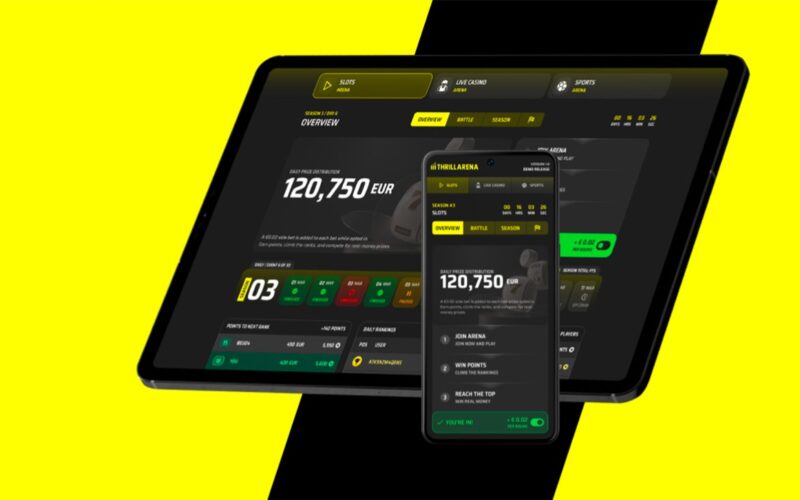
Penn pressed further into Canada on 13 July 2026, launching theScore Bet, theScore Casino, and Hollywood iCasino as standalone apps in Alberta, available on iOS, Android, and web. Ontario has long provided the blueprint: theScore’s media app carries approximately four million monthly active users across North America, giving Penn’s betting products a pre-existing audience in Canadian provinces that US competitors cannot replicate.
Snowden also noted that Penn’s online casino revenue now exceeds its online sports betting revenue across the portfolio, a reversal from this time last year, with Pennsylvania and Ontario running as the two top iCasino markets by revenue.
Revenue Miss and Market Reaction
Revenue of $1.857 billion for Penn was down about 2% from the $1.9 billion consensus estimate. Penn stock was down 2.1% on the day, closing at $19.62 and trading 12.25% below its 52-week high of $22.36 seen on 16 June 2026. Forward estimates remained dependent on analyst models as Penn did not offer any guidance for the year in its report.
Adjusted EPS came in at $0.44, which was up from the $0.35 consensus and far above last year’s Q2 $0.10. Analysts’ response to the report has been overwhelmingly positive in terms of profit quality even though there have been some negative comments regarding the revenue figure. Macquarie increased its price target to $25; Barclays reiterated its overweight rating of $26.
Improvements were made in the balance sheet. The traditional net leverage ratio was 2.9x as of 30 June 2026, compared to 4.5x as of the end of 2025. Penn paid off $106.7 million in convertible notes in May, extended its revolver to April 2031 and issued $600 million in 6.75% senior notes, which were due 2031. The total liquidity was $1.9 billion as of quarter-end.
Expert Analysis
Penn’s Q2 profit is structurally dependent on retail performance, and the numbers make that clear. Land-based revenues at record levels, nine properties setting quarterly records, two new properties opening in June; the retail side of Penn is executing well. The interactive division, meanwhile, is smaller and less costly than it was twelve months ago, but it is not yet profitable. The $9.5m adjusted EBITDA loss represents an 85% reduction from Q2 2025, which is a credible trajectory, but the ESPN Bet episode consumed capital and credibility that Penn is still working to rebuild. Canada offers a genuine foundation: Ontario’s double-digit sports betting share and growing iCasino penetration give the interactive segment a market where theScore’s brand does the work that ESPN’s name failed to do in the US. Alberta’s early performance in Q3 will be the first test of whether that Canadian model can be replicated beyond Ontario. Snowden confirmed that encouraging trends in both segments continued into July. Whether those trends hold through a full quarter without World Cup tailwinds will matter considerably more for Penn’s second-half story.
Explore more:
 Share
Share


 219 views