




Key Points
- People Incorporated officially withdrew its $48.30 per share MGM offer on 23 September 2026, after four months of negotiations.
- Analysts had questioned the valuation from the opening week, citing MGM’s Asia assets as underweighted.
- The WSJ reported on 24 September that MGM is now discussing a possible bid for People Incorporated itself.
The greatest ever attempted takeover of the casinos industry just turned against itself and neither side is ready to explain the reason behind it.
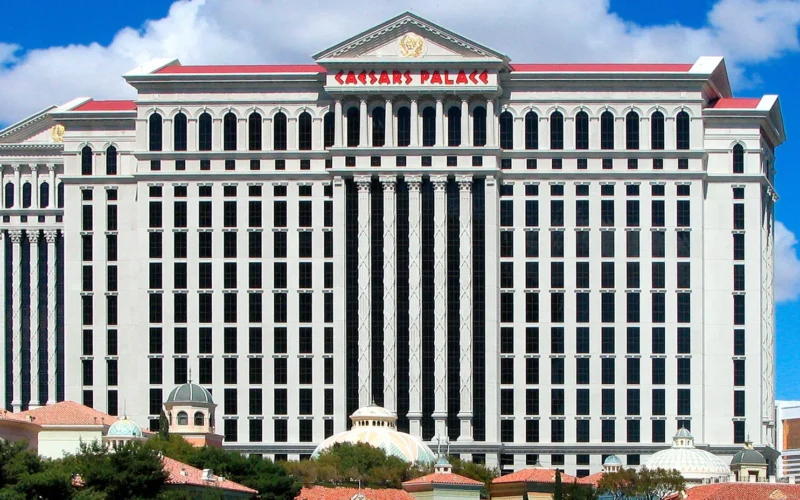
People Inc. announced on 23rd of September that it had officially pulled back its proposal to take over all MGM Resorts’ stocks that People Inc. didn’t yet own. MGM Resorts, which runs 30 destinations in hotels and gaming businesses around the world, will remain an independent publicly held corporation. In less than 24 hours, MGM’s stock lost 8% of its value, thus erasing almost all the premium that was built since June. However, this wasn’t everything.
Analysts Never Fully Bought the $48.30 Price Tag
People Incorporated submitted its non-binding proposal on 1 June 2026, offering $48.30 per MGM share in cash, a 24.1% premium on the 30-day volume-weighted average price through 29 May. The company, formerly known as IAC, already held 26.1% of MGM’s outstanding common stock. Under the structure, People Incorporated would own just over 50.1% of MGM’s equity, taking the casino group private.
The market responded with a sharp rally, but the analyst community was more measured. Seaport Research Partners analyst Vitaly Umansky said almost immediately that the $48.30 offer did not incorporate the potential long-term value of either MGM China or MGM’s 40% stake in the Osaka integrated resort project. According to Umansky, the proposal “may not be acceptable to the independent board members or MGM shareholders.” That scepticism, stated in the opening week, would prove significant as months of talks produced no agreement.
Four Months, a Special Committee, and a Door Left Open
MGM’s board formed a special committee of independent directors in July 2026 to evaluate and negotiate the proposal, composed, as CEO Bill Hornbuckle confirmed, of directors with no ties to Barry Diller or People Incorporated. Months of talks followed. Neither side announced a price revision, a counter-offer, or a breakdown in any specific area.
Diller’s explanation for the withdrawal was notably vague. “There are lots of ingredients that go into a proposal of this kind on its way to completion,” he said. “We didn’t feel the mix was coming together in the way we had hoped and have decided not to pursue taking the company private at this time.” What the “mix” actually referred to, whether valuation, financing structure, disagreements over international assets, or something else entirely, was not disclosed. The related SEC Schedule 13D/A filing, accepted on 24 September, adds one line that most coverage glossed over: People Incorporated “remains open to and interested in the possibility of a strategic transaction” with MGM. That is not the language of a clean exit.
MGM Stood Firm – Its Shareholders Took the Hit
MGM chairman Paul Salem responded with a statement pointing to Las Vegas market leadership, BetMGM’s momentum, MGM China, and the Osaka opportunity ahead. “Our leading position in Las Vegas, our best-in-class regional properties, and BetMGM’s continued momentum highlight the value we bring to our shareholders,” he said. “In addition, our international portfolio of MGM China and the significant opportunity ahead with MGM Osaka support a clear path to increasing shareholder value.”
The messaging was confident, but the stock fell sharply on the news. MGM’s share price had been trading with a deal premium baked in since the June announcement. Once that premium vanished, the market adjusted fast.
Diller, meanwhile, made clear that People Incorporated is not stepping away from MGM. The company retains 66.8 million MGM shares, roughly 27% of outstanding stock. “We continue to hold 66.8 million shares, representing approximately 27% of MGM Resorts, and have total confidence in both the management and the company’s prospects,” he said. As the single largest MGM shareholder, that position carries weight in any future boardroom conversation, which may be precisely the point.
The WSJ Bombshell: MGM Is Reportedly Discussing a Bid for People Incorporated
Less than 24 hours after the withdrawal was announced, the story reversed direction entirely. The Wall Street Journal reported on 24 September that MGM Resorts is now discussing the possibility of making a bid for People Incorporated itself. People familiar with the matter told the Journal that MGM could put forward a proposal within days if it decides to proceed. Reuters confirmed the same report. Neither MGM nor People Incorporated commented publicly on the matter.
If pursued, such a transaction would be structurally unusual. MGM buying People Incorporated would mean acquiring its own largest shareholder, recovering the 27% stake People holds in MGM, and bringing under its roof a media and publishing business with more than 40 brands, including PEOPLE magazine, Food & Wine, Investopedia and Entertainment Weekly. Whether that combination makes operational sense for a casino-and-hospitality group is a question the reported discussions have not yet answered.
Expert Analysis
We find the timing and tone of this entire sequence worth examining carefully. People Incorporated entered 2026 with a thesis that was commercially defensible: physical resort and casino experiences are resistant to AI disruption, MGM’s assets were undervalued in public markets, and a private structure would release that value. BetMGM’s Q1 2026 results showed net revenue of $696 million, up 6% year on year, with Adjusted EBITDA reaching $25 million, up 11%. MGM Digital revenues hit $183 million for Q1, up 43% year on year. The underlying business metrics were not the problem.
Seaport flagged from the start that MGM China and the Osaka project were not reflected in the $48.30 offer. Whether that gap was ultimately the decisive issue in negotiations is not established by the public record; Diller’s own statement pointed only to a vague “mix” that never came together. What we find notable is that after walking away, he still holds 27% and explicitly kept the door open to a “strategic transaction.” That is an unusual posture for a bidder who has simply decided to move on.
We think the most likely reading here is that the real negotiation has not ended; it has just changed form. A potential MGM bid for People Incorporated, if it proceeds, would resolve the ownership complexity in a single move, bringing the 27% stake back inside the company and providing an exit for People Incorporated shareholders at a price the market would need to determine. Whether that outcome was always a possibility somewhere in the background of four months of talks is something neither side has addressed.
Explore more:
 Share
Share


 7 views