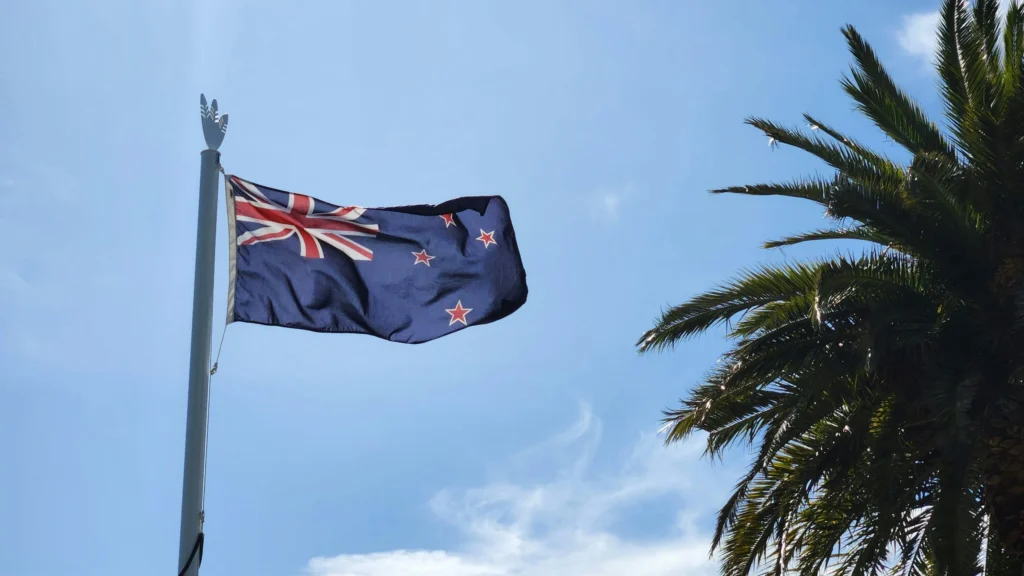
New Zealand has outlined what operators must provide after securing a place in its upcoming online casino licence auction, placing business operations, advertising, consumer protection and compliance at the centre of the application process.
The Department of Internal Affairs will hold the auction on 29 September 2026. Companies that passed the expression-of-interest stage have been invited, although the regulator has not named participants or confirmed their number.
Winning a place will not automatically provide a licence. Successful bidders will earn the right to apply and must still meet the remaining requirements of New Zealand’s incoming online casino framework.
Operators must submit five core business and compliance strategies
Applicants will receive a form requiring a business plan, advertising and marketing strategy, consumer protection strategy, harm prevention and minimisation strategy, and compliance strategy.
The DIA will use these documents to assess how an operator intends to run its business under the new framework. Applicants must also provide a signposting template showing how their strategies, policies, systems and processes meet the Online Casino Gambling Act 2026, related regulations and minimum standards.
Auction winners may seek clarification on draft requirements during the first week after the process. The DIA expects to finalise the requirements by 23 October.
Existing UK and Ontario certifications may avoid repeat testing
The regulator has also explained how games and random number generators will be tested. Independent laboratories will assess technology to ensure it operates safely, reliably and in line with market rules.
Games and RNGs available when licensing begins will not need further testing if they already hold applicable certification in the UK or Ontario. The approach is intended to avoid unnecessary duplication while maintaining confidence in game fairness and integrity.
Other games and RNGs available at launch, as well as new products introduced later, must undergo external testing and certification.
New Zealand plans to issue a maximum of 15 licences, with each platform or brand requiring its own licence. No operator may hold significant influence over more than three licences. Initial licences can last up to three years and be renewed once for up to five years.
New Zealand’s auction is only the first filter. The work begins once operators must show how their marketing, consumer protection and harm-minimisation systems will operate. Recognising UK and Ontario game certifications is sensible, but the DIA’s assessment will determine whether the new market is genuinely built around compliance.
 Share
Share


 3 views