Key Points
- On 12 June 2026, Justice and Security State Secretary Claudia van Bruggen declared a near-total ban on the advertisement and bonus offerings for online gambling.
- These include the establishment of a centralised betting limit and affordability controls, reforms to the Cruks system, and increased ability to combat illegal operators.
- Industry experts are raising red flags about the possibility that gamblers could go back to the underground gambling market, where the majority of the country’s gambling income is already generated.
Netherlands Moves to Ban Online Gambling Ads and Bonuses Amid a Growing Youth Addiction Crisis
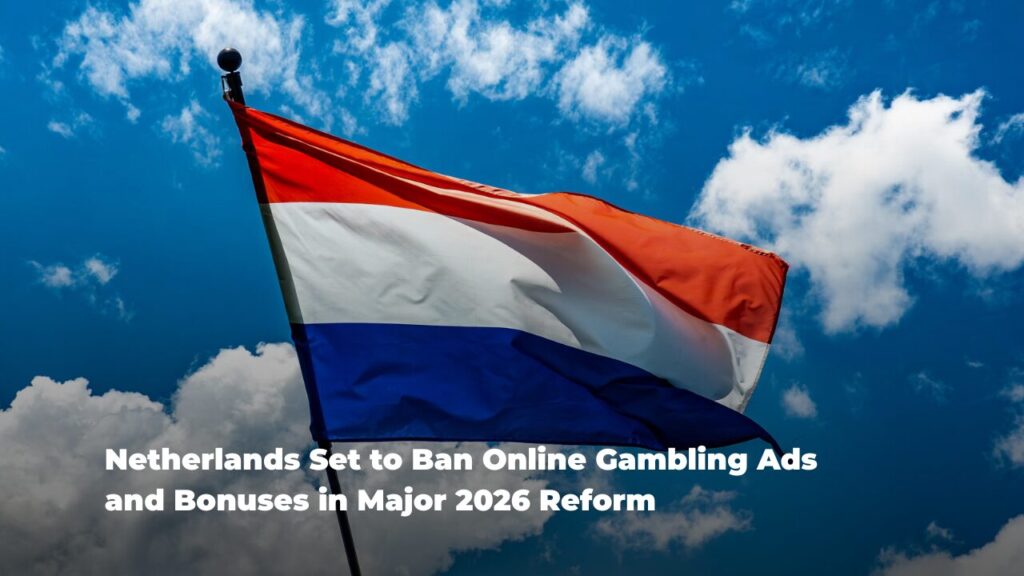
Twelve June 2026 is a day that the Dutch gambling industry is not going to forget. The authorities have unveiled measures to ban the promotion of gambling services online, and if adopted by parliament, the license holders won’t be allowed to advertise their products and provide free spins in an effort to attract new customers. No legislative measure introduced in the Netherlands since the opening of online betting in October 2021 compares to this one.
Justice and Security State Secretary Claudia van Bruggen is the force pushing this through, and her reason is direct: too many people, particularly the young, are falling into gambling addiction online, and the rules already in place are simply not catching them. “I find it particularly concerning that more and more people, and especially young people, have started gambling online and are getting into trouble as a result,” she said. “It is high time to reverse this trend. With the proposed measures, I am taking an important step to better protect people against the negative effects of gambling, such as addiction and debt. Special attention is being paid to young people and young adults because they are particularly vulnerable to the risks of gambling.”
The facts associated with such terminology are more convincing. Adults aged 18 to 23 represent only 9.3% of the adult population of the Netherlands; however, they have 22% of the country’s total gambling accounts. Registration on the national voluntary exclusion register called Cruks increased from 61,000 in 2024 to 111,534 at the end of January 2026.
The Rules Have Been Tightening for Years
This ban did not arrive without warning. Since the market first opened, the Dutch government has been closing one door at a time. From 1 July 2023, gambling companies lost the right to advertise on television, radio, in newspapers, and on billboards. From 1 January 2024, sponsoring TV programmes or public events was out. Then, from 1 July 2025, sports sponsorships went too, stripping gambling logos off Eredivisie football shirts for good.
Each time a restriction landed, the government declared progress. Each time, the numbers told a different story. Operators shifted to targeted digital ads and social media, finding gaps in rules built for an earlier era of advertising. The government has run out of patience with that cycle; rather than narrowing which ads are allowed, this proposal cuts the whole thing off at the root.
What the New Plan Actually Covers
The advertising ban is the headline, but Van Bruggen’s plan stretches considerably further. Bonuses would go as well, including the free bets that gambling sites hand out when a new account is opened. The government’s view is that these promotions act as a hook, pulling people who are already at risk deeper into the habit.
A new central deposit limit would apply across every licensed gambling platform at once. At the moment, some players sidestep individual site limits by splitting their activity across several platforms; the new system locks that door. Anyone wanting a higher limit would first have to pass a financial check, where the government looks at outstanding debts, any existing financial supervision, and whether the person can realistically afford further losses.
This follows on from 2024 rules, when the KSA, the Dutch gambling regulator, set monthly loss limits of €150 for players aged 18 to 23 and €350 for those 24 and over. After those limits took effect, the share of players breaching their monthly deposit threshold fell from 9.7% to 2.2%, and average monthly losses dropped from €116 to €80. The government read those figures as a step in the right direction, then concluded the step was not long enough.
Cruks is changing shape too. Right now, a self-exclusion block expires on its own after a set period. Under the new rules, it stays in place until the person takes deliberate action to lift it. The reform also lowers the barrier for family members and financial administrators to register someone who is struggling, even without that person’s own request.
The Industry Says This Will Backfire
Not everyone believes this plan will do what the government thinks it will. Some of the most pointed criticism is coming from within the regulated industry itself, and the argument they are making is not easy to wave away.
The operators’ trade body VNLOK has warned that stripping licensed sites of their ability to advertise and offer bonuses will drive players straight toward illegal platforms, ones that sit entirely outside Dutch law and carry none of the safeguards the government is trying to build.
State-owned Nederlandse Loterij, which operates the TOTO sports betting brand, went further still and came out against the advertising ban directly. Its argument: the capacity to advertise is exactly what steers Dutch players toward safe, legal platforms. “A total ban therefore plays entirely into the hands of illegal gambling sites,” the company said. It also noted that roughly 200,000 people in the Netherlands already gamble illegally, on platforms with no age checks, no deposit limits, and no access to support services.
The data underneath that concern is not speculation. The KSA’s own reports show the illegal gambling market surpassed the licensed sector in revenue for the first time in 2025. More money now flows through unlicensed platforms than legal ones. The channelisation rate, the measure of how much total gambling activity runs through licensed sites, dropped below 50% for the first time since the market launched. Players gambling exclusively on illegal platforms rose from 19,000 in the first half of 2025 to 30,000 by the end of the year.
That is the core tension the government has not yet resolved. Making legal gambling less visible is meant to protect people. But if reduced visibility just redirects players to platforms where no protections exist at all, the whole exercise achieves the opposite of what it intended.
The new package does try to meet that problem head-on. The KSA would gain powers to block illegal gambling websites and to place legal obligations on payment providers and hosting companies that prop up unlicensed operations. The regulator is already moving away from chasing individual sites and toward cutting off the infrastructure those sites depend on.
What Happens Next, and What to Watch
Now, Van Bruggen formalises her suggestions in a legislative proposal. The discussions regarding the policy on gambling are expected to be held by the parliament on 24 June 2026. These actions will go into the framework of the government’s Multi-Year Agenda for the Protection against Gambling Damage which encompasses actions till the year 2030.
The 24 June debate is the first genuine test of whether these proposals hold together under political pressure. For operators in the Dutch market, the urgent question is how fast the bill moves and whether any transition period is built in. For players, the deposit limit system and the updated Cruks rules are the changes that will land first and feel most immediate in practice.
Expert Analysis
The evidence base Van Bruggen is drawing on is difficult to challenge. Young people are overrepresented in gambling accounts by a wide margin, self-exclusion registrations nearly doubled in a single year, and each previous wave of advertising restrictions failed to make meaningful dents in exposure. Stronger action was not just predictable; it was overdue.
The harder question is whether this intervention is aimed at the right target. Legal platforms stripped of advertising ability hand unlicensed competitors a relative advantage without those competitors lifting a finger. The illegal market has already pulled ahead in revenue. A near-total advertising ban could speed that drift further rather than slow it, and while the enforcement measures aimed at the black market are credible, dismantling illegal gambling infrastructure takes time; the advertising ban will arrive first.
What the Netherlands is running, whether it intends to or not, is a live test of whether you can reduce gambling harm without reducing the legal market’s ability to compete for the players it is designed to protect. When the results come in, they will carry weight far beyond the Dutch border.
Further updates on regulatory developments will be available in the Regulation Section.
Explore more:
 Share
Share


 271 views