Key Points
- Netflix has brought on Ian Hunter, who worked with Stars Group for seven years and was previously with Snap Inc., to oversee the relationships with real money gaming advertisers in their London office. This is Netflix’s first such role.
- Netflix’s advertising business generated over $1.5 billion in 2025, with the company targeting roughly $3 billion in 2026; gambling operators represent a high-value, compliance-intensive category not previously courted with a dedicated specialist.
- The hire arrives as the EU Digital Services Act intensifies pressure on digital platforms handling gambling promotions, making in-house regulatory expertise not just useful but necessary.
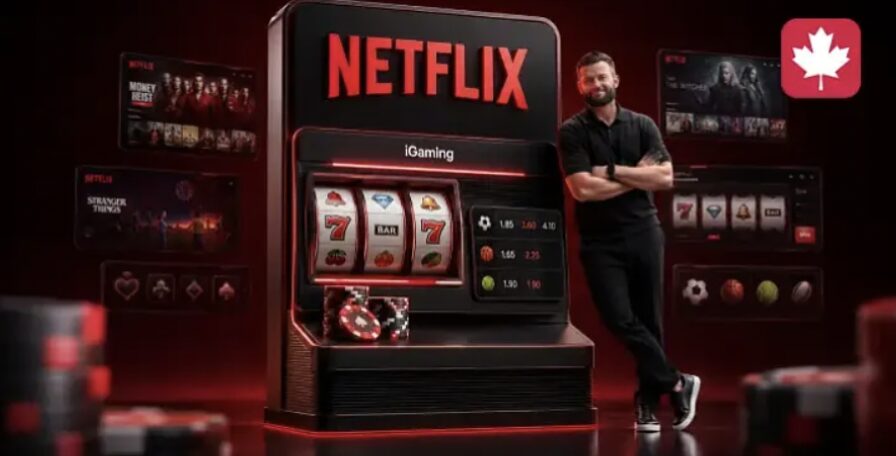
Netflix has never done this before. Not once in the years since it launched its ad-supported tier in November 2022 has the streaming company installed someone whose explicit brief is to build commercial relationships with betting and gambling operators. That changed on 24 July 2026, when Ian Hunter joined Netflix’s London office as its first dedicated real-money gaming (RMG) advertising hire.
The appointment is quiet, as these things tend to be. No press release. No formal company announcement. Hunter posted on LinkedIn, and the industry noticed. The implications of this hire are not as straightforward as they may seem, however, considering that Netflix is also a subscription-based company making more than $42 billion in subscription-based revenue, a company whose founder once said that ads would distract the company from its goals, and also a platform that is actively seeking out a heavily regulated advertiser base in Europe.
Who Is Ian Hunter, and Why Does His Background Matter?
Hunter’s arrival at Netflix was not through the usual way of media sales. He has been at Snap Inc. for over eight years where he has gained experience in account management, partnerships, and sales management and created commercial relationships within consumer categories. This kind of experience is quite useful for the company as it is building its advertiser infrastructure, but it is the experience of Hunter from earlier on that makes this hire special.
During the period of 2017 to 2019, Hunter held the position of Global Digital Marketing Manager at The Stars Group where he was responsible for digital marketing of the largest poker and betting site in the world until it merged with Flutter Entertainment in 2020. This kind of experience of working in gambling and tech platform sales is what Netflix wanted in its employees.
Announcing the move on LinkedIn, Hunter said: “From my first conversation with the team here at Netflix, I was instantly engaged by the opportunity to join such an exciting business. With the growth of live events, award-winning content and a massively engaged audience, there is huge ambition across the team.”
What This Hire Actually Signals?
The presence of a dedicated RMG advertising specialist does not mean betting ads are running on Netflix today. When Netflix launched its ad-supported plan in November 2022, gambling, cryptocurrency, and political campaign advertising were all excluded categories. That restriction has not formally changed. But building the infrastructure to work with regulated gambling brands requires relationships, compliance frameworks, and category-specific expertise long before a single spot airs. Hunter’s appointment is precisely that groundwork.
It also reflects something about where Netflix’s co-CEOs Ted Sarandos and Greg Peters see the business going. The streaming giant had over $1.5 billion in its advertising revenue in 2025, which saw an increase of more than 2.5 times year-on-year. Netflix’s target for 2026 regarding advertising revenue stands around twice that amount at $3 billion. The gambling industry, which entails high customer acquisition costs and a huge interest in premium and engaged audiences, constitutes such an exact example of a category that can have an impact on those figures under the proper regulatory framework.
For the 2025 fiscal year, the streaming company reported total revenues of $45.18 billion, with memberships constituting the vast majority thereof. The $1.5 billion in advertising revenue comprised about 3.3% of the total revenue for Netflix.
The Live Sports Engine Behind the Advertiser Pitch
Netflix’s pitch to gambling advertisers is not built on drama or comedy content. It is built on live sport. Betting operators pay premium rates for live audiences, and Netflix has spent the past two years acquiring exactly those eyeballs.
The company already holds rights to Christmas Day NFL games in the United States. However, in December 2024, FIFA and Netflix made an agreement in which Netflix gained exclusive broadcast rights for the 2027 and 2031 FIFA Women’s World Cups in the United States for the first time when a Women’s World Cup went exclusively to a streaming service. Another contract was made by Canada in August 2025. Netflix also holds a partnership with Major League Baseball, further embedding the platform into live sports calendars.
Live sports content is the single most effective advertising environment for sportsbooks and betting operators; viewing happens in real time, audiences are engaged, and the proximity between content and commercial message is obvious. A platform capable of delivering the FIFA Women’s World Cup, Christmas Day NFL, and MLB programming to 325 million subscribers globally is difficult for any serious betting advertiser to ignore.
A Hire Timed Against a Regulatory Headwind
The timing is not straightforwardly convenient. Hunter arrives as European regulators significantly step up their regulation of gambling advertising via digital channels, introducing another dimension that needs to be managed prudently by any digital platform venturing into this field.
The EU’s Digital Services Act, applicable to large platforms since 2024, demands that large providers of digital services establish mechanisms for gambling content promotion, to restrict targeting of vulnerable groups, and to ensure that any illegal gambling operators cannot use their advertising capabilities. In December 2025, the first violation fine under the DSA was imposed by the European Commission; the fine in the amount of €120 million was levied on X (former Twitter) for failing to comply with transparency requirements concerning blue checkmarks and research access. X is contesting the fine at the General Court of the European Union.
That enforcement action is exactly the kind of precedent that should make any platform considering gambling advertising think carefully. Netflix operating in 190 countries, with particularly large subscriber bases across EU member states, faces real compliance exposure if it moves into gambling promotion without the right infrastructure. Hunter’s background at The Stars Group, a company that itself operated across multiple regulated markets simultaneously, is relevant here precisely because those regulatory environments demand more than standard commercial salesmanship.
The Subscription Business That Advertising Must Not Break
There is a tension at the centre of all of this. The Drum published an analysis in July 2026 noting that Netflix’s ad revenue, even if it reaches $3 billion this year, represents only around 6% of its projected 2026 revenue of $50.7 to $51.7 billion. Subscriptions are still the engine. Netflix’s 325 million paying members, its 9.0% share of US TV viewing time in December 2025, and its content investment of $18 billion in 2025 are all subscription-side assets.
The risk, pointed to by marketing commentators, is that the push toward advertising, live sports, and now gambling ad partnerships stretches the brand proposition that made Netflix dominant in the first place. Reed Hastings famously opposed advertising. Marc Randolph, Netflix’s co-founder, argued ads would undermine customer focus. Both positions have since been abandoned.
What Hunter’s appointment represents, read carefully, is not simply a sales hire. It is a statement that Netflix considers regulated gambling operators a serious, investable advertiser category. Getting that right, in a European regulatory environment that has already produced nine-figure DSA fines, requires the precise combination of gambling industry experience and platform commercial expertise that Hunter brings.
Expert Analysis
Netflix is not building gambling advertising for the money it generates today; it is building the category infrastructure for where advertising revenue needs to go in 2027 and beyond. Gambling operators are among the few advertiser segments that can both afford and justify premium CPMs at scale, particularly around live sports inventory. The challenge for Netflix is not commercial appetite, it is regulatory sequencing. Each European market will require a separate compliance framework, and the failure of X under the DSA has given every major platform a very clear signal about the consequences of moving without that framework in place. Hunter’s appointment, combining platform advertising expertise with hands-on regulated gambling experience, is not incidental to that challenge. It is the answer to it.
Explore more:
 Share
Share


 179 views