




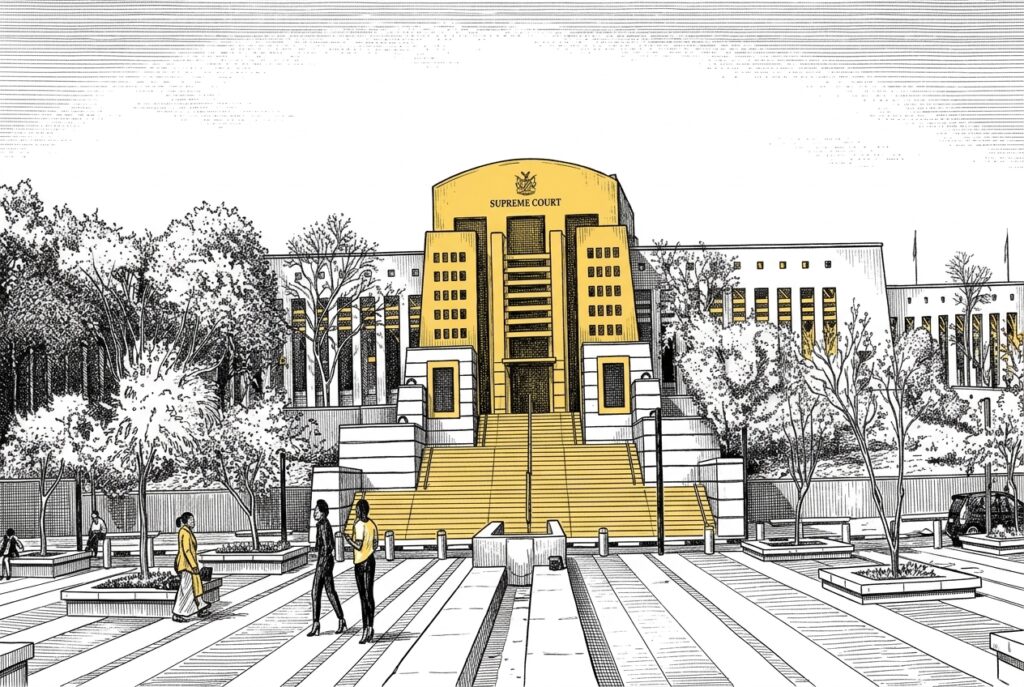
Namibia’s Supreme Court has ruled that licensed gambling operators are liable for a 10% levy on net gambling income from 1 December 2021. Judges rejected the argument that an earlier government settlement exempted operators from a charge imposed under the Gaming and Entertainment Control Act (GECA) of 2018.
Delivered on 19 November, the judgment concerned a dispute involving the Gambling House Association of Namibia and Irmgard Fourty CC. It confirmed liability for the company and the individual licence holders identified in the proceedings, while leaving the amounts owed by each operator undetermined.
Government’s 2020 Settlement Could Not Override Parliament’s Levy Requirements
Licensed operators reached a settlement with then Environment Minister Pohamba Shifeta in June 2020 after raising concerns about the growth of illegal gambling. Under that agreement, the government undertook to withhold levies on registered gambling houses until illegal establishments had been legalised or closed. The settlement became a High Court order.
Operators argued that the undertaking continued after GECA replaced the Casinos and Gaming Houses Act of 1994. In their view, licensed businesses should remain exempt while unlicensed rivals operated without equivalent obligations. The Supreme Court held that the ministerial commitment could not displace the levy Parliament imposed under Section 62 when GECA took effect.
Licence Holders Must Calculate And Pay The Levy Each Month
Regulation 29 sets the levy at 10% of monthly gambling income after deducting player winnings from gross gambling income. Licensed operators must submit accounts showing their gambling revenue and payouts and pay the Gambling Board within 21 days of each month’s end.
Judges removed the association from the list of liable parties because it did not hold a gambling licence. They also set aside the earlier requirement to pay on presentation of invoices and overturned the interest claims. Each party will bear its own legal costs after the Supreme Court set aside the previous costs orders.
Judges Question Long-Running Failure To Act Against Unlicensed Gambling
The association reported a ratio of 10 illegal machines for every licensed machine. It argued that unlicensed businesses operated outside the rules while avoiding levies, licence fees, VAT and income tax.
Appeal Judge Esi Schimming-Chase criticised the authorities’ prolonged failure to enforce gambling law against illegal operators, describing it as detrimental to the rule of law. The Supreme Court directed its registrar to notify the Inspector-General of the Namibian Police Force of the judgment.
The ruling leaves licensed operators with a clear obligation and an unresolved accounting exercise. Monthly revenue and payout records will matter when determining what each licence holder owes from December 2021. Meanwhile, the court’s decision to notify police draws attention to the enforcement disparity that prompted the original settlement.
 Share


 5 views