





Key Points
- Completion of the sale of MGM Northfield Park’s operations to Clairvest Group for $546 million by MGM Resorts International. Despite the facility earning $142 million in EBITDAR during 2025, MGM exited from one of its non-strategic regional facilities.
- By selling, MGM generates around $420 million in net proceeds and reduces its yearly rent bill by $53 million under a new lease agreement with VICI Properties.
- This is yet another step taken by MGM to consolidate its strategy of creating growth around premium facilities while Clairvest adds its 17th gaming facility to its portfolio.
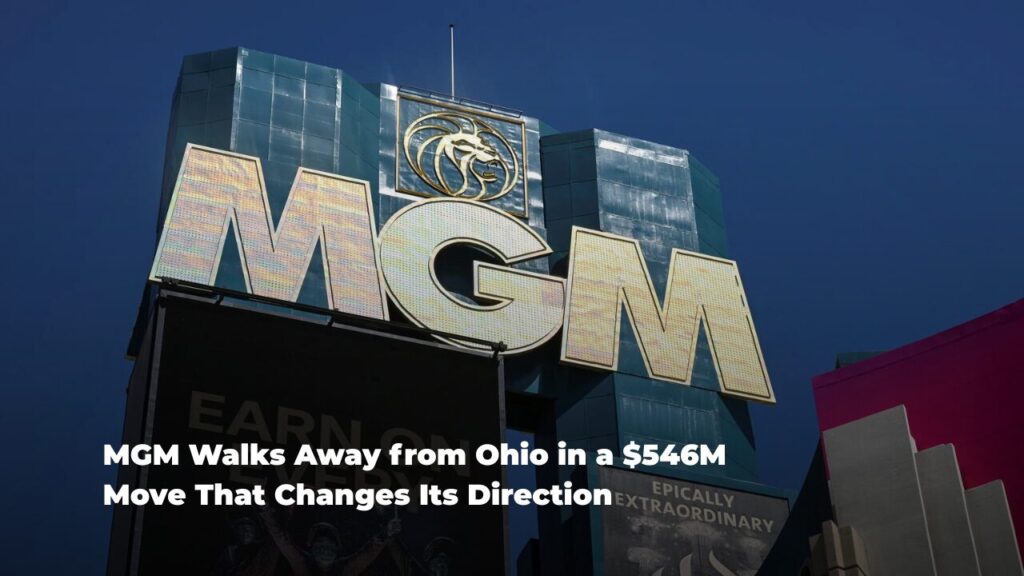
MGM Resorts International has wrapped up the $546 million sale of MGM Northfield Park’s operations to Clairvest Group. The property brought in $142 million in EBITDAR in 2025, and MGM still walked away from it. On April 21, the deal closed and put around $420 million in net proceeds back into MGM’s hands after costs. The reworked lease with VICI Properties removes $53 million from annual rent, and that shift carries more consequence than the figure suggests at first glance. Nothing about this transaction points to pressure it points to a company that has already decided its next move.
A Profitable Exit That Points to Where MGM Really Wants to Be
People often think a company only sells what it struggles with. MGM just proved that wrong. MGM Northfield Park produced around $142 million in adjusted EBITDAR for the year ended December 31, 2025, and the company still walked away from it. That kind of decision does not come from weakness it comes from a clear picture of what matters next.
MGM did not place this property inside its “premium portfolio,” and that label carried weight. Once the company drew that line, the asset sat on the wrong side of it. The $546 million cash deal hands operational control of the Ohio-based racino to private equity funds that Clairvest Group manages. Nothing about this deal feels rushed or forced.
Bill Hornbuckle, president and CEO of MGM Resorts International, said, “MGM Northfield Park is a market-leading property supported by a talented team that has consistently delivered outstanding guest experiences. The property has a strong foundation. We extend our best wishes to the team and new ownership for continued success.”
He said it with care. But between those words sits a reality that the industry already understands performance alone does not save a property from a strategy reset.
What Clairvest Actually Bought with That $546 Million?
The scale of MGM Northfield Park explains why Clairvest moved on to it. The venue runs as a regional racino with 74,000 square feet of gaming space that keeps traffic moving. Around 1,600 video lottery terminals sit inside, and a half-mile standardbred harness racetrack runs alongside them. Ten food and beverage outlets serve the crowd, and an entertainment space holds 1,820 seats.
That combination of gaming, racing, and live entertainment builds a revenue base that does not depend on one stream alone. It holds, but it does not scale the way a destination resort does. Clairvest now runs a fully operational, cash-generating property. Whether the brand name stays or changes, that question belongs to new ownership now.
How the Numbers Actually Work in This Deal?
The $546 million figure grabs attention first. But the real story sits in what follows. After taxes and transaction costs, MGM nets around $420 million, and the company already has a plan for where that money goes: balance sheet strength, growth initiatives, and returns to shareholders.
MGM also renegotiated its master lease with VICI Properties, removing Northfield Park from the agreement. That cuts annual rent by around $53 million. Lower fixed costs mean steadier cash flow, and a leaner structure gives the company room to move faster. MGM trades a stable but moderate earner for cash and fewer obligations, and that trade makes sense when the next chapter demands capital.
Jonathan Halkyard, chief financial officer of MGM, noted, “The closing of this transaction underscores the value of MGM’s high-quality operations. It provides an opportunity to divest a non-strategic regional asset at a significantly higher multiple than currently ascribed to our premium portfolio.”
The market, in his view, has not fully priced what MGM’s core holdings have been worth. This sale gives a data point that argues otherwise.
Clairvest Keeps Building Its Gaming Book
For Clairvest, this deal follows a pattern it knows well. Northfield Park becomes its 17th investment in the gaming sector. Its existing holdings include Wyoming Downs, Delaware Park racino, New Meadowlands Racetrack in New Jersey, Nash Casino in New Hampshire, and video gaming terminal operator Accel Entertainment in Illinois. Each of those sits in the same category stable, revenue-generating, and market-established.
Northfield Park fits that template without friction. Predictable income and a firm market position make it the kind of asset private equity holds for long-term value, not quick flips.
Capital Is Moving and MGM’s Next Moves Show Where
The timing of this sale did not land by accident. On the same day MGM announced the Northfield Park deal, plans for a 21,212-seat “Diamond Arena” on the Las Vegas Strip came to light, built around the possibility of landing an NBA expansion team. Those two announcements, side by side, say everything.
Regional gaming generates revenue. Destination entertainment builds empires. MGM made its choice visible, and it chose scale, brand power, and a seat at a much larger table.
What This Deal Tells the Rest of the Industry?
This transaction does not end at the Ohio border. It signals a shift in how major operators think about portfolio construction across the sector. Properties that do not build brand strength or open global doors may get monetised even when they perform well. That shift changes how companies measure value.
MGM’s $53 million annual rent reduction shows how companies reshape cost structures while they trim their portfolios. Lower fixed obligations, combined with fresh liquidity, create space for the next investment cycle. Across the industry, a split is becoming clear. Large operators move toward premium, experience-led destinations. Private equity steps in to absorb regional assets that still generate cash.
Both sides gain something. Private equity gets stable cash flow. Major operators unlock capital for expansion, technology, and shareholder returns. But risks exist on both ends. Regional properties under cost-focused ownership may slow their rate of change. Premium-focused operators carry more exposure when economic conditions shift and capital demands rise.
Mid-tier regional operators without scale or strong differentiation face the hardest road ahead. Investors who need yield and operators with strong flagship assets stand in a better position. The next wave of similar divestments looks probable. What comes after depends entirely on where that $420 million lands in international markets, digital gaming, or large-scale entertainment infrastructure. The sale itself does not define the outcome. What MGM builds with that capital does.
Explore more:
 Share
Share


 309 views