

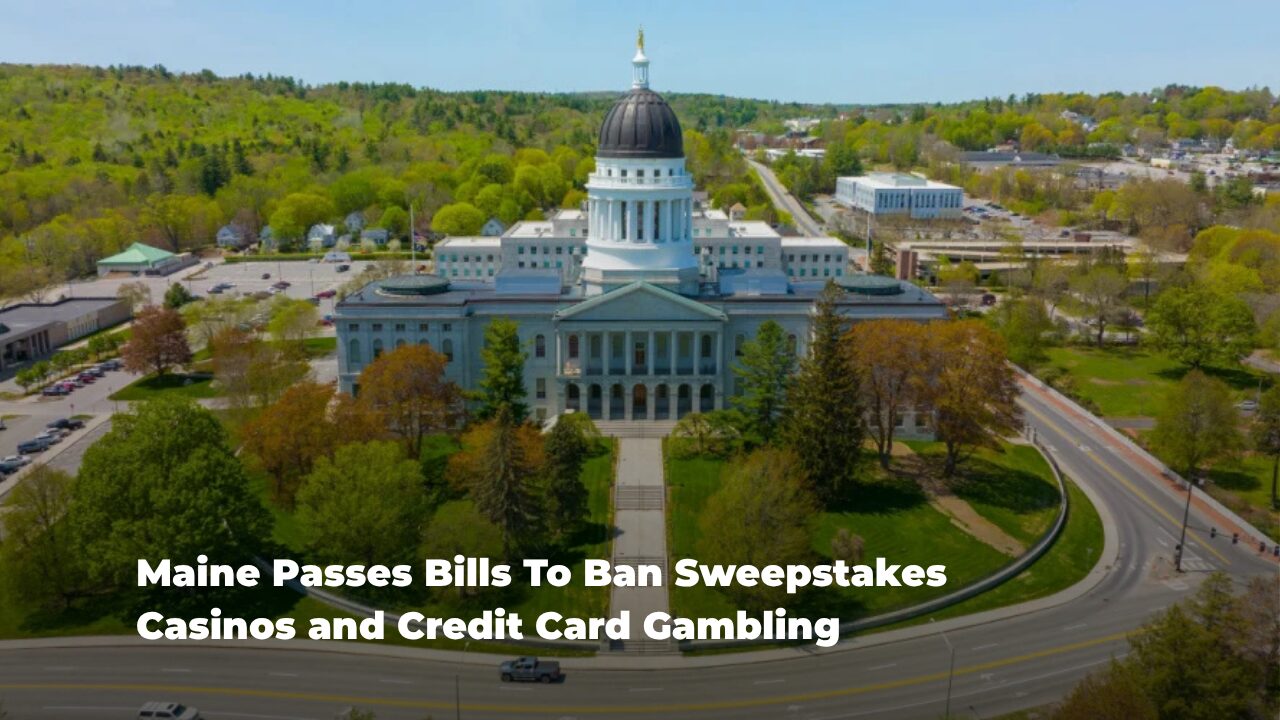
Maine Governor Janet Mills has approved a series of gambling bills prior to the 15 April 2026 legislative deadline, tightening controls across the state’s gaming market. Lawmakers had already passed the measures earlier in the month, pointing to clear political backing for stronger oversight.
The changes target areas regulators consider vulnerable to abuse, including sweepstakes-style platforms, gambling with credit cards, and bulk purchases of lottery tickets.
One of the most significant updates is the classification of sweepstakes platforms as unlawful gambling. The definition captures casino-style games operating with dual currencies redeemable for cash or prizes.
Sweepstakes platforms moved out of grey area
Under LD 2007, sweepstakes casinos are now formally treated as illegal gambling operations. The move removes the ambiguity that previously allowed such platforms to function in a regulatory grey zone.
State officials had raised concerns about unlicensed activity, estimating that around 60 operators were active within Maine. The new law gives authorities the power to act, with penalties including fines of up to $100,000 and potential licence bans.
The decision reflects a shift among US states to address sweepstakes models that mimic casino gameplay while avoiding traditional licensing requirements.
Credit card gambling and lottery bulk buying face limits
Lawmakers have also introduced LD 2080, which bans the use of credit cards for online gambling. The policy is based on concerns that credit-funded betting increases financial risk by allowing players to stake money they do not have.
The bill was initially focused on sports betting but was expanded to include all forms of online gambling. This places Maine alongside states such as Massachusetts, Tennessee, Vermont and Illinois in restricting credit card use across digital betting platforms.
Lottery regulation has also tightened. Under LD 2095, individuals or groups are now capped at $25,000 in lottery ticket purchases. The rule applies across multiple transactions and locations, targeting coordinated buying schemes to accumulate large volumes of tickets.
Officials argue that such practices undermine the fairness of the lottery system. By limiting bulk purchases, the state aims to preserve equal access and maintain public trust in lotteries.
Expansion of tribal iGaming adds complexity to market
While restrictions have increased in several areas, Maine has also expanded online gambling through tribal control. Earlier this year, the state granted the Wabanaki Nations exclusive rights to operate iGaming platforms.
Supporters view the move as an economic opportunity, pointing to potential gains in revenue, employment and community development. This model gives tribal operators a central role in shaping the state’s online gambling landscape.
The decision has not gone unchallenged. Commercial casino operators have taken legal action, arguing that exclusive rights for tribal entities distort competition. These disputes remain unresolved and could influence how the market evolves.
Further updates on regulatory developments will be available in the Regulation Section.
Explore more:
 Share
Share


 53 views









 Analysis
  Business
  Companies
  Crime
Crime  Finance
  M&A
M&A  Prediction Markets
  Regulation
  Reports