

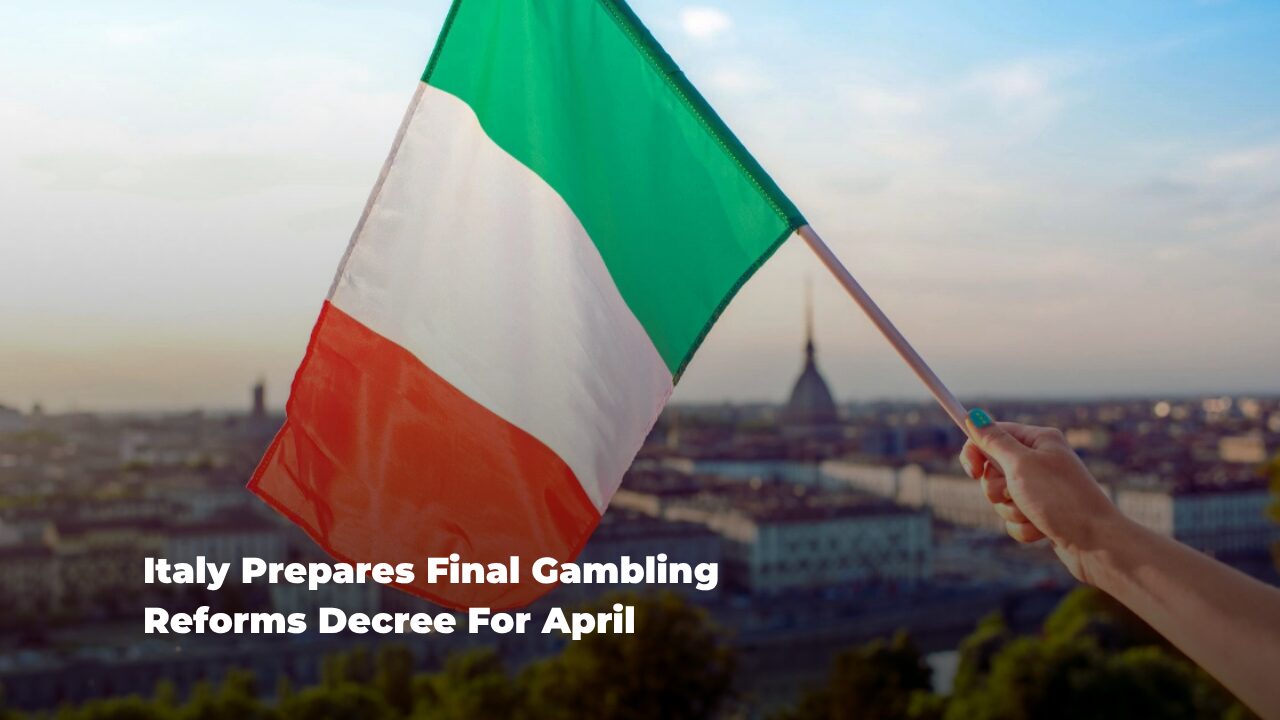
Italy is set to publish the final version of its legislative decree on land-based gambling reform by 10 April. The draft is currently under review by the Unified Conference, representing the nation’s 20 regions and 100 municipal authorities.
The reform process started in 2023 with a focus on digital gambling, leading to a new licensing framework introduced in November 2025. Policymakers have now shifted attention to physical venues, which require stricter regulations and updated concession structures.
Venue restrictions and compliance rules tightened nationwide
The decree introduces stricter controls on gambling venues. Authorities plan to impose limits on operating hours and reinforce minimum distance rules between gambling locations and “sensitive sites” such as schools, hospitals and public institutions.
The objective is to create a unified national standard while addressing differences that have existed across regions for years. These inconsistencies have allowed operators to navigate local rules unevenly, creating enforcement gaps.
Oversight mechanisms will be improved through tighter anti-money laundering controls under ADM supervision and the creation of a permanent committee to monitor problem gambling.
The framework also introduces certification conditions allowing licensed venues to operate within 100 metres of restricted locations if specific criteria are met.
New licensing structure targets revenue recovery and market control
The reform outlines a revised concession model covering several land-based verticals. Gaming machine licences will carry starting bids of €25 million for packages including 4,000 Amusement with Prizes machines and 900 Video Lottery Terminals.
Retail betting licences will be grouped into bundles of 25, each priced at €60,000, with a base bid of €1.5 million. However, Bingo halls will be offered at starting bids of €350,000 per venue, covering approximately 210 locations.
These measures come at a time when tax revenues from gaming machines declined by €250 million in 2025. Policymakers view the new structure as a way to stabilise revenue while improving control over the sector.
Concerns about the illegal market have also influenced the approach. Estimates place unlicensed gambling activity between €30 billion and €35 billion across retail and online channels. Authorities believe stricter licensing and enforcement can limit this expansion.
Furthermore, a revenue-sharing model will be introduced, allocating €80 million to regional authorities under provisions linked to the 2026 Budget Law.
Market performance highlights shift from retail to online growth
Italy’s legal gambling market has shown contrasting trends between online and land-based segments. Total stakes in online gambling reached €77.85 billion last year, with effective player spending recorded at €3.3 billion.
In 2024, total gambling volume reached €157.4 billion, representing a 42% increase compared to 2019. Online activity accounted for €92 billion in turnover, with €87 billion returned to players as winnings.
Land-based performance has remained under pressure, with only selected categories growing since 2019. Lotto and lotteries increased by 18%, sports games rose by 33%, and bingo posted a modest 1% gain.
Forecasts indicate continued expansion in online gambling over the next decade. Market Research Future reports suggest that the market could grow from about $3.1 billion in 2025 to $8 billion by 2035.
The government is working against a fixed timeline, with the fiscal delegation law set to expire on 29 August. Finalising the decree before this deadline would allow Italy to avoid further extensions on existing concessions for gaming machines, betting and bingo, which are due to expire on 31 December.
Despite political challenges, the Meloni administration is committed to completing these reforms by 2026. Further updates on regulatory developments will be available in the Regulation Section.
Explore more:
 Share
Share


 66 views









 Analysis
  Business
  Companies
  Crime
Crime  Finance
  M&A
M&A  Prediction Markets
  Regulation
  Reports