






Key Points
- Finland’s channelisation rate fell from roughly 90% to approximately 50% over the past decade, with a 2023 Ministry of the Interior study estimating €500m to €550m draining annually to offshore operators.
- Parliament approved the new Gambling Act in December 2025 with 158 votes to 9, opening online betting and casino games to licensed competition from 1 July 2027.
- Fifty operators had applied for licences by 8 June 2026, but industry experts warn that the affiliate marketing ban could actively push players towards offshore platforms rather than pulling them into the regulated market.
The Verdict That Needs Proving
National Coalition Party MP Sinuhe Wallinheimo has seen what happens when a gambling system stops working. He watched Finnish players quietly move their money to offshore platforms while the state-owned monopoly stood legally intact but practically irrelevant online. So when he told SiGMA News in Malta that the country’s upcoming licensing reform is “a win-win situation for everybody,” the confidence behind that claim came from somewhere real. The question is whether the data, the structure, and the market will agree.
Finland will abolish its gambling monopoly in large measure, allowing online casino games and sports gambling to be offered by private licensees from 1 July 2027. Veikkaus, the monopoly provider run by the state, continues to have exclusive rights to lotteries, scratch cards, land-based casinos, and physical slot machines. The application process for licenses has already begun at the Finnish National Police Board as of 1 March 2026, and 50 licensees have made their applications by 8 June. Whether this process is successful and whether Finnish gamblers use the licenses is what Wallinheimo himself has pinpointed as the key. “First of all, we need the channelling rate to be high.”
A Decade of Slow Collapse
The urgency behind this reform did not arrive suddenly. Finland’s channelisation rate, meaning the share of gambling that occurs through supervised domestic services, fell from roughly 90% a decade ago to approximately 50% by the time parliament voted on the new law. That collapse happened while Veikkaus technically held a monopoly. Finnish players did not need anyone’s permission to look elsewhere. They found offshore platforms with faster withdrawals, broader game selections, and no registration queues, and they moved.
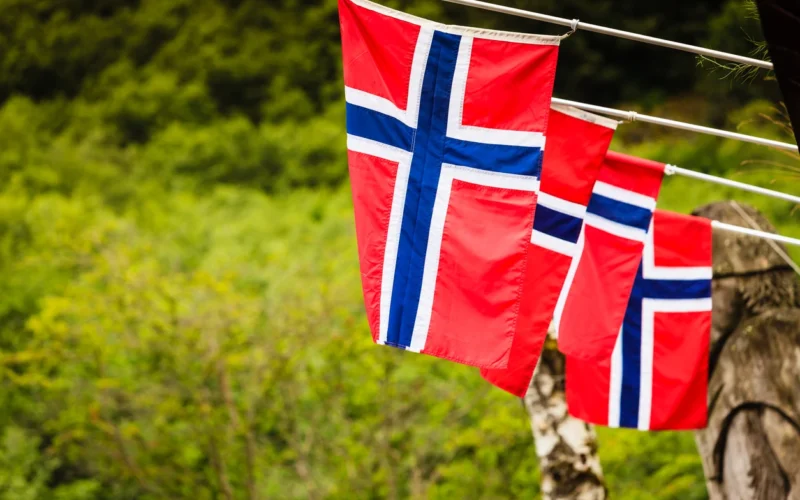
The financial scale of that shift is stark. A 2023 Ministry of the Interior study put offshore gambling expenditure at €500m to €550m per year, equating to roughly half of Finland’s total online gambling market. A comparison with Sweden, Denmark, the Netherlands, France, and Norway found that countries with licensing systems had significantly improved channelisation rates. Norway, which stayed with its monopoly model, kept fighting a losing battle with offshore providers. Finland, facing the same trajectory, chose a different path.
Veikkaus’ own gross gaming revenue collapsed from €1.8 billion in 2017 to €931 million in 2025 as players migrated to EEA-licensed operators. The company’s market share sat at 51% going into 2026, with only 36% of Finland’s total digital gambling market in its hands. Wallinheimo put the logic plainly: “Digitalisation has broken up the Finnish system, and people saw that they had an opportunity to play somewhere else, so they did. That’s why we need a new kind of licensing law.”
What Reform Opens and What It Does Not?
It is noteworthy that this legislation does not ban Veikkaus completely. Slot machines, lottery, scratch cards, and land casinos stay state-monopolised. Online casinos, sports betting, online slots, and cash bingo become open to competition starting from 1 July 2027. The Licensing and Supervision Authority will take control of the gambling industry from the National Police Board from this date. It will be empowered to grant licenses, regulate advertising, and fight unlicensed foreign operators.
This piece of legislation was approved by Parliament in December 2025 on a vote of 158 to 9 (this figure exceeds 94%). The Gambling Act received the President’s signature on 16 January 2026. Licensees have to pay a 22% flat-rate tax on GGR. The cost of annual supervision depends on the licensee’s annual GGR – from €4,000 (under €100,000 in annual GGR) to €434,000 (over €50 million in annual GGR).

Veikkaus Is Not Waiting Around
Rather than resist a reform that ends its online dominance, Veikkaus has welcomed it. Deputy CEO Velipekka Nummikoski stated publicly: “We have been waiting for a model that improves the possibilities of channelling gambling into a licensed offering.” CEO Olli Sarekoski called the shift “a historic change for Veikkaus and at the same time a major opportunity.”
The company’s 2025 annual report recorded sales revenue of €936.3 million, with 61% of gross gaming revenue coming from digital channels and a registered customer base of close to 2.7 million at year-end. That customer base gives Veikkaus a scale advantage that most incoming operators will not quickly replicate. Sarekoski noted that the decline in GGR was halted in the second half of 2025, with the Betting and iCasino segment turning to growth, positioning the company for the multi-licence market ahead.
The Problem Nobody Wants to Talk About
Here is where the “win-win” framing gets complicated. Finland’s new law bans affiliate marketing outright, prohibits influencer promotions, and restricts social media use to operators’ own accounts on a non-interactive basis. These are some of the tightest digital marketing rules in Europe.
Jari Vähänen, Co-Founder at The Finnish Gambling Consultants, warned that affiliate platforms will not disappear after the market opens; they will continue directing Finnish traffic toward EEA-licensed operators, only without domestic licensees able to compete for those referrals. His concern is direct: “If legal operators cannot compete where people actually discover brands, channelisation will drop, and all the negative effects will follow.”
Jaakko Soininen, Managing Director at Finnplay, a platform supplier with direct involvement in Finland’s market preparations, framed the problem from an operator angle. “Channelisation is not only about blocking the offshore market; it is also about making the licensed market the better choice through experience and player education,” he told SiGMA News. “If the licensed product feels significantly slower or more difficult than offshore alternatives, that becomes a channelisation risk.”
Research shows that 78% of Finnish gamblers now rank withdrawal speed as their top priority, reflecting years of frustration with Veikkaus, which required full registration and processed withdrawals over three to five days. Offshore Pay N Play platforms solved that problem years ago. Licensed operators entering Finland in 2027 must solve it too, while carrying compliance obligations their offshore rivals ignore completely.
Finland is targeting a channelisation rate of 80% to 90%, modelled on Sweden’s 2019 market liberalisation. Sweden, however, allowed affiliate marketing at launch. Denmark did too. Finland is attempting to reach the same destination through a narrower road.
Expert Analysis
The politics behind the Finnish reform are clear, and the legislative process has proven to be effective. There is no problem with a reform that has received a 158-to-9 vote in parliament and generated fifty license applications in three months. What “win-win” misses is a particular structural conflict: the reform is expected to help licensed operators regain players from offshore providers through a limitation of digital means that Finnish gamblers use to find online gambling offers. The affiliate sites are not going to disappear when July 2027 comes – they will continue to appear in Finnish search results and refer Finnish gamblers to operators from the European Economic Area with no compliance obligations imposed by Finland. It is possible to go from fifty per cent of channelisation to eighty per cent, but to achieve it, it needs to become easier, clearer, and more attractive to play at the licensed site than what Finnish players already do.
Explore more:
 Share
Share


 201 views