Key Points
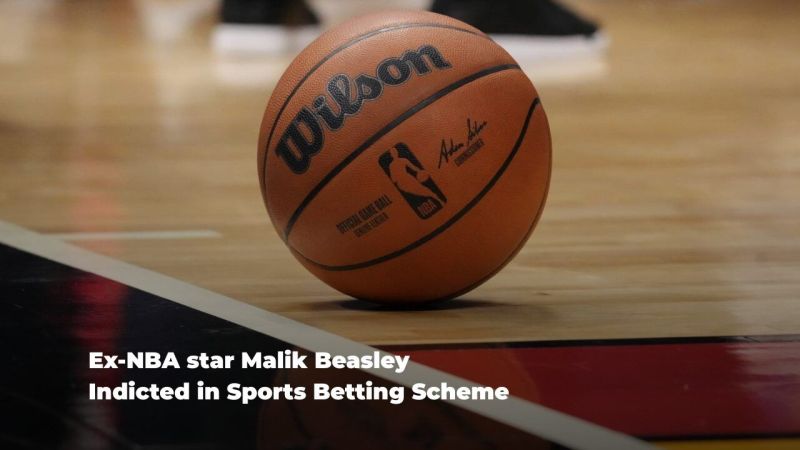
- Malik Beasley and Ed Davis, who played professional basketball in the National Basketball Association (NBA), have been charged with multiple crimes, including bribery of sporting events and money laundering conspiracy among others on 29 June 2026.
- It is claimed that Beasley tampered with his performance on court in four different matches in the 2023-2024 season while he was part of the Milwaukee Bucks team.
- Both Malik Beasley and Ed Davis, professional basketball players from the National Basketball Association (NBA), have been accused of numerous offenses, such as bribing sporting contests and conspiracy to launder money and many others, on 29 June 2026.
- It is alleged that Beasley manipulated his play on the court in four games during the 2023-2024 season when he played for the Milwaukee Bucks team.
- This has happened amid the ongoing federal probe into betting that has involved more than fifty people, including the former NBA star and Hall of Famer Chauncey Billups.
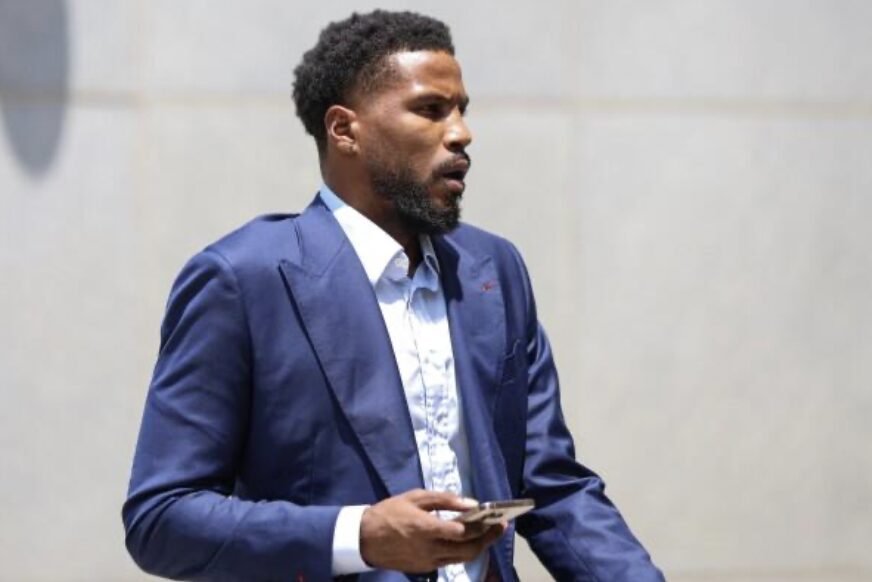
The following names were listed on the indictment, unsealed in Brooklyn on 29th June: Malik Beasley, Ed Davis, William Brown, Robert Gorodetsky, Ernesto Plascencia and professional basketball players’ agent, Paolo Zamorano. Each of these men is charged with conspiracy to commit wire fraud, bribery of participants in sporting events, honest services wire fraud conspiracy and money laundering conspiracy. Several defendants were arrested the same day at locations across the country. Beasley and Zamorano were not in custody as of that Monday morning.
US Attorney Joseph Nocella Jr. put it plainly. “As alleged, the defendants turned professional basketball into a criminal betting operation, bribing then-NBA player Malik Beasley to fix his performance in multiple games in order to place fraudulent wagers, enrich themselves and cheat legitimate sportsbooks,” he said. Schemes of this kind, Nocella continued, “erode the integrity of American sports and victimize the sports-watching public.” No softening. No qualifications beyond the standard “as alleged.”
Beasley’s attorney Steve Haney pushed back on the charges. “Malik maintains his presumption of innocence throughout this two-year investigation,” he said. “We ask that people reserve judgment until all the facts are known.”
What Was Actually Being Fixed: Prop Bets, Not Results
What makes the alleged operation particularly striking is how unremarkable it looks on the surface. Court documents describe Beasley agreeing, in advance of games between December 2023 and April 2024, to underperform and at times overperform relative to his betting statistics, leaving co-conspirators free to wager on outcomes they had already arranged. No game results were fixed. Nobody threw a match. The manipulation was buried inside the minutiae of a box score, a rebound here, a missed line there, numbers that only matter when money rides on them in a prop betting market that has exploded across the United States.
By the time this alleged arrangement took shape, Beasley had already burned through millions in gambling losses despite earning close to $60 million across a nine-year career with six clubs, from 2016 through 2025. His debt to Davis, a former teammate at the Minnesota Timberwolves in the 2020-21 season and a man the other defendants allegedly called Beasley’s “gatekeeper”, gave the scheme its leverage. Fix the numbers, the indictment alleges, and get paid by winning co-conspirators while watching money owed to Davis shrink or disappear altogether.
One text message cited in the court filings captures the spirit of what prosecutors allege was taking place. Davis allegedly texted Beasley a month before the first alleged fixed game: “The only way you can beat Vegas is sports betting. We can make some good money.”
A Meaningless Rebound. A Very Meaningful Bet
Strip away the court filings and the legal architecture, and one moment does more to illustrate the alleged scheme than any paragraph of charges. Before Milwaukee’s game against the Los Angeles Clippers on 10 March 2024, Beasley allegedly told Davis he would try to beat the 3.5-rebound prop line. With one second left and the Bucks ahead by seven points, Beasley drove past four players to collect a missed shot. The result was already decided. That rebound changed nothing. Except it pushed his total to four boards for the evening, an overperformance, and a winning bet.
A co-conspirator’s reaction, preserved in a text message and now reproduced in a federal indictment, said what needed no explanation: “What’s funny is after he got it he had a big sigh of relief.”
This Clippers game was not an isolated case, according to the prosecutors. During a match between the Clippers and the Cleveland Cavaliers on January 26, 2024, Beasley reportedly gave Davis information prior to the game by telling him that he would not have enough rebounds in the game. He ended up having only three rebounds, which was less than 3.5, the number set by several bookmakers. Games against the Charlotte Hornets on 27 February and the Brooklyn Nets on 21 March are also cited. Across all the allegedly influenced games, fraudulent bets placed through multiple operators are said to have reached hundreds of thousands of dollars in total.
Federal Charges Follow the NBA’s Own Investigation
The indictment did not arrive without warning. Federal scrutiny of Beasley has been building for roughly two years, and the NBA has been running its own parallel review. League spokesperson Mike Bass confirmed the NBA was examining the unsealed indictment and would keep cooperating with authorities, adding that the league takes the allegations “with the utmost seriousness.”
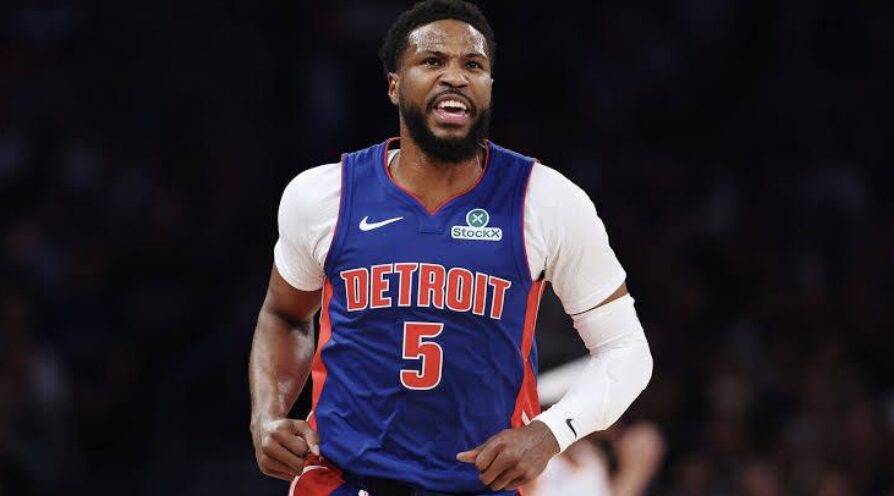
Whatever Beasley’s situation off the court, his last full NBA season was a strong one. He scored 16.3 points per game in 82 games playing for the Detroit Pistons in 2024-25, came in second in the balloting for Sixth Man of the Year, and continues to be one of only five players in NBA history to make over 300 three-point shots in one season. It wasn’t good enough to maintain his reputation. The federal investigation had started at the same time that negotiations for a three-year $42 million contract were underway, but it did not go ahead. Beasley had a brief stint in Puerto Rico in the early part of 2026 and hasn’t come back to play in the NBA.
Financial trouble was nothing new for him. Court proceedings requiring him to pay back $1 million in unpaid money to his agent, eviction from his apartment in Detroit because of unpaid rent, fighting with a barber in Milwaukee, and another conflict with a dentist in Minnesota the troubles were piling up long before the federal charges surfaced.
Davis has been playing professionally for 12 years, largely as a reserve player with different teams, taking in around $48 million in salary during his career that ended in 2022.
Billups, Rozier and a Sweep That Has Already Claimed Dozens
The investigation feeding into this case did not begin with Beasley. More than 30 people have been arrested across the broader federal sweep, among them reputed organised crime figures and a collection of individuals tied to professional basketball at various levels.
The former NBA star Damon Jones who was 49 years old pleaded guilty in April 2026 to the two charges of conspiracy to commit wire fraud involving the schemes on the biggest sportsbooks like DraftKings and FanDuel and also robbing millions from unsuspecting poker players. Damon was charged with giving the inside information he had obtained from the NBA. The prosecutors have now charged him as a co-conspirator in the new indictment of Beasley.
Another notable individual that is caught up in this scandal is Chauncey Billups. This Basketball Hall of Famer faced allegations of being part of a conspiracy scheme of rigging high-profile card games related to La Cosa Nostra organised crime families and defrauding the gamblers by at least $7 million when he was still coaching the Portland Trail Blazers. He pleaded not guilty.
Terry Rozier faced allegations when he was playing for the Miami Heat in 2025. According to his charges, Terry Rozier conspired with his friends to make profits on the wagers placed on his performance during the 2023 Charlotte Hornets game. Terry Rozier has also pleaded not guilty and is going to be tried.
Jontay Porter, a former player for the Toronto Raptors, got a life ban from the NBA in April 2024 due to the fact that the NBA investigation revealed that he provided confidential information to gamblers and reduced his participation in the games for betting. Gilbert Arenas was arrested in July 2025.
There have been talks between the NBA and the National Basketball Players Association concerning the stricter regulation of player prop bets. All charges in the current indictment remain allegations. Every defendant named is presumed innocent unless and until proven guilty in court.
Expert Analysis
The Brooklyn charges mark a shift in the federal investigation’s direction. Peripheral figures and organised crime links were always going to be pursued; charging an NBA-calibre player with deliberately staging his own statistical performance to serve a prop-bet operation is something different. Prop markets have expanded rapidly since sports betting was legalised across most US states, creating the exact conditions this kind of scheme depends on. A rebound line of 3.5 is invisible to the average fan, yet it moves hundreds of thousands of dollars through multiple betting operators. Leagues and regulators have been behind that pace from the start. The indictment unsealed in Brooklyn on 29 June is the clearest sign yet of where the gap between the market and the oversight leads.
 Share
Share


 252 views