
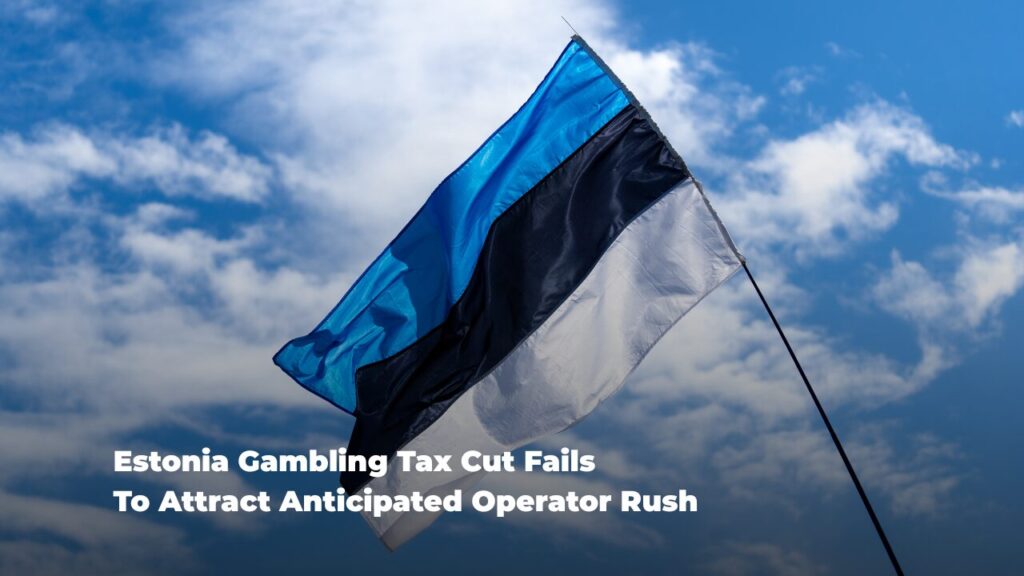
Estonia’s decision to reduce online gambling tax has not produced the wave of new operators policymakers that was expected.
The reform, approved by the Riigikogu last year, was designed to make the country more attractive to international online gambling companies. Under the plan, the tax on online gambling will fall in stages from six per cent to four per cent.
Lawmakers hoped the lower rate would encourage foreign operators to apply for licences and establish regulated operations in Estonia. So far, the early response has been limited. According to Finance Ministry officials, only two licence applications have been submitted, and both remain under review.
Neither applicant is expected to launch before the end of this year or early 2027. A third operator has withdrawn.
Officials Say Licensing Delays Make Early Judgement Difficult
The slow start has raised questions over whether the tax cut is delivering results. Officials and supporters of the reform argue that it is too early to assess the policy properly.
One factor is the length of Estonia’s licensing process. Depending on the application, approval can take between six and ten months.
MP Tanel Tein, one of the reform’s main backers, said operator interest is visible but should be measured over a longer period. He noted that licensing speed and efficiency can influence where gambling companies choose to base operations.
For Estonia, the challenge is offering a lower tax rate while keeping licensing competitive.
Drafting Error Briefly Removed Online Gambling Tax
The rollout was complicated earlier this year by a drafting error in the legislation. The mistake, discovered in January, temporarily removed online gambling taxation altogether and left online casino operators exempt from gambling tax.
Despite the loophole, operators kept making voluntary payments. Authorities collected around €815,000 ($940,000) in January and €1.12 million ($1.29 million) in February.
A remaining shortfall of approximately €220,000 ($254,000) was later covered through a supplementary budget allocation. Lawmakers returned to the legislation in February to correct the issue.
The amendments introduced a single 5.5% tax rate for online casino games and games of skill. This restores the system while keeping gambling tax revenue available.
Finland’s Market Opening Adds Pressure On Estonia
Supporters believe the reforms could strengthen Estonia’s position as a regulated online gambling hub without expanding the country’s land-based casino footprint.
The government is watching Finland, which is preparing to open a regulated gambling market next year. Tein warned that Estonia must remain competitive or risk losing operators to Finland once that market launches.
If companies choose Finland over Estonia, future tax revenues could fall short and weaken the economic case for the reform.
Finance Ministry officials maintain a cautious optimism around the subject. They argue that the true effect of the tax reduction will only become clear once pending licences are approved and operators have had time to assess Estonia as a base.
Estonia reduced its gambling tax last year in hopes of attracting new international operators. However, this has not materialised due to the length of the licensing process. The authorities are closely watching Finland and must adjust to avoid losing operators to them.
Explore more:
 Share
Share


 228 views