Key Points
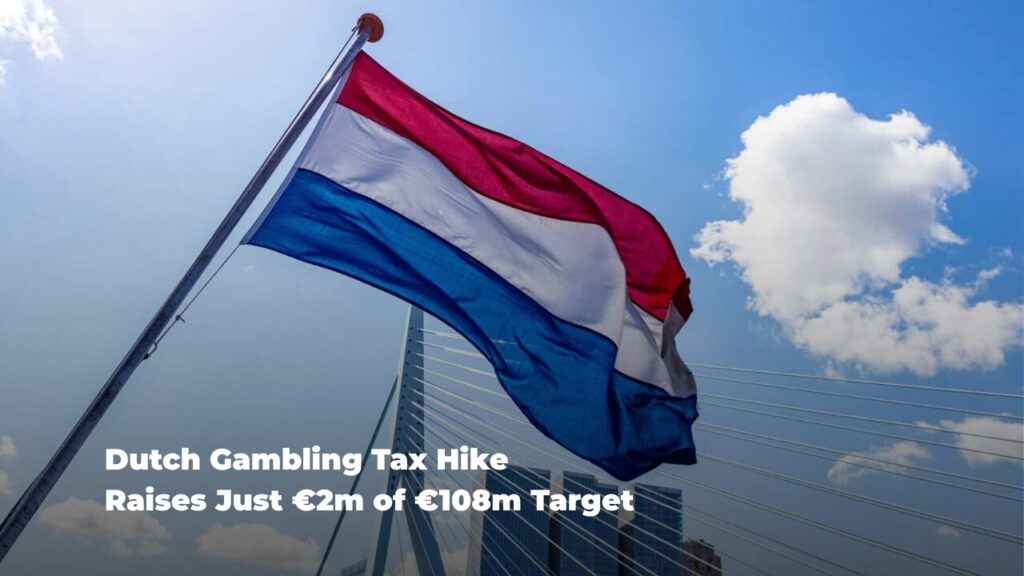
- The Dutch gambling levy went up from 30.5% to 34.2% in January 2025, followed by another increase to 37.8% in January 2026; however, only €2m extra was collected against a target of €108m for 2025.
- A shrinking tax base driven by new player protection rules, deposit limits, and advertising restrictions offset the gains from the higher rate.
- VNLOK, the trade group, claims that the licensed gambling market has shrunk by 18.5% in 2025, but “irreversible damage” will be done if no action is taken until 2027.
The Dutch government had a number. The industry had a warning. The number was wrong. A joint monitoring report between the Ministry of Finance and KSA issued on 23 June 2026 revealed that successive gambling taxes did not raise anywhere near as much money as had been projected, although this was clear from observing the shrinking regulated gambling market.
The report focused on two consecutive yearly increases in the gambling tax. Starting from 30.5% in 2024, the rate increased to 34.2% in January 2025, and to 37.8% in January 2026. The rationale was simple: increased rates will result in more revenue. This was stated in figures, estimating €108 million in additional revenue for 2025, and €216 million for 2026.
The findings were rather distant from such projections. The income generated through the gambling tax in 2025 was €1.036 billion, an increase from €1.034 billion in the preceding year. An increase of €2 million is almost two percent of the projected income. In 2026, the estimated income will be €57 million higher compared to 2024, but even then will fall below the €216 million projection.
A Shrinking Base, Not a Rising Yield
The report’s core argument is not complicated. The Dutch gambling tax is levied on operators’ gross gaming result, which is total stakes minus prizes paid out. Raise the rate on a shrinking number, and the yield does not climb. It stalls. That is precisely what happened.
Several regulatory shifts collided with the tax changes during the same period. Player protection rules that took effect in October 2024 capped monthly net deposits at €300 for younger adults and €700 for those aged 24 and over, with affordability assessments required for anyone seeking to go higher. The intent was harm reduction. The side effect was a direct reduction in the volume of money circulating through licensed operators.
Advertising restrictions compounded the squeeze. Gambling companies lost the right to sponsor television programmes from July 2024 and were barred from sports kit and club sponsorships a year later. Fewer channels to reach new players meant fewer new players. The market’s ability to grow simply evaporated.
The monitor did not shy away from acknowledging that the rate increases may have accelerated the very erosion they were meant to outrun. Profitability fell at some operators, and with it came decisions to exit or cut back. JVH Gaming and Fair Play Casino both pointed to the tax increase as a factor in closing venues, and the number of physical gambling locations across the Netherlands has continued to slide.
Land-Based Sector Takes the Hardest Hit
Nowhere is the damage more legible than in the land-based sector. Gaming centres and Holland Casino’s premises witnessed a decline in attendance, which dropped from 4.6 million in the first quarter of 2025 to 4.1 million in the first quarter of 2026, representing a 11% decline. The gambling sector had been struggling even before taxes were introduced, owing to its recovery challenges and stiff competition from online casinos. The report made special mention of the fact that multiple pressures make it hard to pinpoint one factor behind venue closings.
Online gambling told a different story. Gross gaming revenue in the regulated digital segment held relatively firm, and the number of licensed operators actually grew. The monitor found no clear sign that the tax increases drove a significant contraction online, though advertising curbs and deposit limits reshaped conditions there too.
State Revenues Eroded Further by Operator Losses
The headline tax number already looks bad. The full picture is worse. Holland Casino and Nederlandse Loterij, both connected to state finances, reported lower profitability as the tax burden rose. That decline fed through into smaller corporation tax receipts, reduced dividends, and shrinking contributions to public funds. The monitor’s conclusion was clear: the net gain to public finances was lower than the gambling tax figures alone suggested.
The KSA had already seen this coming. In August 2025, chairman Michel Groothuizen put it plainly: “The revenue from gambling tax has decreased. The measures we have taken to offer players more protection have made it more difficult for providers financially. This has led to a decrease in the gross gaming result for the entire market.” He went further, warning that “a financially healthy legal market is essential” if player protection is to remain more than an aspiration.
Industry: Market at a Dangerous Crossroads
VNLOK was not satisfied with the monitor’s framing. The trade body told NEXT.io the regulated market contracted by 18.5% in 2025, a figure it said the report failed to reflect with appropriate weight. The government’s proposed follow-up, a further evaluation in 2027, drew particular criticism. “The Dutch regulated market is at a dangerous crossroads,” the organisation said. “The combination of high tax pressure, high regulatory burdens and the risk of additional over-regulation will cause irreversible damage.”
The illegal market concern has been building since before the first rate rise took effect. Peter-Paul de Goeij, who set up NOGA (Netherlands Online Gambling Association), summed up his concerns about the future of the sector with these three words at an international conference a few months ago: “Death by taxes.” He referred to government figures that show how only 49% of all income from online gambling in the Netherlands is coming from legal companies.
Betsson CEO Pontus Lindwall, speaking at the same event, stripped it back to basics: “Regulation isn’t for the benefit of operators. It’s for protecting consumers, and failing to protect 50% is a failure.” It is also worth noting that the previous month, Dutch Lottery CEO Arjan Blok had made a similar statement, suggesting that the tax rise could potentially fuel the underground economy while taking funds away from the good cause.
What Comes Next?
More pressure is coming. The government has proposed a blanket ban on gambling advertising, a step beyond what is already in place. Meanwhile, VNLOK has launched legal action against Meta over illegal gambling advertising appearing on Facebook and Instagram, a move that says something about how far unlicensed operators have embedded themselves while the regulated sector shrinks.
The monitor’s language was careful. Its meaning was not. The objective was not achieved. The tax base fell, and the rate increase may have helped cause that fall. A second hike is already in effect, advertising curbs are tightening, and the 2027 review is the only action on the table. The industry is not waiting that long to say the situation has moved past the point where measured evaluation is enough.
Explore more:
 Share
Share


 240 views