





Key Points
- Fertitta Entertainment agreed to acquire Caesars Entertainment in a $17.6bn cash-and-debt deal, offering shareholders $31 per share.
- Caesars adds casinos, sportsbook partnerships, digital betting, and 65 million rewards members to Fertitta’s entertainment and hospitality portfolio.
- The takeover could affect US sports betting regulations, Houston Rockets restrictions, and casino competition in overlapping gaming markets.
For a long stretch, Caesars Entertainment seemed untouchable in the takeover market. Heavy debt, sprawling operations, and its enormous size kept most buyers away. Still, Tilman Fertitta never fully stepped back from the idea. Quiet negotiations continued behind the scenes, and now the gambling industry is staring at one of its biggest deals in years.
This agreement reaches far beyond casino ownership alone. Sports betting regulations, competition between operators, overlapping casino markets, and NBA-linked wagering rules could all change because of this single move. On paper, the transaction looks simple. Inside the gaming industry, though, many see it as a sign of where American gambling may head next.
Caesars Finally Moves Ahead with Fertitta’s Long Chase
Caesars Entertainment spent years looking too difficult to acquire. Debt concerns stayed in focus, while the company’s scale discouraged serious buyers from moving forward. Even so, takeover conversations never truly disappeared. Earlier merger discussions surfaced in 2018, and that long-running pursuit has now become an official agreement.
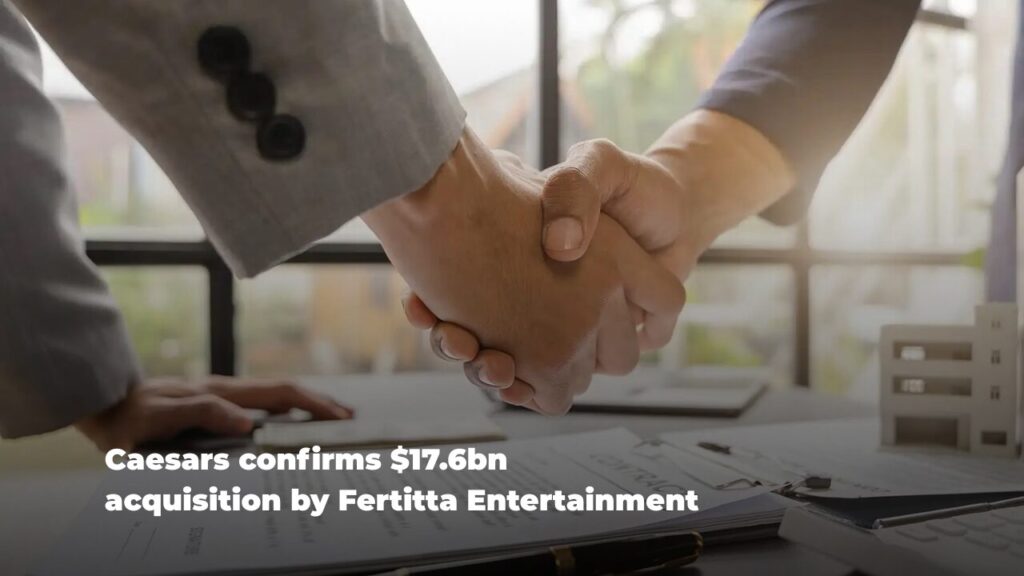
Caesars Entertainment has agreed to a takeover by Fertitta Entertainment in a deal valued at roughly $17.6bn.
Investors reacted fast once the details became public, and the reason was clear from the deal structure itself. Fertitta Entertainment is not simply handing cash to shareholders. The company is also taking on nearly $11.9bn in Caesars’ existing debt, turning the transaction into one of the largest consolidation moves seen in the US casino business in recent years.
Under the terms of the agreement, Caesars shareholders will receive $31.00 in cash for each share. That price sits 49% above Caesars’ February 25 closing value, which marked the final trading session before takeover reports surfaced publicly. The offer also comes in 46% higher than the company’s 30-day volume-weighted average share price.
Deals carrying premiums this high rarely involve ordinary businesses. Caesars controls casino properties across the country, sportsbook access on a national level, a massive customer rewards system, and gambling operations spread across several hospitality segments at once. Only a small number of rivals can match that reach.
A Larger Gambling and Hospitality Giant Starts to Form
This merger stretches well beyond casino floors and betting terminals.
Caesars entered the deal with 60 casino properties, online gaming products, digital betting systems, and sportsbook access through the William Hill brand across more than 200 linked locations. Fertitta Entertainment adds Golden Nugget operations, the Landry’s hospitality network, and over 600 restaurant and entertainment venues to the combined business.
If regulators approve the takeover, brands such as Mastro’s, Morton’s, and Del Frisco’s will join the combined company portfolio. Such a structure is a result of an even larger transformation that is transforming the gambling and hospitality industries in America. Nowadays, casino conglomerates aim for their customers to remain in one environment where dining, hoteling, entertainment, loyalty programs, gambling solutions, and online betting are integrated.
The thinking behind the strategy is simple. Customers who remain inside one connected network often generate greater long-term value for the business. Caesars’ Rewards Programme already holds nearly 65 million members, and protecting that loyalty network appears to sit at the centre of Fertitta’s plans. Those customers represent ongoing engagement rather than one-time casino trips.
Meanwhile, the takeover appears designed to limit disruption inside the company. Caesars chief executive Tom Reeg and company president Anthony Carano are both expected to remain in their current leadership roles after the deal closes.
Fertitta Entertainment stated: “The leadership teams of both companies are all expected to remain in their current roles and continue to lead the combined companies’ operations.”
The company also said: “This continuity reflects our confidence in the leadership teams that have built both companies.”
That approach may become important once integration work begins. Large casino mergers often struggle when leadership changes happen too quickly, creating instability across gambling, hospitality, and digital operations. Keeping Caesars’ current management team in place suggests Fertitta wants control over strategy without tearing apart the company’s existing structure.
Caesars Still Holds Space for Rival Bids
Board approval may already be secured, but the transaction has not reached the finish line yet. The agreement includes a “go-shop” period lasting until July 11, 2026. During that timeframe, Caesars can seek or review competing offers without immediately revealing those discussions publicly unless major developments emerge.
That clause matters even more because another billionaire investor had already examined a possible takeover earlier this year. Reports stated that Carl Icahn presented a separate proposal in March 2026 that valued Caesars shares at $33 each, although the offer depended on due diligence requirements.
Fertitta’s agreement enters the process with a major advantage already secured. Reports indicate that ten banks have committed financing support, while the deal itself contains no financing condition. That structure reduces uncertainty for shareholders because the buyer cannot easily step away later by pointing to funding problems.
The Caesars board formally backed the transaction, stating: “The Board of Directors of Caesars Entertainment has approved the transaction and recommends that Caesars shareholders adopt and approve the merger agreement.”
The acquisition still needs approval from shareholders and regulators before it can close. No official completion date has been announced so far. Once the transaction becomes final, Caesars is expected to leave the NASDAQ exchange.
Sports Betting Rules May Enter a Complicated Phase
Some of the biggest effects from this takeover may appear inside the sports betting industry rather than casino operations themselves. Tilman Fertitta’s ownership of the Houston Rockets creates a possible regulatory challenge for Caesars Sportsbook. Several US states restrict sportsbooks from accepting wagers involving teams connected to the same ownership group operating betting businesses. If regulators enforce those rules on a wider scale, the merged company could face restrictions on Houston Rockets betting markets starting from the 2026-27 NBA season.
That situation creates an unusual connection between professional sports ownership and sportsbook growth. Timing also plays a major role here because Caesars Sportsbook still sits behind FanDuel and DraftKings after years of heavy spending in online betting. Caesars currently controls around 7% to 8% of the US online sports betting market. During the fourth quarter of last year, its digital division produced a record $85m in adjusted EBITDA, showing stronger profitability even though market share growth remains limited.
That gap is now pushing investors and analysts to study Fertitta’s next decision closely. The discussion no longer focuses on whether Caesars can run a profitable sportsbook business. Instead, attention has moved toward whether Fertitta plans to increase digital investment or reshape the company’s wider betting strategy.
Any major change could affect customer acquisition plans, marketing spending, technology partnerships, and expansion priorities across several states.
Regulators May Push for Property Sales in Major States
Another issue sits beneath the surface of this transaction, and it centres on regional concentration. The companies already run operations within some states, including Nevada, Louisiana, and Mississippi. The regulators may decide that the merger will give the company excessive power over the operation in some markets.
This decision can lead to the sale of some assets by the company. The examination of a potential merger is not always considered with the same excitement as a headline worth a billion dollars, but it often determines the level of influence of the deal. Besides analysing the possibility of financing the merger, regulators take into account the effect of competition after the acquisition.
The clients might experience this influence in the form of prices, sports betting, incentives within casinos, and further development of the operation. Competing firms can also gain some advantages from the sale of some properties due to regulations.
Fertitta Entertainment described the reasoning behind the acquisition this way: “Fertitta Entertainment brings a proven operating model with a track record of successfully integrating and growing leading hospitality and entertainment businesses.”
The company also stated: “Fertitta Entertainment’s agreement to acquire Caesars Entertainment brings together two of the world’s premier hospitality and gaming companies.”
Those comments reflect a wider consolidation trend already moving through the gambling sector. Casino operators increasingly see scale as necessary because modern gaming businesses now depend on linking casinos, digital betting, hospitality, entertainment, and customer loyalty into one connected ecosystem.
Expert Review: Why This Deal Could Shape the Industry’s Future
This acquisition represents far more than one billionaire buying another gambling company. It reflects a wider shift taking place across the US gaming industry.
Traditional casino income alone no longer guarantees long-term strength. Operators now compete through customer loyalty systems, connected betting access, hospitality integration, digital engagement, and cross-property revenue strategies. Caesars already built much of that structure, and Fertitta appears to believe the business can operate with greater efficiency and stronger execution under private ownership.
That shift could place pressure on rival casino and sportsbook companies to pursue acquisitions, expand loyalty programmes, or strengthen hospitality partnerships just to compete with larger integrated platforms. Digital betting operators are watching closely as well. Caesars struggled for years to turn major marketing spending into a dominant sportsbook market share, and Fertitta’s ownership could bring tighter control around spending efficiency, customer targeting, and profitability, areas where investors now demand measurable returns instead of growth alone.
At the same time, the deal could create opportunities for several groups. Regional casino operators may benefit if regulators require property sales. The hospitality providers can access a bigger consumer base while the sports leagues and media partners can enjoy synergy benefits from integrating betting with entertainment assets.
Notably, not all players in the industry are expected to reap the same benefits from the development discussed above. Indeed, firms operating in competing casino markets can be in jeopardy with the development of a loyalty program involving casinos, restaurants, hotels, entertainment facilities, and sportsbook products. Companies unable to respond at the same scale would be disadvantaged in the case of further consolidation within the industry.
In any case, the biggest question mark for the future would continue to be associated with Caesars Sportsbook. Even with substantial investments, the company lags behind both FanDuel and DraftKings. Fertitta now needs to make a choice between spending heavily in hopes of acquiring a bigger share of the market or focusing on profitability.
The future of this company and its choices will undoubtedly have implications far beyond the business environment. Indeed, regulators, investors, sportsbook operators, and casino firms would observe how this acquisition turns out, whether this would be a single mega-merger or just the beginning of something much larger in American gambling and hospitality.
Explore more:
 Share
Share


 317 views