Key points
- Betfred has stated that on 31 July 2026 that 132 shops will close from September 2026, leading to the loss of more than 600 jobs, as well as reducing its total UK stores to about 1,100 stores.
- Remote Gaming Duty almost doubled from 21% to 40% since 1 April 2026, with another increase of 25% in online sports betting duty expected in 2027, alongside increasing National Insurance payments and wages.
- Betfred has been discreetly investigating the possibility of a shift towards Adult Gaming Centres, having recently purchased a small operation of up to seven sites of an AGC, despite criticism from Prime Minister Andy Burnham.

Betfred Lays Off 600 Workers, Closes 132 Stores, and Is Now Eyeing Slot Arcades as Its Next Play
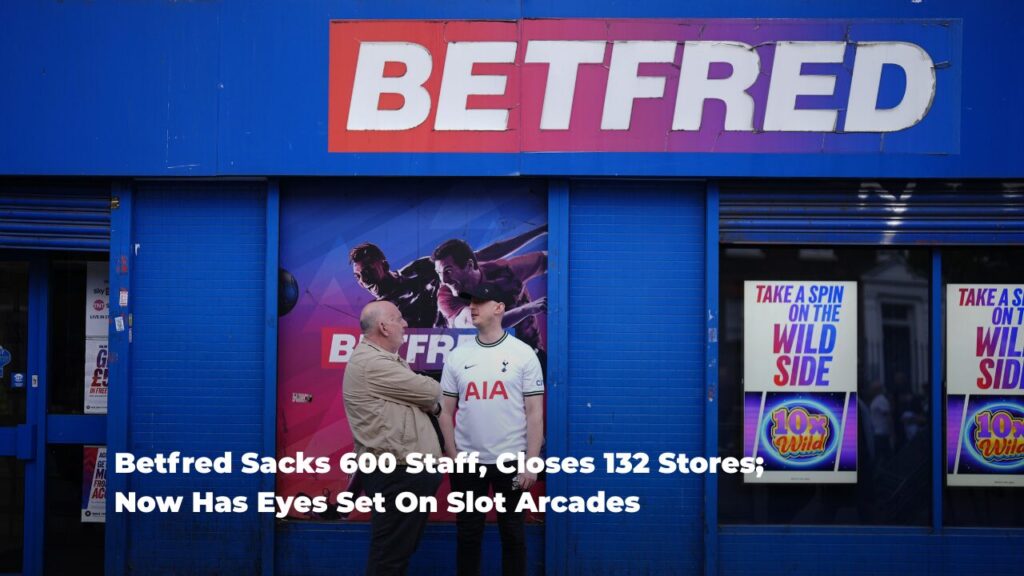
Betfred made it official on 31 July 2026 that it has begun a consultation process for closing down 132 stores and laying off more than 600 workers, from September, leaving the UK with 1,100 outlets in its portfolio. The company has a workforce of about 7,500 employees in all. CEO Joanne Whittaker called the move “with deep regret” and got straight to the point about the factors that forced her into such an unpalatable situation: “We have tried hard to protect all our sites and the colleagues who work in them, but the combination of higher employer national insurance costs, wage inflation, gambling taxes, and general economic uncertainty leaves us no other option.”
There are four different cost drivers, not just one. It is an important difference because most of the discussion about it has treated it as a gambling tax issue only. The latter is an important factor, but not the only one as Whittaker’s own words reveal.
A Tax Structure That Squeezed Both Channels at Once
Remote Gaming Duty rose from 21% to 40% on 1 April 2026, with a new 25% online sports betting duty set to take effect in 2027 covering all sports except horse racing. Over-the-counter betting duty in shops remained at 15%, which sounds like retail was protected. For operators running both a physical network and an online platform simultaneously, the picture is less straightforward. The online cost base expanded sharply, while each individual shop still carried fixed property costs, staffing costs and rising employer National Insurance contributions. Sites that were marginally profitable became unviable, and Gambling Commission licence fees rising by 25% from 1 October 2026 tightened that further.
Mr Fred Done, who formed the company together with his brother Peter way back in 1967, had said in an interview with the BBC in October 2025 that such a tax increase was the biggest threat to the industry in the 57 years he had been in business. In July 2026, when 132 outlets were closed, the size of Done’s portfolio had shrunk from more than 1,650 shops at their height down to about 1,090 outlets – more than one-third less after six years. Done put his reaction, “It’s like killing your own babies.”
The Horseracing Damage the Numbers Reveal
Horse racing was specifically exempted from the duty rises, a concession the sport welcomed. Each physical betting shop contributes approximately £30,000 annually to the sport through media rights and betting levy payments. Shutting 132 of them translates to an estimated £4 million annual loss to the racing industry, a shortfall the exemption was designed to prevent. Protecting racing from the tax itself did not protect it from the knock-on effect of bookmakers closing the shops that fund it.
Every Major Operator Is Retreating
Flutter Entertainment confirmed in October 2025 that Paddy Power would close 57 shops across the UK and Ireland, putting 250 workers at risk. Evoke, which owns William Hill and 888, moved in January 2026 to offset budget changes through its own shop closures and cost cuts. Entain CEO Stella David had warned, before the hikes were confirmed, that tax increases would compel the company “to consider its investment level in the UK” and could lead to “shop closures” across its estate of roughly 2,300 high street betting outlets. Betfred’s closures follow those of Entain, Flutter and Evoke, with the combined job losses across the sector in 2026 already exceeding 500 roles before Betfred’s 600 were added.
Betfred’s AGC Pivot and Its Political Problem
While the closures themselves are confirmed, a separate development reported by NEXT.io adds a strategic dimension competitors have not attempted. Multiple sources told NEXT.io that Betfred is exploring plans to enter the Adult Gaming Centre space, which would make it the only retail betting operator to straddle both verticals. Betfred is understood to have acquired a small AGC operation with up to seven land-based locations to obtain the relevant licences, and is considering converting some closing betting shops into slot arcades subject to a successful licence change, though NEXT.io was unable to independently verify the acquisition.
Adult Gaming Centres operate under a separate licensing and tax framework in the UK. AGCs are not subject to the same betting duty structure that has made bookmaking margins unworkable at the retail level, which gives the format a structural appeal for operators trying to hold onto high street presence. The sector is not without its own pressures, though. Thinktank proposals have called for Machine Game Duty to be doubled to 40% on a “polluter pays” basis, and the political headwinds are direct. Andy Burnham, before taking office as Prime Minister, said: “I’m a very big critic of adult gaming centres, you can see they’re open 24/7 and all the social harms that come from that. Again, councils need stronger control to stop the spread of those things.” A diversification strategy that depends on a format the Prime Minister publicly opposes carries obvious regulatory risk.
The sector is also facing uncertainty over whether Burnham’s government will target only AGCs or include betting shops when it moves on business rates reform. No formal decisions have been announced on either front.
Expert Analysis
The Betfred closures expose a gap in how the UK government modelled the impact of its gambling tax reform. Doubling Remote Gaming Duty while leaving retail duty unchanged was framed as protecting the high street. What it did in practice was create an asymmetric cost structure for operators running both channels, where online revenues were taxed more heavily while retail overheads stayed fixed. Whittaker listed four cost pressures in her statement, not one, and that reflects the reality: margin compression at the shop level came from multiple directions simultaneously. The horseracing funding shortfall is a consequence that appears not to have been factored into the original policy calculation. Betfred’s reported AGC pivot is a rational response to a tax structure that makes bookmaking less viable, but pursuing it under a Prime Minister already on record opposing the format introduces a different category of risk. The company is not simply closing shops; it is navigating a regulatory environment where the rules on both its current business and its potential alternatives are in active flux.
Explore more:
 Share
Share


 237 views