







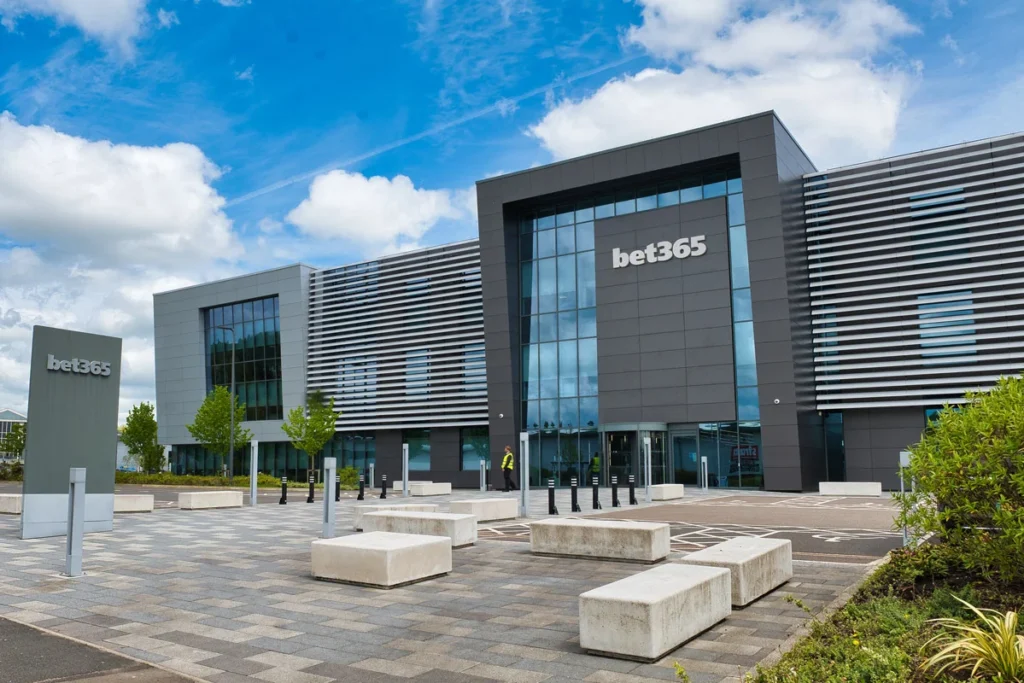
Key Points
- Bet365 is cutting 340 roles, about 3% of its workforce, starting with a voluntary redundancy programme across its European hubs.
- Remote Gaming Duty nearly doubled to 40% in April 2026, with a further sports betting duty rise due in April 2027, both cited by the company alongside competition and regulatory costs.
- According to the IPPR, the 40,000 job loss prediction by the BGC is “seriously flawed,” since the former was based on an aggressive tax plan compared to the latter which actually became law.
Bet365 Confirms 340 Staff Losses at Europe Offices
Bet365 revealed in its press release dated September 8, 2026 that there will be job losses totalling 340 in three offices. 300 staff losses will take place in its head office located in Stoke-on-Trent where there are 5,500 employees in total, while 40 staff losses will be experienced in its offices located in Malta and Gibraltar.
A bet365 spokesperson confirmed the full picture: “As an international business, we continually review and assess our operations to ensure the business’ long-term future. We are currently facing a highly competitive trading environment, plus increased regulatory and tax-related costs. As a result we are restructuring some of our locations this year. Ultimately, this will result in a reduction of approximately 340 roles across our European hubs, which is the equivalent of around three per cent of the workforce.”
The company confirmed it will first pursue voluntary redundancies and is “exploring all avenues to reduce the number of redundancies.” Whether 340 becomes the final compulsory figure or a ceiling depends on how many employees volunteer to leave.
Why Bet365 Is a Different Case From Every Other Major Operator?
The leading UK operators currently announcing job cuts, including William Hill, Betfred and Paddy Power, all carry significant retail exposure. They can absorb tax pressure partly by closing physical betting shops, shifting headcount calculations in a way that corporate roles cannot. Bet365 operates online only. When costs increase for an operator with no retail network to restructure, the adjustment lands directly on the people running the business, which is precisely what makes this announcement more significant than it first appears.
The tax timeline makes that pressure sharper. Remote Gaming Duty rose from 21% to 40% from April 2026, hitting bet365’s online casino and gaming products immediately. A second wave arrives in April 2027, when Remote Betting Duty climbs from 15% to 25% on most online sports products, with UK horseracing carrying a carve-out. Bet365 is restructuring now, ahead of a tax change that has not yet landed.
It is worth being precise about what the company actually said, though. Bet365 cited a “highly competitive trading environment” alongside regulatory and tax-related costs. Tax is a significant stated pressure, not the only one, and the distinction matters when reading into causes.
The Job-Loss Numbers Both Sides Are Citing
According to the estimation of the Betting and Gaming Council, there will be about 600 betting stores closed along with 5,000 job cuts after this year’s Budget by the end of 2026. According to BGC, 540 high street betting stores have been closed and 4,500 jobs have been cut by August 2026. BGC chief executive Grainne Hurst called the bet365 announcement “yet more evidence of the real-world consequences of the tax rises imposed on Britain’s betting and gaming industry.” She pushed directly at the government: “Ministers should instead pursue an evidence-led approach which protects jobs, investment and the regulated market, rather than handing an advantage to the unsafe, unregulated illegal gambling market.”
The government’s documented position is narrower. The Treasury argued that gambling duty rates for high-street betting shops had not changed, and that it was therefore wrong to suggest government policy was responsible for the closures.
The IPPR previously assessed that employment effects from the tax rises should be limited and described the BGC’s estimate of up to 40,000 potential job losses as “overstated” and “seriously flawed.” That context requires careful reading: the 40,000 figure came from EY modelling commissioned by the BGC and was applied to the IPPR’s own proposed tax package, which included Remote Gaming Duty rising from 21% to 50%, not the 40% rate that was actually enacted. The IPPR’s criticism was directed at that modelled scenario, not at the rates currently in force. The argument over employment consequences has always been about a scale of taxation that was not ultimately applied.
Stoke-on-Trent Carries the Local Weight
For Stoke-on-Trent, this is not an abstract policy debate. Bet365 is one of the city’s largest private employers, and 300 of the 340 roles at risk sit there. Gareth Snell, the Labour MP for Stoke-on-Trent Central, was direct: “The announcement of job losses at Bet365 should serve as a warning to the regulators and the Treasury. These are well-paid jobs in an area of the country that needs investment. Decisions by governments which push more people who like a bet into the unregulated black market have consequential impacts for the well-run regulated sector like bet365, and the outcome is job losses.”
The political dimension runs deeper than Snell’s statement. Peter Coates and companies connected to Bet365 donated approximately £490,000 to the Labour Party up to 2015 and contributed £25,000 to Keir Starmer’s leadership office in 2020, as reported by Billionaires Africa. The funding lapsed during Jeremy Corbyn’s leadership and was not resumed. The party they backed has since raised gambling taxes twice.
The Contrast at the Top of the Company
Since Bet365 is a private entity owned by the Coates family, salaries and benefits information is available via Companies House registrations instead of through a remuneration committee which answers to shareholders. Based on the latest accounts filed, it is clear that Denise Coates earns a basic salary of £104 million in the year ending March 2025. She receives a dividend payment of about £183 million, meaning that her total pay package comes out to be about £287 million as per Bloomberg. This amount shows a significant increase compared to last year when she earned about £159 million. This includes her base salary of £94.7 million.
There is no evidence that executive pay caused the redundancies; the two decisions sit in separate financial and legal processes. The significance of the figures is the contrast: hundreds of roles are being cut at a business where the controlling shareholder’s compensation rose sharply in the same financial year that profits fell.
What Could Come Next?
A third wave of potential tax pressure is already circling. Reports indicate the government is considering raising Machine Games Duty in the autumn Budget, with BGC modelling suggesting a 40% rate could result in more than 2,900 betting shop closures and reduce the gambling sector’s contribution to British racing through levy and media rights by around £70 million. Bet365 has no high-street retail exposure to that specific risk, but the cumulative regulatory signal matters regardless: each new announcement tells operators that the environment will stay expensive, and possibly worsen, before it eases.
Bet365 is now the last of the UK’s five largest gambling operators to announce workforce reductions since the tax increases began. That sequence is not a coincidence.
Expert Analysis
We find the framing of this debate increasingly difficult to accept from either side. The BGC’s 40,000 job-loss figure was always tied to an IPPR-proposed tax package that was never enacted, and citing it now as though it validates every subsequent job cut conflates two different tax scenarios. At the same time, the IPPR’s confidence that employment effects would be “limited” looks harder to sustain when every major operator in the country, including the largest online-only one, has announced cuts within months of the new rates taking effect.
What neither side is saying clearly enough is that bet365’s case is genuinely unusual. This is a company with rising revenues, a £4 billion-plus turnover, and a controlling shareholder who took home roughly £287 million in the last reported year. It is not a marginal business squeezed to breaking point. If bet365, with that financial profile, is restructuring 340 corporate roles before the second tax wave has even arrived, the honest question is what the companies running on thinner margins are quietly planning. We are not predicting mass closures; we are noting that the data so far gives the IPPR’s “limited effects” position very little room to stand on, and we think that deserves more scrutiny than either side is currently offering.
Explore more:
 Share
Share


 222 views