

Key Points
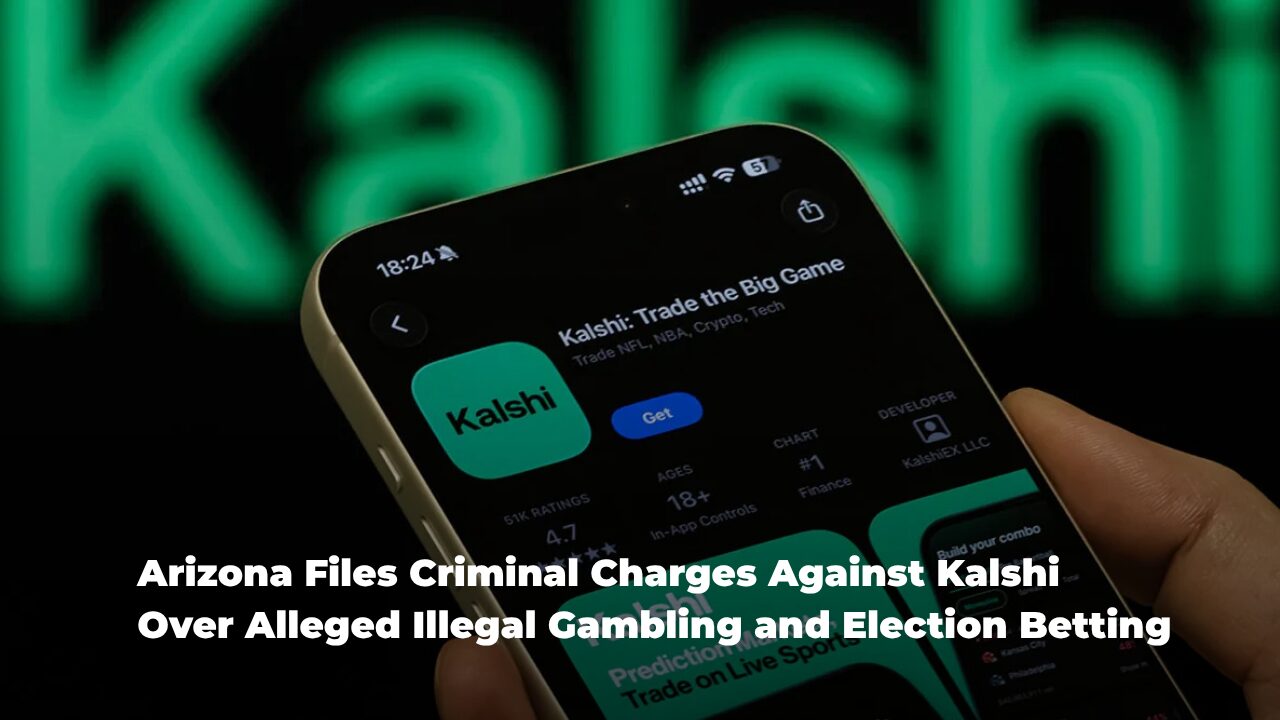
- Arizona filed 20 misdemeanour charges against Kalshi, making this the first criminal action any state has taken against the prediction market platform.
- Prosecutors claim Kalshi accepted bets without a licence on sports and elections, including major political races and outcomes in Arizona.
- The case shows a bigger fight happening across the country between state regulators and federally backed prediction markets over who controls this industry.
Twenty misdemeanour charges now face Kalshi after Arizona Attorney General Kris Mayes accused the company of operating an illegal gambling business. The state claims the company accepted bets on elections, breaking Arizona law and threatening the trust people place in the voting process. Prosecutors filed these charges on March 16 in Maricopa County Superior Court, creating a moment no other state had dared to push for. The New York-based prediction market platform now finds itself at the centre of a nationwide fight over regulation.
First Criminal Case Targets Prediction Market Operator
Mayes accused Kalshi of hiding behind the label “prediction market” while running an illegal gambling operation that takes bets on Arizona elections. No company gets to decide for itself which laws deserve respect, and Arizona will not bow to pressure from anyone, she warned. The state refuses to watch any business place itself above the law, no matter how big or well-funded it becomes. Sixteen counts of betting and wagering as class 1 misdemeanours and four counts of election wagering as class 2 misdemeanours fill the criminal information.
Without a licence, Kalshi allegedly accepted bets from Arizona residents on professional sports, college sports, and individual player performance propositions. Political contests have drawn bets out, with wagers on the 2028 US presidential race and the 2026 Arizona gubernatorial election among them. The company took bets on the 2026 Arizona Republican primary for governor and the 2026 Arizona secretary of state election too. Someone even stuck a single dollar bet on the SAVE Act getting passed meanwhile, others were betting on who would be Governor of Arizona back in 2026. This indictment lists out 20 wagers linked to sports or politics, and if the state wins its case, those involved could be facing a fine of up to $20,000 per sports bet the company took in. And if the state is after them for election-related wagers, that could cost them $10,000 each so if the company loses, things are going to get really ugly, really fast. The platform is still up and running, even as its leaders are bracing for the consequences of this criminal case and that court hearing is supposed to happen within a few weeks, so there’s not much time left for them to start getting their defence together.
Legal Clash Intensifies Over Federal and State Authority
Through trading “event contracts,” Kalshi lets users bet on event outcomes, though the company says its business has nothing in common with sportsbooks or casinos. The platform objects to oversight from what it views as a confusing mix of state laws that differ from one jurisdiction to the next. Kalshi believes states like Arizona want to regulate a nationwide financial exchange and will use whatever method they can to achieve that goal. The company stands firm that its contracts belong under the Commodity Futures Trading Commission jurisdiction alone.
Under President Donald Trump, the federal agency has backed prediction markets against state claims that they operate unlicensed gambling businesses without proper authorisation. Kalshi and similar platforms insist their event contracts should receive the same treatment as agricultural futures contracts, which creates direct conflict with state regulators. When the US Supreme Court struck down the federal sports betting ban in 2018, it set the stage for this clash.
Five days before the charges appeared, Kalshi sued Arizona in federal court, trying to block any enforcement before the state could act. On March 12, after a cease-and-desist letter arrived last year, the company returned to court seeking to stop the prosecution from moving ahead. US District Judge Michael Liburdi said no to the temporary restraining order request, leaving Kalshi without federal protection against the state. The federal case will probably wait while the state criminal proceedings take their course.
Prediction Markets vs. State Regulators: A Legal Showdown Across the U.S.
Across the nation, prediction market operators square off against state authorities over who controls this space and makes the rules. Criminal charges against Kalshi came only from Arizona, though Massachusetts, Nevada, and Michigan filed civil suits to block sports event contracts. A Massachusetts injunction hangs in limbo during the appeal, which adds another layer of uncertainty for the company and the industry.
Consumer protections, state revenue, tribal casino rights, the sports-betting industry, and compulsive gambling programmes all depend on how this battle ends. Prediction markets work like sports gambling but dodge the protections, taxes, and requirements that licensed operators accept, according to experts who study the industry. These platforms grab customers from state-regulated markets without facing the same obligations, which angers businesses that follow every rule.
The US Supreme Court may have to resolve this fight between federal and state authority, according to observers who watch the prediction market industry closely. That decision would settle whether platforms like Kalshi answer to national regulators or to each state where they do business. Kalshi projects revenue around $1 billion this year, which shows the enormous stakes riding on every court ruling ahead.
Explore more:
 Share
Share


 35 views






 Analysis
  Blog
Blog  Business
  Companies
  Crime
Crime  Finance
  M&A
M&A  Regulation
  Reports