




Key Points
- Kjerulf Ainsworth raised his stake in Ainsworth Game Technology to 8.35% after a proportional takeover offer closed on 27 April, which lifts his role as a minority shareholder.
- Even with this rise, Novomatic AG keeps control with 67.39% after its attempt to reach 75% failed in February 2026.
- The increase forms part of a wider push by Kjerulf Ainsworth to influence governance, including board change, dividend plans, and shareholder rights reform.
What changes when ownership rises but control stays? A shift might seem clear at first. Inside Ainsworth Game Technology, a deeper movement unfolds, and the real point sits below the surface.
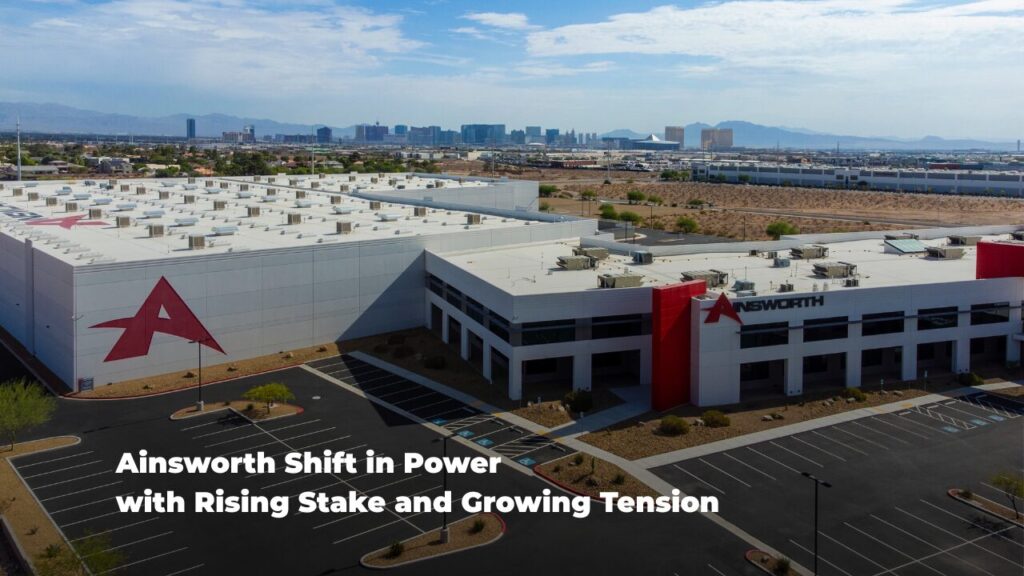
Ainsworth Shift in Power with Rising Stake and Growing Tension
Kjerulf David Hastings Ainsworth increased his stake in Ainsworth Game Technology to 8.35% after his takeover offer closed on 27 April 2026. This strengthens his role as a minority shareholder while Novomatic AG keeps control with 67.39%. The update followed the close at 7:00 pm Sydney time, marking another step in a plan that builds influence without changing control. Ownership moves higher, yet authority in the company does not shift.
Stake Rise Shows More Than Ownership Change
A small change from 8.24% to 8.35% holds more meaning than it seems. After the offer closed, voting power first stood at 8.24%. Data released on 4 May confirmed a rise to 8.35%. The offer aimed at 5.5% of each shareholder’s shares at AUD1.30 per share, equal to US$0.93. This move did not stand alone. It followed a prior bid and forms part of a wider approach. Instead of a full takeover, the plan uses gradual steps. Control does not change at once, but influence builds over time. This difference defines the present case. A full buyout shifts ownership at once, while a proportional move shapes leverage slowly.
Why the Offer Worked and What Holders Saw?
The offer opened on 31 March and ran until 27 April, giving holders time to respond. During this time, an independent board group advised acceptance. They said the offer gave value above market price at that point. This view guided holders, mainly those wanting liquidity without fully leaving. Structure played a role too. Holders could sell only part of their shares. This reduced pressure and made the decision easier. As a result, the plan worked as expected. Incremental gain occurred without shifting control.
Control Remains in Place Elsewhere
Despite the rise, the power structure stays unchanged. Novomatic AG holds 67.39% of shares, keeping majority control. This level stays firm even after its attempt to expand. In August 2025, Novomatic made a bid at AUD1.00 per share, equal to US$0.71, aiming to reach 75%. The bid ended in February 2026 without enough acceptance. This leaves a clear setup. One side holds control, while another builds influence step by step. Kjerulf Ainsworth opposed the earlier Novomatic bid, stating it undervalued the company. This adds another layer to the link between both sides.
Governance Tension Begins to Form
The shift now moves beyond ownership. Focus turns to governance. In a bidder statement, Kjerulf Ainsworth raised issues about board form, shareholder rights, and capital use. These points go beyond surface change and reach the structure. He supports limits on director pay and disclosure rules. At the same time, he rejects renewal of takeover rules, saying they may limit exit paths. Board setup enters focus. He named Lawrence Levy as an independent director and signalled support for him as chairman later. Another point stands clear. He plans to change the company rules to enforce dividend payments. This links to past data. Ainsworth has not paid dividends since October 2018, even as revenue grew. Focus now shifts toward financial policy.
Financial Data Adds Pressure
These changes come with mixed financial results. For the year ending 31 December 2025, Ainsworth reported revenue of AUD290.8 million, equal to US$206.5 million. Growth shows on the surface, yet deeper numbers show strain. Profit before tax fell to AUD21.1 million, or US$15.0 million, compared to last year. At the same time, one-off items pushed the net result into a loss. This links to the goodwill impact in North America. Regional results differ. North America gave 52% of revenue. Asia Pacific grew, with revenue up 52% to AUD65.0 million, or US$46.2 million. Growth came from product launches like the A-Star Raptor cabinet, along with more sales and a price rise. Still, margin pressure remains. Revenue growth does not turn into profit with ease, and this gap shapes governance talks.
Long Ownership Path Enters New Stage
This position was built over time, not in a sudden move. Novomatic has held control since 2018. During this time, Kjerulf Ainsworth stayed a shareholder without an executive role. Recent steps show a change in approach. A series of bids, governance moves, and board plans point to a more active role. Instead of seeking control, focus turns to shaping results inside the current structure. A layered system now appears. Control stays central, while minority influence grows stronger.
Expert View on Industry Impact
Immediate effects may seem small, yet they build over time. Proportional deals show a way to increase influence without the full cost of a buyout. This lowers risk while still applying pressure. Within Ainsworth, governance tension may lead to changes. If dividend or board plans gain support, capital use may shift. This will affect reinvestment, product cycle, and expansion. Across the gaming sector, this reflects a wider move. Control no longer depends only on the majority stake. Minority stakes with governance action now shape influence. Opportunities exist for investors who find undervalued firms with stable control. At the same time, risk remains. Long tension may slow decisions and reduce clarity. Novomatic keeps control but faces pressure to explain choices. Kjerulf Ainsworth expands influence but must show results.
Explore more:
 Share
Share


 383 views