







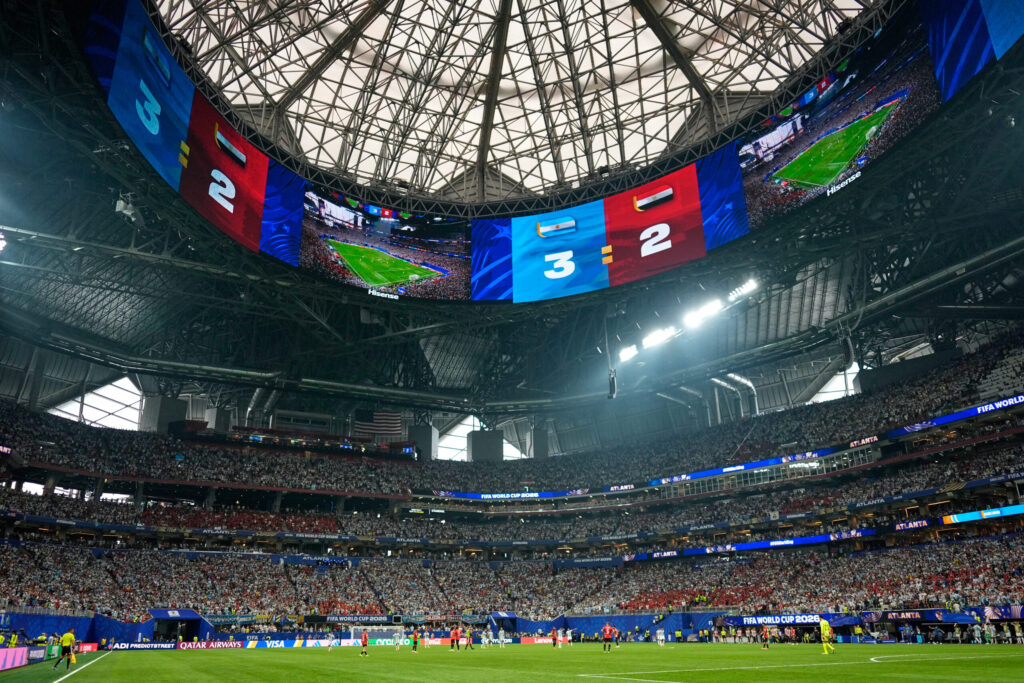
The 2026 FIFA World Cup exposed viewers to an average of 1.5 gambling and prediction market logos for every minute of live play, according to research from the University of Bristol and University of Oxford.
Researchers used an AI model to analyse all 104 matches, tracking promotions visible during live action rather than advertising breaks. The study examined alcohol, gambling and junk food as “harmful commodities”.
Dr Raffaello Rossi, senior lecturer in marketing and co-director of the Bristol Hub for Gambling Harms Research, said: “As one of the world’s most watched sporting events, reaching billions of people, this year’s FIFA World Cup provided an unparalleled platform for advertising. Our findings reveal the sheer scale of branding embedded throughout tournament broadcasts, making exposure to unhealthy food, alcohol and gambling brands both omnipresent and unavoidable for viewers.”
Alex Ballinger MP, co-chair of the Gambling Reform APPG, said existing safeguards were inadequate and called for reform.
Prediction markets accounted for most betting-related logos
Junk food remained the largest category identified, accounting for 70.4% of harmful logos. Gambling and prediction markets ranked second with 15,789 appearances, representing 16.9% of the total.
Traditional gambling accounted for 6,429 logos, while prediction markets generated 9,360 appearances. ADI Predictstreet alone represented 7,384 prediction market appearances after agreeing a partnership with FIFA shortly before the tournament.
Its branding featured extensively on stadium advertising boards, alongside partnerships involving ADI, Kalshi and Fanatics. Among traditional gambling companies, Betano accounted for 91.1% of gambling advertising. Caliente, Matchbook, Winner.mx and Confia also appeared during broadcasts.
Across 172.6 hours of live match action, approximately 13 hours contained gambling or prediction market advertising, equivalent to about 7.5% of playing time.
Broadcast technology raises questions over local advertising rules
FIFA reportedly has virtual board replacement technology that allows stadium advertisements to be changed for broadcasts distributed into individual markets. This can prevent promotions from appearing where they conflict with domestic rules.
However, researchers said the technology was not used effectively enough to prevent gambling branding from reaching jurisdictions where operators were not locally licensed.
“One of the most advertised gambling brands listed licences in around 20 countries, while the World Cup was broadcast across more than 220 territories. Put plainly, audiences in the overwhelming majority of countries were shown advertising for a gambling operator that was not licensed locally,” Dr Rossi said. This raises questions about where tournament advertising was ultimately distributed.
US lawmakers renew calls for stronger federal safeguards
Concerns also extend to the US, which co-hosted the tournament. US Congressman Paul Tonko said: “This is rapidly becoming the public health crisis of our generation. It’s clear that Congress needs to step in to provide minimum consumer safeguards for online sports gambling – whether done through prediction markets or traditional sportsbooks – by passing legislation like my SAFE Bet Act.”
The proposed SAFE Bet Act would introduce federal requirements for states offering legal sports betting. Participating states would need Department of Justice approval under the proposal to strengthen consumer protections.
That approval would depend on maintaining current consumer protection and public health standards covering areas including gambling advertising, affordability and the use of artificial intelligence.
The World Cup findings arrive as gambling advertising faces broader political scrutiny in both the UK and US. In Britain, Rossi recently gave evidence to the House of Lords Liaison Committee, which recommended that the government introduce a total ban on gambling advertising.
In addition, this research adds broadcast exposure to the debate, particularly where international sporting events distribute the same commercial inventory across markets operating under very different gambling laws.
The findings expose how international sports broadcasts can carry gambling-related branding across markets with very different rules. Virtual advertising technology may offer a way to manage this exposure, but its value depends on whether rights holders use it consistently. The pressure is likely towards the broadcast systems enabling this form of advertising.
Explore more:
 Share
Share


 5 views