

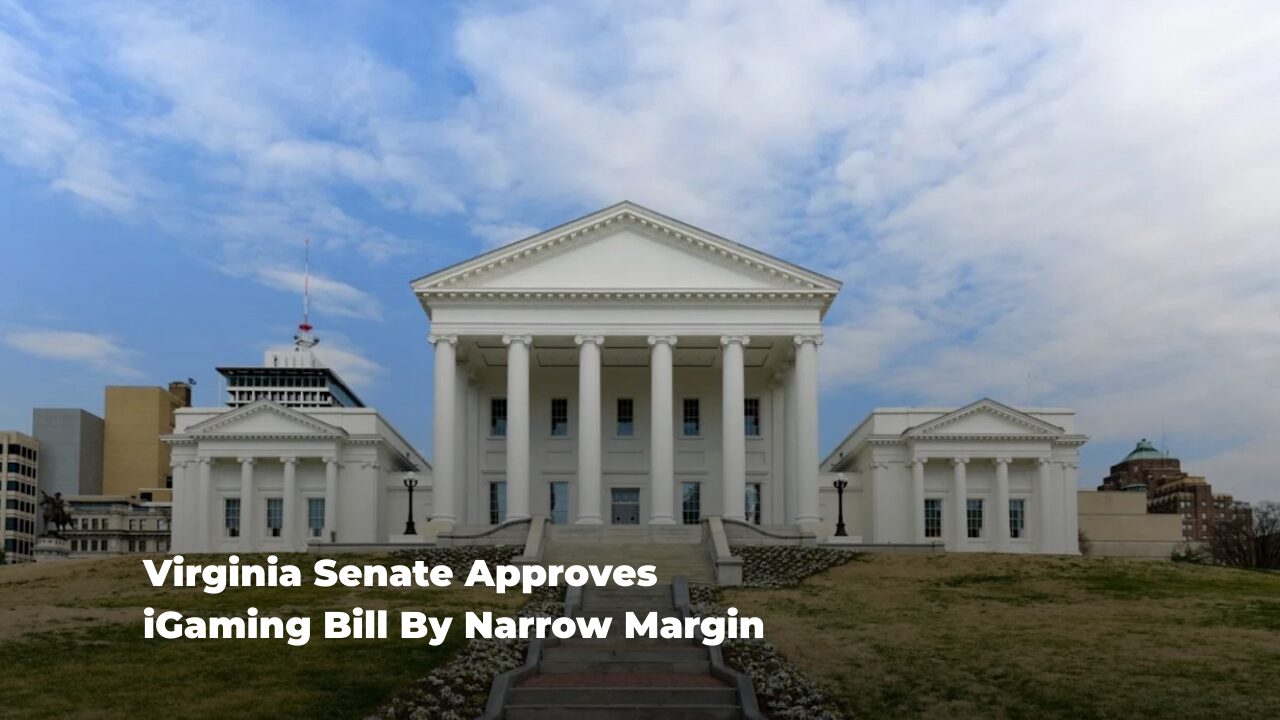
Virginia has advanced legislation authorising regulated online gaming through the Senate on 16 February after a keenly contested vote. Senate Substitute SB118S2 amends the Code of Virginia to legalise and regulate internet gaming under the supervision of the Virginia Lottery Board.
The bill inserts a new Article 12 into Chapter 41 of Title 58.1. This framework covers licensing, taxation, enforcement powers, consumer protections and revenue allocation from online casino-style gaming.
Only existing casino operators in designated eligible host cities are allowed to apply for an internet gaming operator licence. The initial licence fee is set at $500,000 and remains valid for five years or for the duration of the underlying casino licence, whichever period is shorter.
Third party platform providers must pay a $2m application fee and meet renewal requirements. Each licensed operator may run up to three branded platforms, with the possibility of a fourth by partnering with a qualified entertainment company. Also, applicants must submit a mitigation plan addressing potential job losses linked to online expansion.
Consumer safeguards and implementation timeline
The new bill mandates strict age verification allowing individuals aged 21 and above, geolocation measures, responsible gambling provisions and advertising restrictions.
Operating without a licence would constitute a felony under this proposal. The Virginia Lottery Board must finalise regulations by 1 January 2027, and the law will kick in by 1 July 2027. No earlier implementation date has been specified.
Tax structure and revenue allocation
Furthermore, this bill sets a 15% tax on adjusted gross internet gaming revenue. Of that amount, 5% would be directed to the Problem Gambling Treatment and Support Fund.
An additional 6% would be allocated to the Internet Gaming Hold Harmless Fund until 1 January 2030. The remaining 89% before that date would be deposited into the state’s general fund.
After 1 January 2030, the general fund share increases to 95% once the Hold Harmless allocation expires. The revenue distribution formula will adjust automatically at this point.
Floor votes reflect divided support
The Senate engrossed the bill on 12 February, placing it in final amended form ahead of a third reading. On 16 February, it initially failed on the floor by a 19 to 20 vote.
Later the same day, senators voted 38 to 0 to reconsider the result. The chamber also agreed to revisit the motion that had parked the bill.
On the third reading, the legislation passed 19 to 17. This proposal will now move to the House of Delegates for further scrutiny and a potential delay, if necessary.
Explore more:
 Share
Share


 13 views







 Analysis
  Blog
Blog  Business
  Companies
  Crime
Crime  Finance
  M&A
M&A  Regulation
  Reports