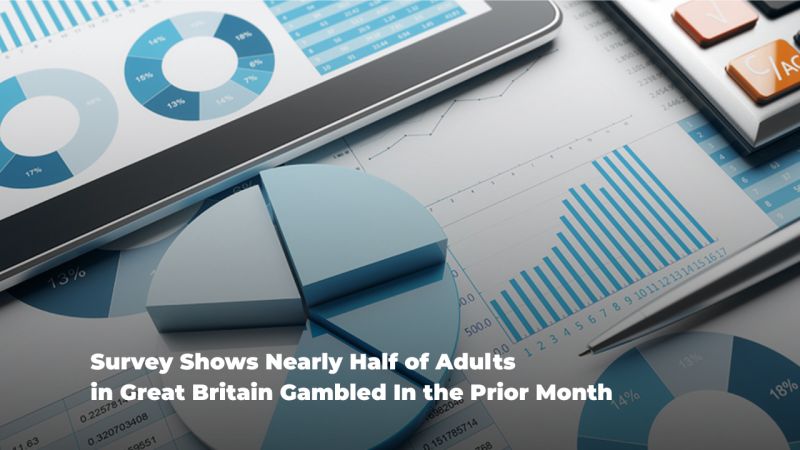
According to new figures published by the Gambling Commission, almost half of Great Britain’s adult population gambled during the four weeks before participating in the latest Gambling Survey.
The regulator noted that 47% of adults aged 18 and over had gambled, but this figure fell to 27% after excluding respondents whose only gambling activity was entering lottery draws. Its third annual survey is based on responses from around 20,000 adults, examining gambling participation, behaviour, attitudes and consequences, including National Lottery play.
Winning remained the biggest motivation for gambling. Among respondents, 84% said the chance of winning a large prize was the main attraction, while 69% said gambling was fun. Over half also stated that they gambled to make money or enjoyed the excitement.
Tim Miller, the commission’s executive director for research and policy, said the research offered “a richer, more timely picture of the trend in gambling in Great Britain than has previously been available”.
Tax increases and affordability checks are reshaping the market
Britain’s gambling sector is also adapting to regulatory and tax changes. Remote Gaming Duty increased from 21% to 40% on 1 April 2026, while the duty on most remote betting will rise from 15% to 25% in April 2027.
Bets placed on British horseracing are exempt from the second increase. The Treasury expects the package to generate more than GBP 1 billion by 2031. Furthermore, the Betting and Gaming Council described the higher tax burden as “a devastating blow to thousands of individuals employed in the industry”.
Operators have argued that higher operating costs could put licensed businesses at a disadvantage against illegal operators. The Gambling Commission is also introducing financial risk assessments for customers who spend heavily online to identify at-risk individuals.
Industry questions the impact of new financial risk assessments
Industry bodies are critical of the affordability checks. Grainne Hurst, chief executive of the Betting and Gaming Council, said “the central issues around reliability, consumer impact, and the practical operation of these checks remain unresolved”.
The British Horseracing Authority has also noted that the checks could expose racing bettors to “unwarranted levels of intrusion” while encouraging customers to move towards unlicensed operators.
Debate over problem gambling figures persists despite stable results
The latest survey found that 2.4% of adults recorded a score of eight or more on the Problem Gambling Severity Index, which the Gambling Commission uses as the threshold for problem gambling. This figure has remained stable across the past three years of survey.
However, their methodology has been heavily criticised. The previous survey reported a problem gambling rate of 2.5%, compared with the 0.4% estimate from the earlier NHS-led survey system.
Although the latest research uses larger samples and continuous data collection, the statistics regulator has called for explanations around limitations and potential sources of bias.
Expert Opinion
The UKGC has released a survey showing the participation rates among adults within the country. 50% were found to have gambled within the month leading to this survey. Recent increases in taxes have impacted legal operators negatively and there are fears over a shift towards illegal operators.
Source: https://sigma.world/news/ukgc-gambling-survey-47-percent-adults/
Explore more:
 Share
Share


 164 views