

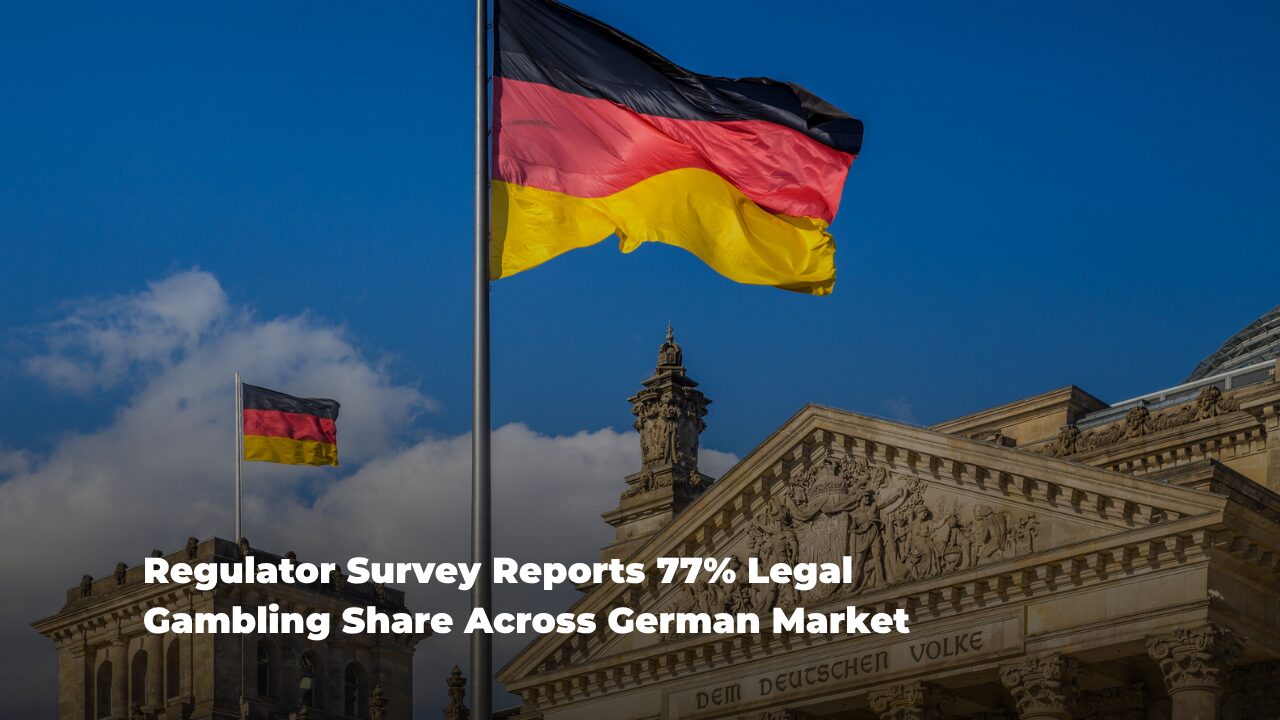
Gemeinsame Glücksspielbehörde der Länder has released new data suggesting that most online gambling activity in Germany now flows through licensed operators. The study places the channelisation rate at 77.03%, leaving the unregulated market with a 22.97% share.
The research was commissioned by the regulator and conducted by Blockchain Research Lab. It estimates that illegal online gambling generated around €547m in 2024. The findings are based on responses from 2,000 users who engaged with betting, poker, or casino products within the past year.
“The scientifically calculated channelisation rate confirms our previous assumptions about the extent of the black market,” said Ronald Benter.
Industry Pushback and Conflicting Estimates
The size of the black market has remained one of the most contested issues in Germany’s gambling policy discussions. Operators and trade bodies have argued that strict regulations are pushing players toward offshore platforms.
Last year, the German Sports Betting Association presented a sharply different picture. The group reported 382 illegal German language betting sites compared to just 34 licensed operators. “Online, it’s 11:1 in favour of the black market and that puts players at risk,” said Mathias Dahms.
The new study does not dispute the volume of illegal operators. Survey data showed that 74.6% of identified brands were unlicensed. Those platforms accounted for only 20.3% of total mentions, while licensed operators captured 79.7%.
This gap points to a fragmented offshore space with many options but less concentrated activity. Licensed operators appear to retain a stronger share of actual player engagement.
Researchers also questioned earlier measurement approaches. Some previous estimates relied on website traffic or proxy indicators rather than actual spending. The report argues that such methods fail to capture how much money players truly wager or lose.
Black Market Still Holds Significant Weight
Despite the higher channelisation rate, unlicensed operators continue to command a notable share of activity. The study found that illegal platforms accounted for 22.4% of total stakes and 22.97% of losses.
Players using these sites reported higher average monthly spending. This detail suggests that a segment of users remains deeply engaged with offshore options.
Licensed gambling remains a key contributor to public finances in Germany. Market data showed operators paid €2.5bn in taxes in 2025, supported by sports betting and online casino activity.
Regulators see enforcement as the primary response to illegal competition. “Our measures will also be reflected in market shares in the medium term,” Benter said. “The fight against illegal online gambling is, however, a marathon, not a sprint.”
2026 Review Will Test Regulatory Balance
Germany is preparing for a full review of the Interstate Gambling Treaty by the end of 2026. The role of the black market will shape key decisions during that process.
Operators are pushing for adjustments that make the legal market more competitive. Current rules include deposit limits, stake caps, and restrictions on advertising. Regulators maintain that player protection must remain central. The report reflects this stance by warning against weakening safeguards in response to offshore competition.
At the same time, it acknowledges that strict controls can affect the appeal of licensed platforms. The suggested path forward focuses on stronger enforcement against illegal providers rather than loosening existing rules.
The latest findings give regulators support for their position. Legal operators still dominate spending, but the presence of unlicensed platforms influences how the market evolves.
Explore more:
 Share
Share


 53 views





 Analysis
  Blog
Blog  Business
  Companies
  Crime
Crime  Finance
  M&A
M&A  Regulation
  Reports