Key Highlights
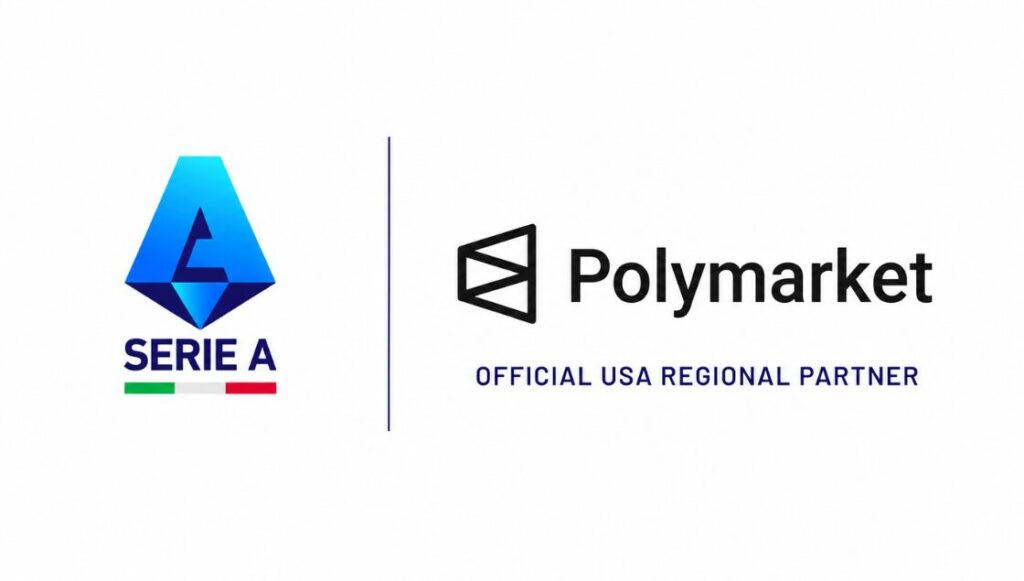
- Polymarket entered a multi-year partnership with Serie A USA and became the Italian football league’s official and exclusive prediction market partner across the United States. The agreement also includes official league data delivered through Genius Sports together with integrations across Serie A’s U.S. media and digital channels.
- Through this partnership, Polymarket pushed harder into football before the 2026 FIFA World Cup after earlier agreements with MLS and LALIGA North America. The company now aims to become a leading place for football prediction markets across the American market.
- Even while growth keeps moving fast and sports partnerships continue expanding, Polymarket still faces pressure tied to ethics, gambling issues, insider-trading concerns, and contracts connected to geopolitical events. Some countries across Europe have already limited prediction markets although the sector continues gaining public attention.
Only months before excitement around the 2026 FIFA World Cup rises across America, Polymarket completed another huge football partnership. The latest Serie A agreement goes beyond predictions because it reflects a strong change in how supporters may follow matches, engage during games, and earn from live sports entertainment in the coming years.
Serie A’s U.S. Growth Plan Moves Toward Participation
Ahead of growing attention around the 2026 FIFA World Cup across the United States, Polymarket locked in another major football agreement. This time the company secured a multi-year regional partnership with Serie A USA and became the league’s “official and exclusive” prediction market partner inside the American market.
Under the deal, Polymarket gained exclusive rights to run Serie A prediction markets for users in the U.S. while the platform also became integrated across Serie A’s American digital and media network. More than branding, the structure behind the agreement reveals a wider industry movement where sports engagement depends more on involvement instead of simple viewing.
Serie A USA confirmed Polymarket would receive official league data supplied through Genius Sports, a company listed on the NYSE. According to both sides, the agreement aims to strengthen “accuracy, transparency, and integrity” within prediction market products tied to fixtures, clubs, and player narratives.
That section matters deeply for the sector.
Prediction markets depend strongly on trusted data systems. Whenever disputes appear around outcomes, settlement timing, or results, confidence can fall very fast. By relying on official Serie A data routed through Genius Sports, a company already linked closely with global sports integrity systems, both companies appear focused on limiting one of the industry’s biggest operational threats before it expands further.
Michele Ciccarese connected the agreement directly with shifting audience habits.
“The United States represents a key growth market for Serie A,” Ciccarese said. “Our exclusive alliance with Polymarket, as Regional Partner in the USA, lets us engage a new generation of fans through a platform that embodies emerging trends. It delivers an interactive, real-time product rooted in insights and participation perfectly aligned with their expectations.”
The repeated focus on “participation” carries purpose. Football leagues now understand that younger viewers interact with the sport differently compared with earlier generations. Traditional broadcasts no longer guarantee attention across an entire season, especially inside crowded digital spaces where supporters constantly jump between highlights, fantasy products, live interaction tools, social feeds, and streaming platforms.
Why Football Became Polymarket’s Main Strategy?
The Serie A partnership became Polymarket’s third major football agreement this year. Earlier partnerships with Major League Soccer and LALIGA North America already showed where the company wanted to expand next.
Now the direction looks far more obvious.
Football’s commercial growth inside the United States keeps building ahead of the 2026 FIFA World Cup, which the U.S., Canada, and Mexico will host together. Executives across the industry increasingly describe the tournament as a rare opportunity capable of changing long-term football adoption across America.
Polymarket appears eager to establish its position before mainstream demand reaches full strength. Ari Borod, who also served as Fanatics’ Chief Business Officer, explained that the company intentionally focused on the American market.
“We want to invest heavily in the U.S. market,” Borod said. “There may be opportunities to do bigger deals in the future. Right now, it’s the beginning of the partnership. You want to grow into these things, and we felt this was the right place to kick this off.” Borod also explained the broader thinking behind the company’s sports expansion plans. “We want to build an ecosystem focused on a great product with integrity and all the safeguards you need,” he said. “The best way to do that is to go to the rights holders, leagues, and governing bodies themselves to forge partnerships.”
That strategy mirrors a wider reality surrounding prediction markets. Across several regions, the industry still operates inside a regulatory grey area. Partnerships with football leagues do more than create promotion opportunities because they also help strengthen credibility, improve alignment around compliance and data usage, and provide protection while regulators continue reviewing the sector.
Borod also tied the company’s football strategy directly to the 2026 World Cup opportunity.
“The world is coming to America for the World Cup,” he said. “If ever there was a time to invest in soccer, we feel like this is it.”
Interestingly, Polymarket never secured the World Cup partnership itself. FIFA instead reached an agreement with ADI PredictStreet, a company supported by the Abu Dhabi royal family. Reports suggested the asking price for World Cup rights reached nearly $150 million, a number both Polymarket and Kalshi reportedly refused to match.
“We would have loved to partner with FIFA and the World Cup,” Borod said. “In terms of what the ultimate price was, I’m not sure.”
The Main Revenue Focus Is Engagement, Not Betting
At first sight, prediction markets look close to sports betting platforms. Regulators across several European nations have already noticed the resemblance with growing concern.
Romania, Germany, Belgium, Italy, Poland, Hungary, the Netherlands, Switzerland, France, Portugal, and other regions restricted or blocked prediction-market activity after authorities concluded that those systems operate like gambling products.
Polymarket refuses that label.
Instead, the company describes its services as “event contracts” where users trade with each other based on the probability tied to real-world outcomes. The distinction may appear technical, yet it remains central to how prediction-market firms shape their legal and commercial identity.
Traditional sportsbooks usually depend on odds-making systems where operators manage exposure and risk directly. Prediction markets take another route because they position themselves as exchanges supporting peer-to-peer interaction between users.
For sports leagues though, the attraction moves beyond wagering structures.
Engagement time stands as the core asset.
Under a traditional viewing setup, a late-season Serie A match involving mid-table clubs may fail to keep viewers interested. Interactive prediction markets attempt to change that pattern by giving supporters constant reasons to track each moment, react to shifting outcomes, and stay active throughout the match.
Shayne Coplan described that transition clearly.
“The next phase of sports engagement won’t be defined by more content, but by more participation,” Coplan said.
“Prediction markets give fans a way to actively interpret the game in real time, and partnering with Serie A brings that model to one of the world’s most followed leagues at a moment when American interest in the sport is at an all-time high.”
Across the sports sector, the same trend continues to appear. Streaming platforms, fantasy sports, second-screen products, social interaction systems, and live betting services now compete for one thing: active audience attention across longer periods because fans increasingly expect interaction instead of passive viewing.
Prediction markets now try to secure space inside that structure.
Growth Expanded Fast, So Did the Pressure
Polymarket expanded into sports at high speed.
The company now holds partnerships linked with MLB, NHL, UFC, MLS, LALIGA North America, and Serie A. Front Office Sports earlier reported that Polymarket’s MLB partnership may reach $300 million across four years.
Meanwhile, scrutiny surrounding the company continues rising.
Its offshore platform allegedly appeared in an indictment involving a U.S. soldier accused of using insider information to earn more than $400,000 from trades tied to when the U.S. military would capture Venezuelan President Nicolás Maduro.
Reports also indicated White House staff received warnings against using insider information while participating in prediction markets connected with geopolitical events.
Those situations reveal another challenge facing the sector.
Sports prediction markets already attract difficult questions linked with gambling classification and ethics. Expansion into elections, military conflicts, geopolitics, religion, weather events, and other sensitive subjects introduces another level of reputational risk that many observers now watch closely.
Criticism intensified again after reports suggested some prediction markets allowed trading connected to controversial situations involving religion, military activity, weather outcomes, and geopolitics.
Polymarket itself became more polarising across financial and technology circles. The platform previously reached a settlement with the Commodity Futures Trading Commission in January 2022 before later returning to the U.S. market. Earlier this month, the company’s U.S. iOS app became widely available for American users after months of waitlists and limited access.
Ari Borod rejected concerns surrounding the increasing media attention. “No, it does not have a particular impact,” he said. “You can’t believe everything you read in the press.” Even then, controversy continues following the industry because the stakes now stretch beyond sports entertainment.
Prediction markets increasingly connect with finance, speculative trading, behavioural economics, regulation, and public information systems. Regulators still attempt to determine whether these platforms function more like sportsbooks, financial exchanges, speculative assets, or something else entirely.
That issue remains unresolved.
Serie A’s Timing Shows A Wider Industry Strategy
Serie A’s decision arrived during a difficult period for the league itself.
Reports this week pointed toward scheduling disruption caused by overlap with a major tennis tournament, leaving several Serie A clubs uncertain over fixture timing only days before the penultimate match round. Earlier reports also connected multiple Serie A players with investigations involving alleged prostitution activity and nitrous oxide use.
Against that background, the Polymarket partnership serves another role beyond fan participation. Visibility matters deeply.
Serie A continues competing against the Premier League, La Liga, and Bundesliga for international attention, especially inside the United States. Interactive digital partnerships offer leagues another path to remain culturally connected even when domestic narratives appear fragmented or overshadowed.
American audiences increasingly reward leagues that feel digitally connected. Older expansion strategies no longer create the same momentum they once generated. Prediction markets may provide leagues another method to sustain conversation and interaction throughout the year instead of relying only on superstar players or marquee fixtures to drive engagement.
Expert View: Why This Partnership May Change Sports Revenue
The agreement between Serie A and Polymarket signals that major sports leagues now treat prediction markets less like experimental products and more like engagement infrastructure.
Operationally, that changes the revenue structure.
For years, sports income depended heavily on broadcasting rights, sponsorships, ticket sales, and merchandise. Interactive prediction ecosystems introduce another layer built around participation time and audience attention.
For companies such as Polymarket, official league agreements solve several strategic issues simultaneously. Those partnerships strengthen legitimacy, secure trusted data access, reduce integrity concerns, and improve positioning before regulation fully develops. Such advantages become more important as competition with Kalshi and other emerging prediction-market firms intensifies.
At the same moment, sports leagues may soon face a difficult balancing challenge. Higher engagement benefits leagues commercially, especially when supporters spend more time within official digital ecosystems. Yet as prediction markets move closer toward gambling-style behaviour, reputational pressure and regulatory scrutiny may rise further.
Several groups stand ready to benefit from this transition immediately.
Sports leagues gain stronger engagement systems. Companies like Genius Sports deepen their role as infrastructure providers. Prediction-market operators receive legitimacy through association with recognised global brands. Younger audiences gain interactive experiences aligned with modern viewing habits.
Others may experience growing pressure instead.
Traditional sportsbooks could encounter competition from products blending speculation, entertainment, and market participation together. Regulators may struggle to fit prediction markets inside current legal structures. Broadcasters may also need to reconsider passive viewing models because audiences increasingly expect interaction layered onto live sports coverage.
The next major development now centres around regulation.
If more top-tier leagues continue signing official partnerships despite ongoing scrutiny, prediction markets may shift from controversial niche products into a standard part of sports entertainment infrastructure worldwide. Once that shift happens, reversing the process becomes far more difficult.
Right now, the industry still feels experimental.
By the time the 2026 FIFA World Cup begins, that perception may already appear outdated.
 Share
Share


 394 views