

Key Points
- Playtika starts a strategic review and looks at a possible sale to raise shareholder value.
- Shares fell nearly 90% since the January 2021 IPO and pressured the leadership.
- The company cuts nearly 15% of its workforce and keeps revenue growth and profit gains.
A Strategic Turning Point Driven by Market Reality
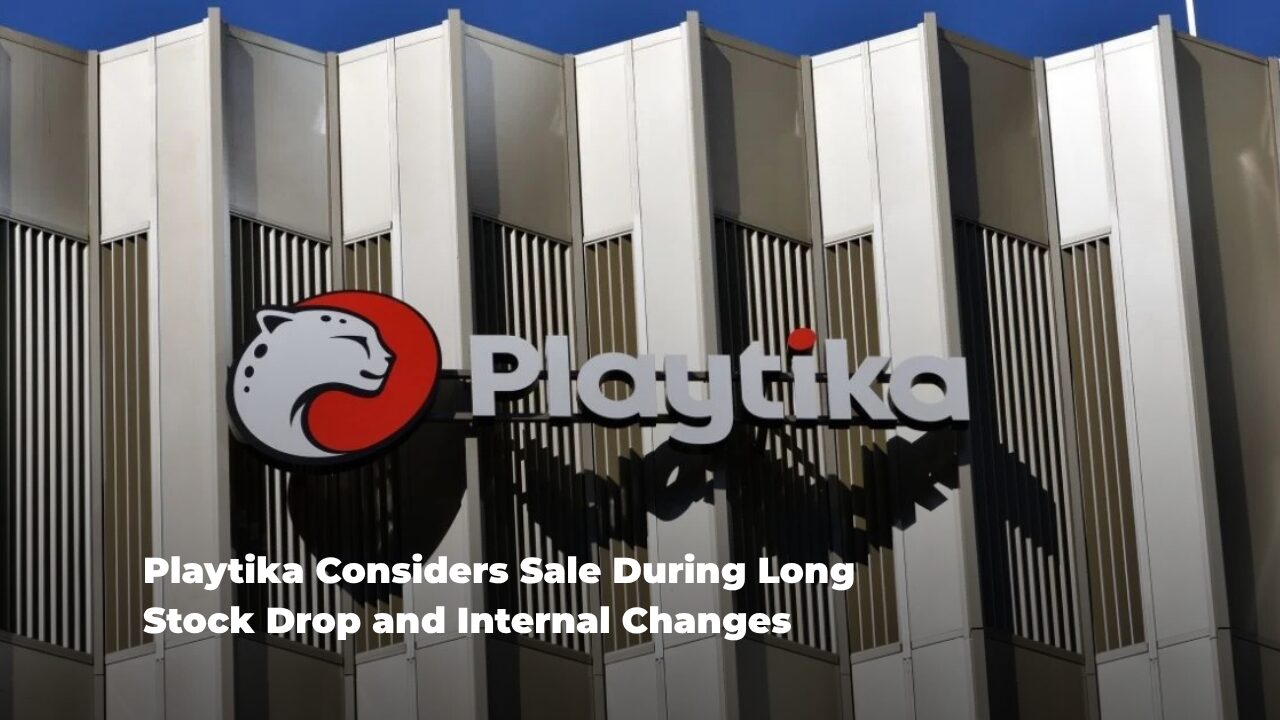
Companies that explore a sale tend to do so when operations fall apart that is what most people expect. Playtika does not fit that expectation. Revenue grows. Profits rise. Yet the company considers a sale at this very moment. The gap between those two realities points directly at market perception as the pressure that drives this. On April 6, Playtika Holding Corp. (NASDAQ: PLTK), a mobile gaming and social casino developer, confirmed it initiated a comprehensive strategic review. A special committee built entirely from independent directors now evaluates “strategic alternatives across its portfolio” to “unlock and enhance shareholder value.” The words in that statement hold purpose. They indicate the company does not search for minor fixes it looks at options at the deepest level, including a potential sale. To lead the work, Playtika brought in Morgan Stanley & Co. LLC as its financial advisor. At the same time, the company set clear limits on what people should expect from the process, stating: “There can be no assurance that the strategic review process will result in any strategic transaction.” It also stated that updates will not come forward unless the board approves a definitive course of action.
Why Now: A 90% Stock Collapse Changes the Equation
The strategic review did not come out of nowhere it grew from a long period of falling investor confidence. That confidence loss reshaped the range of choices available to the company. Since the January 2021 IPO, Playtika’s stock has dropped by nearly 90%. That collapse reaches beyond the valuation number it takes away the flexibility a company needs to act. Capital becomes harder to raise. Every acquisition carries a risk that compounds over time. Shareholders push harder and do not stop. A company that still earns profit can find itself unable to move when the market withdraws its support from the valuation. In that position, a sale or restructuring shifts from a survival question to a move about unlocking trapped value and giving shareholders what the stock no longer delivers. That shift explains why the company frames the review around “enhancing shareholder value” and not operational failure.
Internal Restructuring: Layoffs Signal a Shift in Priorities
Market pressure finds its way inside the company as well. Playtika stated in an SEC filing in January that it would reduce its workforce by approximately 15%. This reduction belongs to a broader plan to reshape the cost structure and move resources where the game portfolio needs them. CEO Robert Antokol wrote to employees: “Dear Playtikans, I am writing to share a message that is both difficult and necessary. Today, we are reducing the number of our employees by approximately 15%.” He went on: “This decision was not made lightly. It reflects a fundamental shift in how we operate so we can invest in the future and remain a leader in a highly competitive mobile games market.” The weight in those words goes beyond a workforce update. This is not a short-term cost reduction it is a structural recalibration that the company directs toward long-term competitiveness.
Performance vs Perception: Strong Numbers, Weak Sentiment
The strategic review and workforce reduction have not moved Playtika’s financial results off a positive track.
Results from the fourth quarter, released in February, showed:
- Revenue of $678.8 million, up 4.4% year-over-year.
- Adjusted EBITDA of $201.4 million, up 9.5% year-over-year.
Numbers like these confirm that growth continues and profitability moves in the right direction. But the market does not respond to them, and investor sentiment stays deeply negative. The disconnect becomes clear and uncomfortable to sit with operations held up well while the market withdraws. Markets do not price what a company earns today they price what investors believe will come. If investors see doubt in long-term growth or competitive strength, earnings do not provide enough to stop the stock from sliding.
Industry Context and Structural Risks
Playtika builds its business inside a mobile gaming sector that evolves without pause, particularly in free-to-play social casino games. The company started in 2010 with its headquarters in Herzliya, Israel, and it stood among those who first developed free-to-play social gaming on social networks before the shift to mobile platforms took hold. Casino-themed titles make up a core part of its portfolio, among them the widely known World Series of Poker online game. The company does not hold back from naming the risks that connect to the review and its wider operations. These include:
- The possibility that the review produces no transaction.
- Market and regulatory barriers that could prevent deals from completing.
- Disruptions when leadership attention redirects toward the review.
- Stock price impact depends on the direction outcomes take.
- The influence that the majority shareholder and external stakeholders carry.
- International risk exposure from operations in Israel and Ukraine.
- Ownership structure complications are tied to a Chinese-controlled parent company.
Each of these adds a layer of uncertainty to the review and to the long-term direction the company moves in.
What Does This Means for the Road Ahead?
The moment a company reaches for “strategic alternatives” tends to mark the point where small steps no longer produce change.
Three forces now press together for Playtika:
- A steep and prolonged fall in market valuation.
- Internal restructuring that reshapes costs and focus.
- Continued profitability does not match investor confidence.
The strategic review stands at the point where all three pressures meet. Whether that review ends in a sale, a partnership, or an internal transformation remains an open question. But the shift that already happened cannot be missed. Playtika turns from holding its current model to working on what comes next.
Final Insight
The question of whether Playtika gets sold is not where the real weight of this story sits. The weight sits in why a company that still grows revenue and profit feels the pull to put a sale on the table. A 90% stock decline does more than record what the past held it draws hard limits around what the future allows. Inside those limits, the strategic review becomes something more than an exploration it becomes a confrontation with a reality the company cannot soften: operations that work well are no longer enough to hold position when the market has already chosen to move elsewhere.
Explore more:
 Share
Share


 8 views








 Analysis
  Business
  Companies
  Crime
Crime  Finance
  M&A
M&A  Prediction Markets
  Regulation
  Reports