







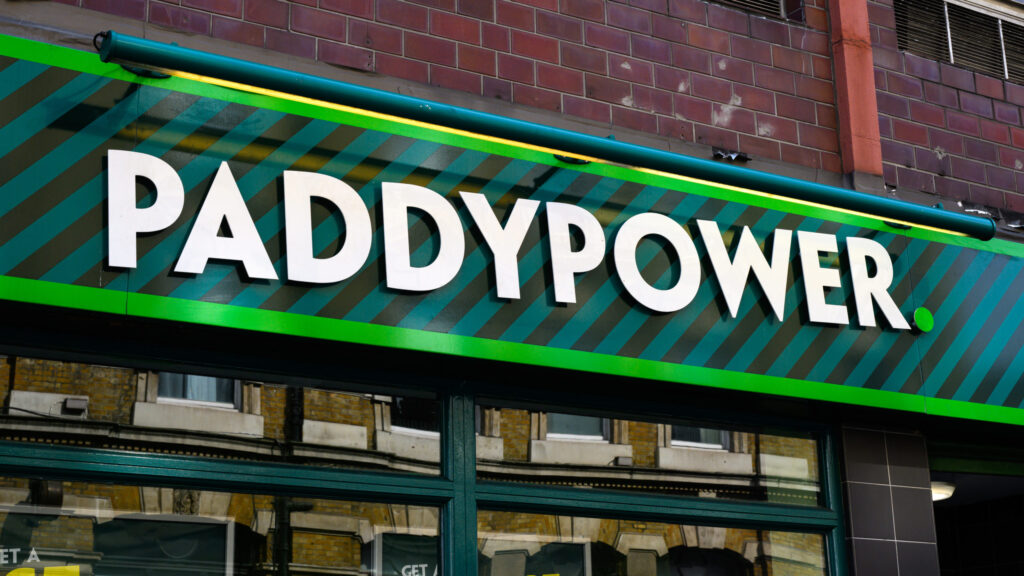
Key Points
- According to Flutter, as of 3 September 2026, 100 Paddy Power shops could potentially have to shut down in the UK and Ireland, putting 400 jobs at risk.
- The remote gambling tax increased nearly twofold to 40%, from 21% in April 2026, with an additional online gambling tax wave following in April 2027.
- Betfred, William Hill and Evoke have already announced hundreds of combined closures, making this a sector-wide retreat, not a Paddy Power problem.
A Fifth of the Estate, Gone Before Year-End
Something unusual happened on 3 September 2026. Flutter Entertainment announced a retail review that could see up to 100 Paddy Power betting shops shut before the year is out, and nobody in the industry was surprised. That absence of shock is itself the story.
Redundancy has been confirmed for around 400 workers, though it has been assured that those employees will be provided other avenues of employment when possible. No locations have been specified yet. No information about splitting the UK and Irish locations has been revealed. Currently, Paddy Power runs 506 stores in all, 310 in the UK and 196 in Ireland, which have more than 2,300 people employed in them. The shutdown of 100 such stores takes out close to one-fifth of the entire estate.
Flutter’s UK and Ireland spokesperson did not dress it up: “We are incredibly proud of our high street estate, and it remains a key part of our business in communities across the UK and Ireland. Unfortunately, we have had to take the extremely difficult decision to conduct this review. The high street trading environment has been challenging for a number of years given rising costs, fierce competition, economic uncertainty and the shift to online, but we also face a material impact from the higher gambling taxes announced in last year’s UK budget.”
The Part That Does Not Quite Make Sense at First
The retail gambling businesses were not directly affected by the UK Autumn Budget 2025 taxes. The tax on remote gambling increased drastically from 21% to 40%, effective from April 1, 2026. The second increase will make the tax on remote sports betting increase from 15% to 25% starting April 2027. Over-the-counter bets in licensed premises stayed untouched at 15% through both rounds.
So why are physical shops closing because of a tax aimed at online gambling? Flutter’s own filings answer that more plainly than any spokesperson statement. The company put the pre-mitigation adjusted EBITDA impact of the UK iGaming tax changes at $320 million in 2026 and $540 million in 2027, with only partial offsets available. The retail estate and the online business share the same parent balance sheet. When the online arm absorbs a hit of that scale, the pressure spreads across every cost centre, shops included. Leases still run. Energy bills still land. A borderline-profitable shop that made marginal sense two years ago no longer does.
Flutter’s UK and Ireland revenue reached $971 million in Q2 2026, up 4% year on year, with iGaming up 7%. Yet the group still swung to a $296 million net loss in that same quarter, against a $37 million profit a year earlier. Revenue growing and losses widening at the same time is not a contradiction; it is what a near-doubling of duty on your most profitable product looks like in practice.
Paddy Power Was Already Shrinking
The closing of 57 Paddy Power outlets, putting 247 employees at risk, occurred even before the Autumn Budget was released. As of then, Paddy Power ran 608 shops. This has reduced to 506. The ongoing review could reduce it to roughly 406, which was an unimaginable situation about three years ago.
Looking at the entire industry, it is amazing how much of a retreat is being witnessed. Betfred plans to close down 132 UK shops and reduce more than 600 jobs by starting consultations with affected employees from 31st July 2026. According to Betfred’s CEO, Jo Whittaker, “The combined effect of increased employer national insurance contribution, rising costs of wages, increases in gambling taxes and economic uncertainties has left us with no other option.” In addition, Evoke, which runs William Hill, has announced about 270 closures in the earlier part of the year. In April 2026, Entain closed down 39 of its roughly 100 Ladbrokes shops in Ireland, reducing 226 jobs. According to the Betting and Gaming Council, 3,000 betting shops have closed down since 2019, resulting in the loss of 15,000 jobs.
Horse Racing Faces a Quiet Financial Crisis
Every closed Paddy Power shop matters beyond the jobs inside it. British racing still derives roughly 40 per cent of its income from bookmakers through the retail channel, according to industry consultants Regulus Partners. Betfred estimated its 132 closures alone would cost the sport around £4 million in lost levy and media rights payments annually. Paddy Power’s 100 potential closures carry a comparable price tag.
BGC chief executive Grainne Hurst and Arena Racing Company CEO Martin Cruddace warned jointly that each closure chips away at prize money and investment in the sport. The BGC estimates that current regulatory proposals around financial risk checks could cut levy income by around £13.2 million each year and push more than 70,000 customers toward unlicensed operators, which pay no levy and fund no British sport. Goodbody gaming analyst David Brohan added a more sobering read on what comes next: “I suspect it won’t be the last of the closures as different leases expire and particularly if MGD increases in the budget.”
A Leadership Handover Lands at the Worst Moment
Peter Jackson confirmed his departure as Flutter group CEO on the same day as the Q2 results in August, with Dan Taylor taking over on 1 October 2026. Jackson’s parting remarks framed his tenure as a structural pivot: “In my time as CEO Flutter has changed beyond recognition, transitioning from a UK-focused Paddy Power Betfair, into the world’s leading online sports betting and iGaming operator, with market-leading positions in the US and around the world.” Flutter simultaneously launched a second phase of cost transformation targeting $500 million in gross operating cost and capital expenditure savings by 2029. The retail review sits directly inside that programme.
Taylor inherits a UK retail division that is actively contracting while the online arm faces a multiyear tax escalation. Whether he closes the remaining shops faster or holds the line will signal more about Flutter’s long-term intentions than any company statement ever could.
Expert Analysis
We find the public framing of this story genuinely frustrating, and deliberately so. The industry has positioned these closures almost entirely as a consequence of the Autumn Budget, and that framing is only partially honest. Flutter’s UK and Ireland online revenue still grew 4% in Q2 2026 despite the duty hike. Entain posted 13% growth in UK and Ireland online revenue across the same period. The online business is bending, not breaking. What is actually happening is that a long-running structural decline in retail betting is being attributed almost exclusively to a convenient external cause.
Retail betting shop numbers were falling well before any budget conversation. Betfred shut 51 shops between 2021 and 2022, years before the April 2026 duty changes arrived. The tax rises accelerated a direction the sector was already travelling. We think the industry knows this, which is precisely why the public argument centres so heavily on jobs and racing’s levy funding, two causes that attract sympathy and political attention in ways that “our retail model was already under structural pressure” simply does not. That is not dishonest advocacy. It is smart advocacy. But readers and policymakers who take the framing at face value will miss the harder question sitting beneath it: at what point does maintaining hundreds of high street shops, in a world where most bettors place their wagers from a phone, stop being a social service and start being a corporate subsidy to an outdated distribution model? The closures are real. The jobs lost are real. The argument that these shops would still be open without the budget taxes, though, is not one the data supports.
Explore more:
 Share
Share


 246 views