






Key Points
- From 2028, mandatory facial recognition will operate at every gaming room entrance in NSW, backing a first-ever statewide exclusion register that follows excluded players from venue to venue.
- The government is raising the poker machine forfeiture rate from one-in-three to one-in-two and introducing a sinking cap, though critics say the pace of machine reduction still falls short.
- Wesley Mission CEO Reverend Stu Cameron and Macquarie University researchers warn the package sidesteps the strongest available measures, calling it “too little too late.”
What Happens When the State That Loses the Most Finally Decides to Act?
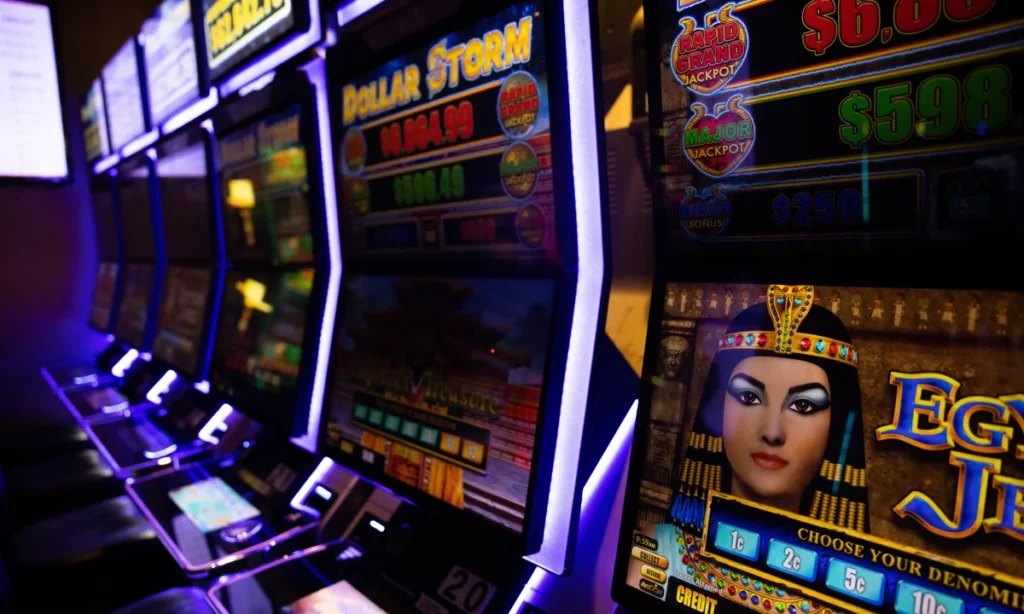
Australia is the country in which people suffer the greatest losses through gambling of any country in the world. New South Wales leads this area, owning 87,000 poker machines in 2,100 clubs and hotels that generate about AU$2.3 billion in gaming machine tax revenue in one financial year. Hence, when the Minns Labour Government released the NSW Gaming Reform package on 25 August 2026, the issue was not if there would be reform, but how much reform.
The answer lies with those who support the reforms.
An AU$95.2 Million Package Built on Three Years of Work
The NSW Gaming Reform package is not a rushed response. It arrives after a cashless gaming trial that ran between March and September 2024, a 530-page Roadmap for Gaming Reform delivered by the Independent Panel on Gaming Reform in November 2024, and a 2022 NSW Crime Commission inquiry that first raised the alarm on money laundering through gaming machines in pubs and clubs. Minister for Gaming and Racing David Harris described it as combining “new technology, stronger exclusion tools, strengthened regulation and increased funding for harm reduction.”
The government is committing AU$95.2 million (US$68.1 million) over four years to fund the changes, drawn from the remaining balance of the AU$100 million gambling harm minimisation fund and increased licence fees for clubs and hotels with gaming machines. A separate AU$20 million boost to the Responsible Gambling Fund over the next two years will support services including the GambleAware helpline.
The NSW Gambling Survey 2024 established the starting point, whereby 3.1 per cent of the adult population in the state were found to be moderate risk gamblers, while 0.9 per cent were high risk. Underpinning these figures are unpaid bills, depleted savings accounts, and families struggling, and the claim of the government is that the system was never designed for that purpose.
The Register That Will Follow You From Pub to Club
The most significant structural change in the package is a first-ever statewide exclusion register, backed by mandatory facial recognition at the entry of every gaming room in NSW. Both the register and the facial recognition technology are confirmed for 2028.
Currently, a person who wants to self-exclude from gambling can only do so at specific venues, and enforcement falls almost entirely on staff memory in crowded rooms. The new statewide framework changes that completely. When someone excludes themselves, that exclusion travels with them, covering every hotel and club with gaming machines in the state. The facial recognition system identifies excluded individuals automatically at the entry point, removing the reliance on staff recognition. Human verification remains part of the process.
Alongside the self-exclusion register, a third-party exclusion scheme has been introduced. Family members, friends, venues and police can now apply to exclude someone experiencing significant gambling harm, without waiting for that person to initiate it themselves. The technology will also support NSW Police in preventing gaming machines from being used for money laundering, addressing the criminal dimension that the 2022 Crime Commission inquiry first flagged.
Harris was clear on the intent: “Our government will continually explore and implement emerging technology to ensure NSW has the most up-to-date safety measures available built into our gambling industry.”
Fewer Machines, But on Whose Timeline?
The package targets the sheer number of poker machines in the state, though not through a fixed reduction mandate. The forfeiture rate applied when gaming machine entitlements change hands rises from one-in-three to one-in-two. For every two entitlements traded, one is permanently removed from circulation. A new “sinking cap” mechanism then lowers the statewide ceiling progressively as those entitlements exit the market; the cap cannot simply be reset.
The package also stops short of mandatory account-based play. The government acknowledged that a significant proportion of gaming machine infrastructure runs on legacy technology, and confirmed plans to upgrade the Centralised Monitoring System over the next two years to support an eventual transition. Whether venues make that switch will remain their choice. That discretion is precisely where critics believe the reform loses its teeth.
The Tax Revenue Problem Nobody Wants to Say Out Loud
There is a figure that can help explain why there has been such slow progress in reforming the gambling laws in NSW. Prior to the announcement, Macquarie University research pointed out budget estimates of NSW which revealed gambling taxes increasing from AU$3.8 billion in 2025-26 to AU$4.7 billion in 2029-30. Tax from gaming machines contributed nearly AU$2.3 billion in 2023-24, which was the fourth-biggest source of tax income in the state. “In addition to the gambling industry, the government of NSW benefits financially hugely from gambling,” said Professor Shireen Morris of Macquarie Law School. “This produces perverse incentives that push governments to extract more gambling losses from the poorest Australians.”
That dependency sits underneath every policy negotiation. The government is simultaneously funding venue diversification into hospitality, events and live entertainment, a signal that it recognises the structural problem, though not one that removes it quickly.
Advertising Rules Tightened, Legislation Timeline Still Unclear
VIP programmes linked to gaming are banned under the package. Gambling advertising on all NSW government and council-owned assets is prohibited. It is necessary to acquire the express prior consent of prospective clients before reaching out to them by phone, email, or text message.
In addition, the government will develop an approach for addressing the problem of gambling harm online and improving enforcement against rogue operators through new offences and increased sanctions. There is one important thing that has yet to be released: the schedule for legislation to make any of this happen. As of 25 August 2026, that remains unclear.
Critics Say the Can Has Been Kicked Down the Road
The reaction from advocates was pointed. Wesley Mission CEO Reverend Stu Cameron, whose organisation operates the NSW GambleAware Helpline for people in gambling crisis, said: “Whilst we welcome some of the initiatives in the announcement made today by Minister Harris, in many ways it’s too little too late. It feels like we’re kicking the can down the road when it comes to real proportionate gambling reform and poker machine harm here in NSW.”
The Macquarie University researchers shared that frustration. Their findings argued that existing programs, including Local Impact Assessments, ClubGRANTS and the current self-exclusion scheme, have largely failed to cut gambling harm in any meaningful way, reducing industry accountability without reaching the underlying causes. Associate Professor Morris pointed out in her conclusion: “Australia should be a reform leader, not the world leader in gambling exploitation. It is beyond embarrassing that Australians lose more money per capita to gambling than anywhere in the world.”
The gaps the critics point to are specific: no mandatory account-based play, no fixed machine reduction target, no legislation timetable.
Expert Analysis
We think the NSW package is the most serious structural attempt the Minns Government has made, and the 2028 commitment on facial recognition deserves credit for putting an actual deadline on something that has been discussed for years. The technology has been trialled in Australian venues already, and the statewide design, covering every hotel and club with gaming machines, takes it far beyond anything attempted previously in small-venue gambling in this country.
What concerns us is what sits on the other side of 2028. A statewide register works only as well as the legislation underpinning it, and that legislation has no confirmed timetable. Account-based play, the reform most likely to give authorities real visibility over gambling behaviour, remains optional for venues. Machine numbers will fall through market mechanics, not a hard target. NSW is simultaneously asking venues to diversify away from gaming revenue while giving those same venues the discretion over whether to adopt the technology that would make that transition most visible. That tension has not been resolved by this package; it has been acknowledged and deferred. Whether AU$95.2 million and a facial recognition mandate are enough to shift the fourth-largest source of state tax revenue in the direction of genuine harm reduction is the question this announcement raises and leaves open.
 Share
Share


 222 views