

Key Points
- A federal judge returned Nevada disputes involving Kalshi and Polymarket to state court and opened the way for regulators to begin enforcement action.
- The court ruled that the Commodity Exchange Act does not remove Nevada gambling law claims and refused arguments supporting federal jurisdiction.
- Regulators in Nevada may request restraining orders and geofencing steps which could block prediction market contracts for users inside the state.
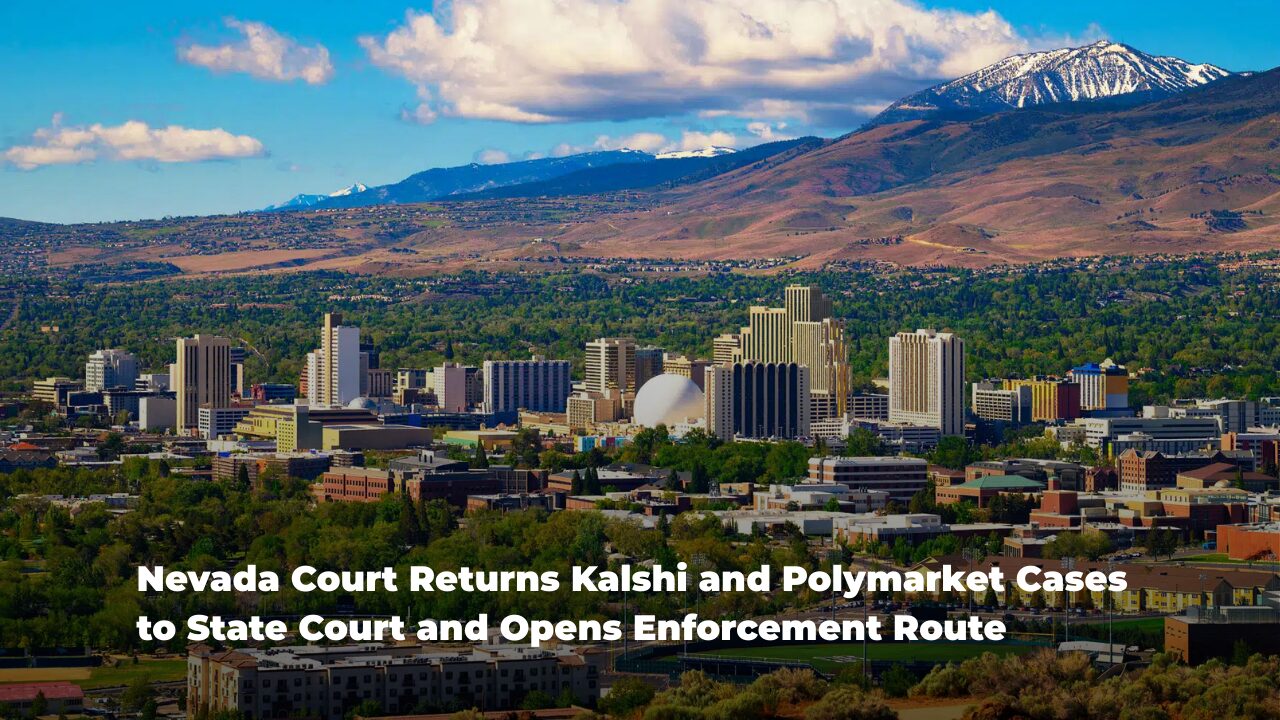
A federal judge in Nevada sent disputes involving prediction market platforms Kalshi and Polymarket back to state court, creating concern for platform operations in the state. This move removes a barrier that had slowed efforts by Nevada regulators who seek to limit services offered by the companies. The rulings now allow authorities in the state to pursue enforcement actions which could stop platform services for residents located in Nevada. Judge Miranda Du from the United States District Court for the District of Nevada issued the orders on 2 March.
Her decision returned both disputes to the First Judicial District Court located in Carson City for further legal review. The court determined that Nevada claims arise from state law and federal commodities statutes do not override state regulatory authority. Through two rulings the judge confirmed federal courts lack jurisdiction because the Commodity Exchange Act does not preempt Nevada gaming law claims. The court also explained that reading the Commodity Exchange Act savings clause shows Congress did not intend to displace applicable state law.
Kalshi Faces Risk of Nevada Market Exit
These decisions reject attempts by both companies to keep litigation inside federal court instead of returning disputes to state-level review. Both platforms argued that federal commodities law gives oversight power to the Commodity Futures Trading Commission over trading on contract markets. Kalshi also argued that its contracts act as swaps which fall under the regulation of the Commodity Futures Trading Commission. The company maintained that bans from states interfere with a federal regulatory framework covering derivatives markets. However the judge ruled that Nevada’s allegations come from state statutes and therefore the dispute must continue before a state judge.
Now that the cases return to state court the Nevada Gaming Control Board may continue civil enforcement against both companies. Regulators are expected to seek temporary restraining orders that could suspend event contract offerings to Nevada residents during proceedings. Authorities may also require geofencing systems designed to block users located in Nevada from reaching the platforms. If the state secures injunctive relief Kalshi may face a temporary halt on event contracts offered to users inside Nevada. Kalshi also faces legal pressure in Massachusetts where an injunction exists but the Massachusetts Appeals Court has stayed that order.
Observers note that the Nevada decision increases the possibility that Kalshi may need to halt operations within the state. Analysts warn that once one state forces geolocation restrictions it weakens arguments raised by Kalshi in other legal disputes. After the company geofences one location it becomes harder to claim that such technology would cause irreparable harm.
Court Rejects Polymarket Jurisdiction Claim
The federal court issued another decision involving Blockratize, the company that operates Polymarket. The judge refused the request from the company to keep the dispute inside federal court based on a federal officer claim. Such a status can allow defendants to move litigation into federal court where cases sometimes continue under federal jurisdiction. However the judge found no support for Polymarket claiming it acted under the authority of the Commodity Futures Trading Commission through exchange operation and contract self-certification.
Before this stage Polymarket already faced a temporary restraining order issued by a Nevada state court during late January. That order continued to remain active even during the short period when the dispute appeared in federal court. After the remand decision Blockratize submitted an emergency motion seeking an administrative stay while it prepared an appeal. Kalshi may also examine additional legal options while the dispute continues through further proceedings. Legal analysts say the company may file an emergency request with the United States Supreme Court seeking a temporary stay.
This stay request would apply while the Ninth Circuit considers the appeal connected with the dispute. Any request of this type would reach Supreme Court Justice Elena Kagan who oversees the Ninth Circuit. She may decide the request alone or refer the issue to the full Supreme Court for review. Past cases show the court sometimes grants administrative stays yet observers note success in such attempts remains uncertain. The dispute in Nevada forms part of a wider discussion across the country about the regulation of prediction markets. Regulators in Nevada argue that platforms offering contracts linked to sports results or election outcomes run gambling activity without a licence.
Authorities also claim these platforms lack the protections required for licensed sportsbooks including age verification and protection from insider wagering. Prediction market operators reject this interpretation and maintain that their contracts fall under federal derivatives regulation instead of gambling law. The Commodity Futures Trading Commission supports this position and warns that state-by-state regulation could fragment the derivatives market. Courts across the United States have issued different decisions on this question in recent cases. A federal court in Tennessee granted Kalshi a preliminary injunction against regulators while courts in Maryland and Massachusetts supported state authority.
Growth in Prediction Markets Raises Stakes
The legal dispute unfolds while prediction markets continue expanding across the sector. Total trading volume reached about 63.5 billion dollars during 2025 which equals roughly four times the volume from the previous year. A federal ruling in 2024 decided that event contracts are not automatically considered gambling under federal law. However that decision did not remove authority held by states to enforce their own gambling regulations. This difference means event contracts may remain legal under federal derivatives law while states apply their own regulatory systems. Analysts warn that such overlapping systems could produce parallel layers of regulation across jurisdictions.
If several states adopt this strategy prediction market platforms may need to build compliance systems for each jurisdiction. Another option would involve blocking users located in regions where regulators impose restrictions. Both choices could fragment liquidity and weaken the market model that depends on large pools of participants. The growing dispute has also created questions regarding the balance between federal and state authority. During a panel hosted by the Stanford Blockchain Club former interim CFTC chair Caroline Pham addressed the issue. She said the dispute raises a constitutional question connected with the authority held by federal and state regulators.
Pham described the issue as a conflict between federal derivatives oversight and state authority over gambling under the Tenth Amendment. According to Pham the legal battle will likely reach the United States Supreme Court. For now regulators in Nevada appear prepared to pursue enforcement actions through state court proceedings. The rulings therefore move the dispute into another phase as regulators and platforms continue their legal contest over jurisdiction and regulation.
Explore more:
 Share
Share


 48 views






 Analysis
  Blog
Blog  Business
  Companies
  Crime
Crime  Finance
  M&A
M&A  Regulation
  Reports