

Key Points
- MLB signed a data-sharing agreement with the CFTC to monitor prediction market activity.
- Polymarket becomes MLB’s exclusive partner with rights to use league data and identity.
- The agreements emerge during legal disputes over prediction market classification.
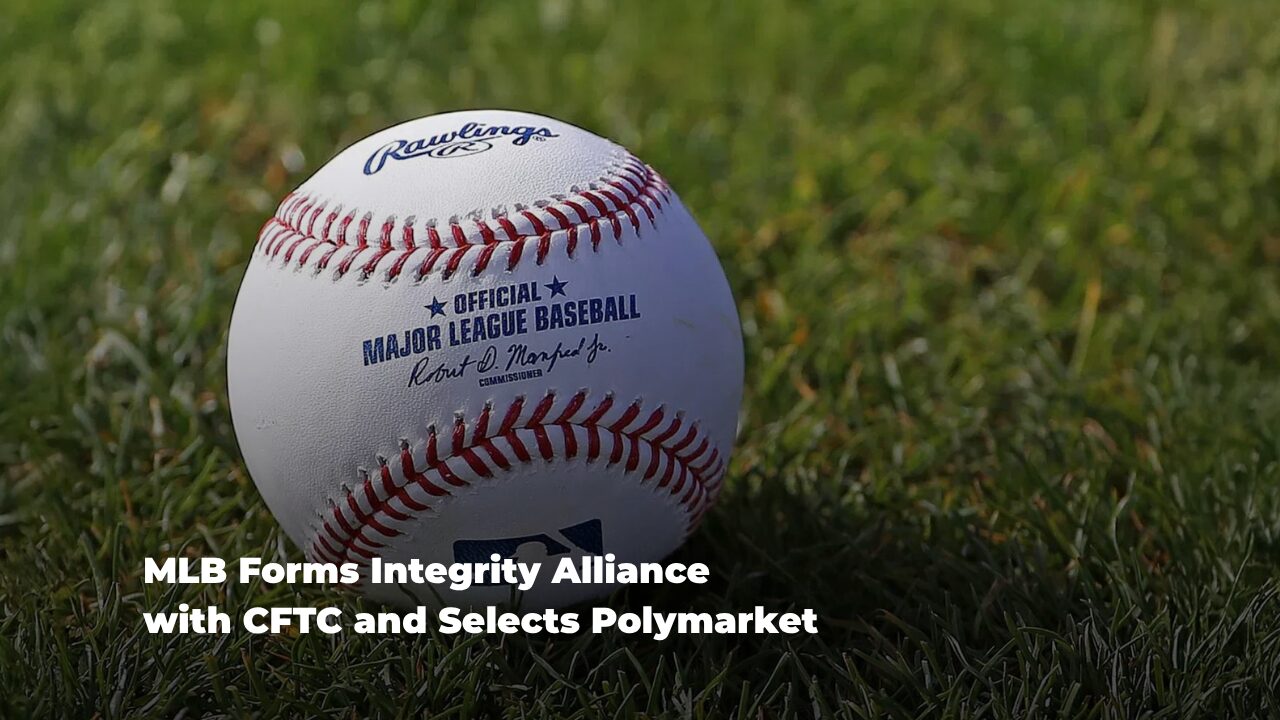
Major League Baseball completed two agreements within the expanding prediction market sector, creating a shift that signals urgency and responsibility. The league agreed to a memorandum with the Commodity Futures Trading Commission, marking a first collaboration between a regulator and a sports league. At the same time, MLB named Polymarket as its Official Prediction Market Exchange partner, forming a direct link with controlled expectations. Commissioner Robert D. Manfred, Jr. and CFTC Chairman Michael S. Selig signed this agreement after MLB requested stronger safeguards. This step reflects a joint plan to secure baseball integrity, ensuring quick responses while preparing for risks tied to prediction markets.
MLB and CFTC Establish Data Exchange Framework
Under this agreement, both MLB and the CFTC will exchange real-time data, intelligence findings, and information connected to baseball activities. They will treat all shared information as confidential to allow clear communication, while representatives meet often to review integrity risks. The partnership focuses on protecting game integrity and maintaining stability in financial markets linked to prediction trading systems. This approach aims to detect and stop match fixing, insider trading, and manipulation while supporting regulators in protecting users.
This agreement arises during an ongoing legal disagreement over how prediction markets should be defined and controlled. The CFTC maintains authority over these platforms, treating contracts as swaps under the Commodity Exchange Act. Several states including Massachusetts, Nevada, and Arizona argue these platforms act as unlicensed gambling operations. Arizona’s attorney general filed criminal charges against Kalshi, citing violations of rules on sports and election betting. The CFTC position shifted after setbacks, including a 2024 court ruling involving Kalshi that forced policy change. Current leadership removed earlier restrictions and adopted a controlled regulatory method focused on enforcement safeguards.
MLB Pushes for Federal Oversight Structure
This plan aims to shift prediction markets from state gambling laws to federal financial regulation structures. However, conflict between state and federal authorities may require intervention from the United States Supreme Court. Alongside this deal, MLB granted Polymarket access to league marks, logos, and branding for use in its products. Polymarket will also receive official data through Sportradar and gain presence across MLB digital platforms and events. A core part of the agreement introduces an integrity system to reduce risks linked to certain market categories. Both sides will limit markets that raise concerns, including those tied to pitches, decisions by managers, and umpire actions. Polymarket will include these controls in its United States rulebook to ensure consistent standards across brokers. While Polymarket holds exclusive rights, MLB intends to build integrity links with other platforms offering baseball contracts. These platforms must include required protections in their rulebooks to meet MLB standards.
MLB Responds to Expanding Prediction Market Sector
These agreements show MLB taking direct action within the prediction market space, which brings both opportunity and concern. Prediction markets allow users to trade outcomes of events through contracts structured as yes or no decisions. This structure creates overlap between financial systems and sports betting models, raising attention and scrutiny. MLB also reviewed this sector, including hosting a presentation on prediction markets during its owners’ meeting in Florida. These agreements signal a broader move to shape development while protecting the integrity of games. Despite this, parts of the sports betting industry continue to question these models strongly. The American Gaming Association expressed doubt, stating that federal agreements do not confirm lawful business operations. It argued that state and tribal systems provide stronger safeguards, transparency, and accountability for sports betting. Within this setting, MLB agreements with the CFTC and Polymarket show an effort to balance innovation with regulation and integrity.
Explore more:
 Share
Share


 56 views





 Analysis
  Blog
Blog  Business
  Companies
  Crime
Crime  Finance
  M&A
M&A  Regulation
  Reports