Key Points
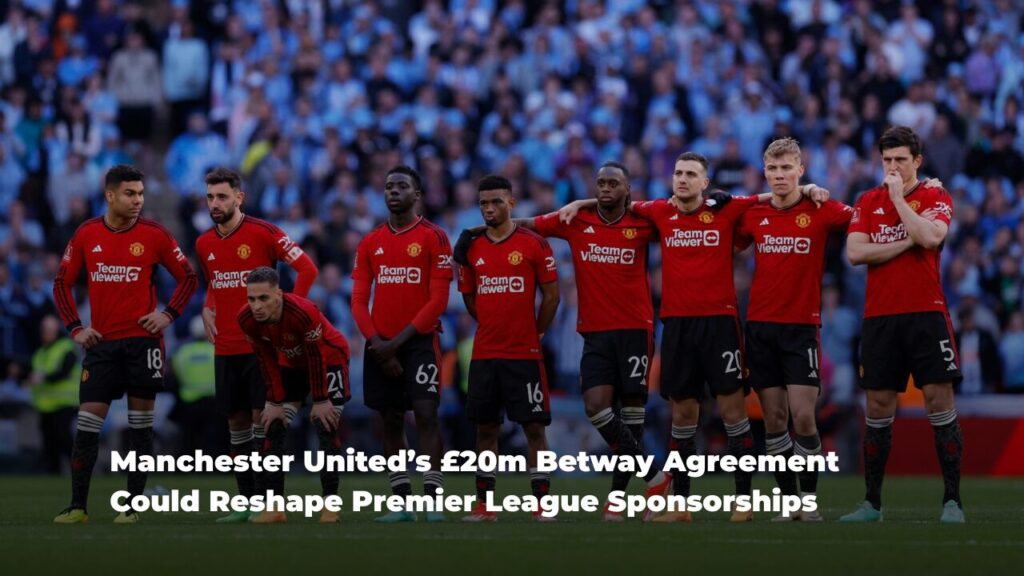
- Manchester United have reportedly secured a £20m-per-year training kit sponsorship agreement with Betway, setting a new benchmark for football training apparel partnerships while staying outside the Premier League’s incoming gambling shirt ban.
- The deal arrives after United completed a full season without a training kit sponsor following the end of their £24m-per-year Tezos partnership, while also delivering fresh income during Sir Jim Ratcliffe’s restructuring programme.
- The agreement could push other Premier League clubs toward training kits, sleeve sponsorships, media partnerships, and “official betting partner” deals as betting firms search for visibility under new restrictions.
Many believed the Premier League’s gambling sponsorship crackdown would force betting brands away from major clubs. Manchester United, however, may have uncovered the gap nobody expected. The deal that their association with Betway appears to entail, worth about £20 million annually, is much larger in scope than that of any usual commercial arrangement. This indicates that gambling companies are adapting much quicker than expected, while cash-strapped football clubs look for means of revenue protection. The timing adds even more weight to the story. As the summer transfer window approaches and the Premier League’s gambling shirt ban moves closer, other elite clubs may soon follow the same path.
Premier League Gambling Ban Sparked a New Sponsorship Battle
Manchester United are reportedly close to unveiling a multi-year partnership with Super Group-owned Betway valued at roughly £20 million per season. If the reports prove accurate, the agreement would stand as football’s biggest training kit sponsorship deal to date. The size of the figure catches attention straight away. Yet the bigger story sits beneath the headline number.
The Premier League decided to strip gambling sponsorships from their shirt sleeves starting from the 2026/27 season in order to cut off the involvement of betting companies within English football. It was presumed that the move would slowly see gamblers leave the high-profile clubs.
What has emerged instead feels far more calculated. Betting companies are not leaving football behind. Rather than disappearing, they are moving their branding into different spaces. Because the incoming restriction only covers the front of matchday shirts, clubs can still negotiate deals linked to training kits, sleeve sponsorships, social media campaigns, official betting partnerships, and pitchside LED advertising.
That single detail has suddenly opened a new commercial battle across the league. Manchester United may now offer the clearest example of how clubs and betting companies plan to work within the new system while staying inside the rules.
Why Training Kits Now Hold Major Advertising Value
For years, fans connected sponsorship value with matchday shirts because those logos dominated live broadcasts. Football exposure today works in a very different way. Training wear now appears across football’s digital world every day. Players use it during interviews, warm-ups, press conferences, promotional events, overseas tours, club media productions, and social media posts watched by millions globally.
That change has reshaped how advertisers measure sponsorship value.
Under the reported deal, Betway branding would appear on Carrington training gear alongside wider club media content, giving the company exposure throughout the year beyond live matches. For betting operators losing access to football’s biggest shirt position, training kits have rapidly become one of the few major advertising spaces still allowed under regulations.
The reported price shows how sharply that market has evolved. Even though this amount is much lower compared to the £60 million paid by Snapdragon, which is owned by Qualcomm, each season for seven years till 2029, for a front-of-shirt arrangement, this agreement indicates the increasing importance of secondary sponsorship assets.
This is very crucial because nowadays the Premier League teams depend heavily on their commercial income to fund transfers and wages.
Manchester United’s Financial Position Increased the Deal’s Importance
The reported agreement arrives during a difficult financial period at Old Trafford. Manchester United completed the entire season without a training kit sponsor after their three-year agreement with blockchain firm Tezos, worth £24 million per year, ended in June 2025. Reports claimed club executives rejected smaller offers while holding talks with several global companies, choosing to wait for a package they believed matched the club’s value.
The proposed Betway deal now seems ready to close that commercial gap almost instantly.
The agreement also arrived during the restructuring programme led by Sir Jim Ratcliffe alongside the Glazer family. Cost-cutting measures have already changed several parts of club operations, making new commercial income even more important. One detail linked to the agreement has drawn strong attention. The reported £20 million yearly fee sits close to the estimated £17 million cost connected to former manager Ruben Amorim’s exit. That comparison shows how sponsorship revenue is increasingly covering football expenses that no longer fit comfortably inside normal operating budgets.
Another issue quietly sits beneath the wider discussion.
Manchester United needs financial flexibility before the transfer window opens on June 15. Reports suggest the extra commercial revenue could increase the resources available to manager Michael Carrick during a summer expected to bring major squad changes.
Betway’s Place in Premier League Football Built Over Time
This reported partnership did not emerge overnight. Betway has spent years growing its influence across English football. The company worked as West Ham United’s front-of-shirt sponsor from the 2015/16 season until the close of the 2024/25 campaign. Beyond that partnership, deals involving Arsenal, Manchester City, Brighton & Hove Albion, and Chelsea also became part of the company’s broader football strategy.
That history matters because it reveals how strongly betting companies still value Premier League exposure compared with many other industries. Across football business circles, reports often suggest betting firms regularly pay above-market prices for sponsorship access because of the league’s global reach. Even with tighter restrictions approaching, that commercial demand still appears powerful.
Only the branding strategy now seems to be changing.
Rather than focusing spending on front-of-shirt logos, operators now appear ready to move investment toward whichever sponsorship spaces remain open.
Other Premier League Clubs Have Already Started Adjusting
Manchester United are not the only club dealing with this changing sponsorship landscape. Several Premier League clubs still need new front-of-shirt agreements before next season begins. Everton, Fulham, and Sunderland remain among the teams searching for fresh commercial partners after gambling sponsorship exits. Meanwhile, other clubs have already acted quickly to replace those agreements.
Bournemouth replaced Bj88 with long-term partner Vitality, while Crystal Palace secured a new agreement with US AI company Temporal following NET88’s departure. The financial pressure driving those choices is not difficult to understand. For years, betting firms stood among football’s biggest commercial spenders, often offering sponsorship packages that other industries struggled to match. Removing those companies from main shirt positions creates a serious commercial gap for clubs trying to maintain competitive spending.
That situation explains why Manchester United’s reported Betway arrangement could influence clubs throughout the league. Training kit partnerships may now grow into one of football’s fastest-expanding sponsorship sectors.
Public Pressure Over Gambling Sponsorships Still Remains
The debate over gambling sponsorship remains a heated one. According to a YouGov survey conducted in 2023, the same year in which the Premier League passed its shirt ban, 77% of the people who responded to the survey believed that gambling logos should be stripped off club shirts. The major issue raised by the public was over the prominent use of gambling logos during live broadcasts.
Critics of agreements like the reported Betway deal argue that the purpose behind the restrictions could weaken if gambling firms simply move onto training kits and surrounding club assets. Supporters of the commercial model, however, point toward football’s financial reality. Elite clubs now function inside costly systems where sponsorship income directly shapes recruitment budgets, infrastructure investment, and compliance with financial regulations. The tension between public concern and football’s financial dependence looks unlikely to disappear soon.
The Premier League may have reduced one form of gambling exposure, yet the financial connection between betting brands and football still remains powerful.
Prediction Markets Could Trigger Another Sponsorship Debate
The sponsorship shift may eventually stretch beyond traditional bookmakers. Prediction market platforms have grown rapidly in recent years, and parts of the industry already view football sponsorships as a possible area for expansion. That possibility introduces another layer of regulatory uncertainty. The UK Gambling Commission has stated that it does not oppose prediction platforms operating, although companies would still require betting licences.
That creates a future filled with uncertainty.
If prediction market firms begin replacing traditional sportsbooks within football sponsorship structures, regulators may face many of the same ethical and visibility debates already linked to gambling brands today. The branding strategy may evolve faster than the policies designed to control it.
Why Manchester United’s Reported Agreement Matters Beyond One Club?
The biggest point behind Manchester United’s reported Betway agreement is not simply that another sponsorship deal exists. What matters more is the model the agreement appears to create. Betting companies now have a visible strategy for keeping Premier League exposure while still following incoming restrictions. Avoid restricted matchday shirts, redirect investment toward unrestricted club assets, and maintain visibility through football’s endless flow of digital content.
That structure could spread across football very quickly. Training kits once felt secondary within football’s sponsorship structure. After this reported agreement, they may become one of the most contested advertising spaces in global sport.
Expert Analysis: What Comes Next for Clubs and Betting Companies?
For football executives and commercial operators, Manchester United’s reported Betway arrangement changes far more than one sponsorship category. Clubs now have evidence that betting companies still remain willing to commit major spending despite front-of-shirt restrictions approaching. That alone reduces fears surrounding falling sponsorship revenue across the Premier League.
The wider operational impact could become significant. Commercial departments across English football will likely reassess the value of non-matchday assets, especially training wear, digital integrations, and global media partnerships. Assets once viewed as secondary may now demand far higher prices during negotiations.
Betting companies also secure continuity through this approach.
Instead of losing visibility inside the world’s most-watched football league, operators can preserve audience reach while staying technically compliant with updated rules. From a marketing perspective, training kits may even create stronger long-term engagement because clubs produce digital content constantly outside live matches.
Risks, however, still remain substantial. Regulators and public health campaigners may eventually argue that these agreements bypass the original purpose behind the sponsorship crackdown. If public pressure grows stronger, future restrictions could expand beyond front-of-shirt branding into wider football partnerships altogether.
That possibility would create uncertainty for clubs building long-term financial strategies around these commercial structures. Another pressure point could emerge for traditional sponsors outside of gambling. If betting firms continue paying premium prices for alternative sponsorship assets, other industries may struggle to compete financially for elite football exposure.
Prediction market companies also remain an important area to watch closely. Their rapid growth, combined with unresolved regulatory positioning in the UK, could create another sponsorship category capable of triggering new commercial and political battles across football. Right now, Manchester United appear positioned to benefit immediately through higher commercial income and greater transfer flexibility.
The wider football industry, meanwhile, may be entering a far more complicated sponsorship era where regulations change branding placement, yet football’s financial dependence on gambling-related money still remains firmly in place.
Explore more:
 Share
Share


 473 views