

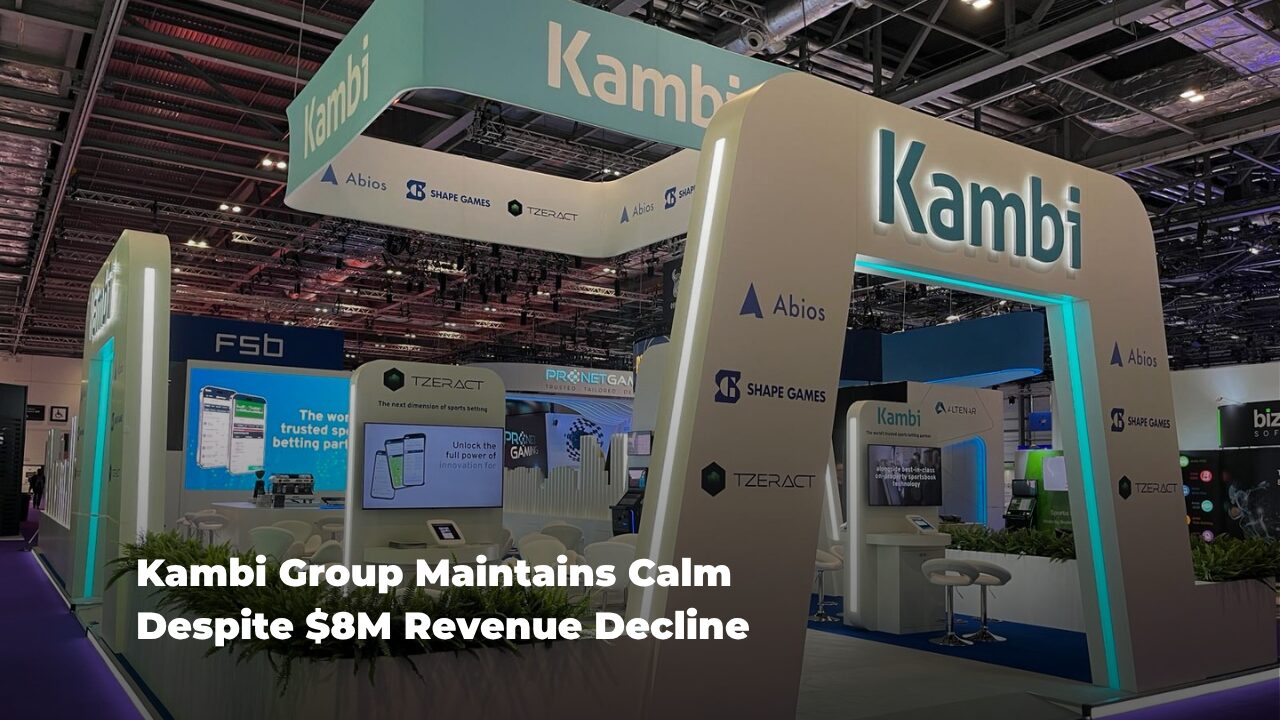
Kambi Group reported full-year 2025 results showing declines across revenue and profitability, plus delayed market entries. Total revenue fell to €162m from €176.4m in 2024, reflecting an 8.2% drop. When excluding one-off transition fees recorded in the prior year, the decline was narrower at 1.2%.
Q4 revenue reached €42.7m, down 3.9% year-on-year. Profitability also weakened during the period. Adjusted EBITDA came in at €50.4m compared to €59.7m in 2024, while operating profit dropped to €8.1m from €18.8m.
The company pointed to regulatory changes as a key driver of the decline. Tighter deposit limits in the Netherlands and tax increases in markets such as Illinois and Colombia affected operator activity and margins.
Delays in market entry remove expected revenue streams
Operational timing issues added further pressure on results. The launch of the Ontario Lottery & Gaming sportsbook platform was pushed into the first quarter of 2026, removing a significant revenue opportunity for 2025.
In Brazil, delays in the licensing process also impacted short-term performance. Slower progress meant anticipated revenue did not materialise within the year.
Despite these setbacks, leadership remains focused on long-term positioning. Chair Anders Ström said: “Following 12 months of operational progress, Kambi enters 2026 in the defining stages of a profound strategic transformation. The foundational work has already delivered positive change with more material benefits to be felt in the coming years.”
AI pricing technology reshapes trading operations
A key milestone for the company came from its investment in automation. By the end of 2025, Kambi confirmed that its proprietary AI pricing system was responsible for managing nearly half of all bets globally.
This shift marks a structural change in how the company approaches pricing and risk management. Management views AI as central to future operations. It is expected to lower costs per bet while maintaining pricing efficiency for operator partners.
The transition reflects a focus on building a system that can operate efficiently at scale without increasing operational complexity.
Growth outlook tied to new markets and modular strategy
Within this year, Kambi expects to drive higher betting activity through completion of the OLG rollout and opening of the regulated Brazilian market.
The company is also advancing its modular product strategy. Operators can now integrate specific components such as Bet Builder or AI-powered odds feeds instead of adopting a full sportsbook solution. This approach gives partners flexibility while creating additional revenue channels.
With major development investments already completed, the company expects improved profitability. Lower overhead costs driven by automation are expected to support margin recovery. Kambi has indicated a target of returning to double-digit revenue growth in 2026.
Explore more:
 Share
Share


 53 views







 Analysis
  Business
  Companies
  Crime
Crime  Finance
  M&A
M&A  Prediction Markets
  Regulation
  Reports