




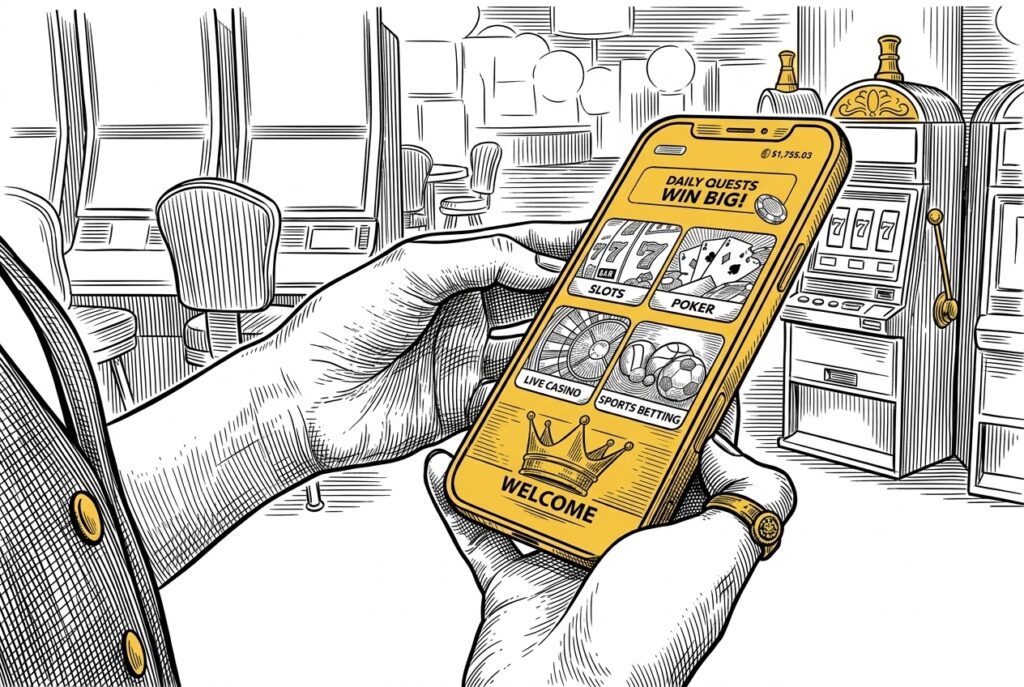
One in ten online gamblers in Ireland holds four or more gambling accounts, while nearly four in ten people who initially register for sports or horse racing betting subsequently participate in other gambling activities, according to research by the Economic and Social Research Institute (ESRI).
The study, commissioned by the Gambling Regulatory Authority of Ireland (GRAI), surveyed a representative sample of 1,000 gamblers about their online and in-person gambling habits, exposure to operator communications and attempts to reduce gambling activity. These findings follow GRAI’s phased introduction of its licensing and regulatory responsibilities.
Online gambling accounts and promotional offers influence participation
The ESRI found that 77% of respondents “had gambled online during the previous year, while 59 per cent had gambled in person”. Another 44% participated in both.
Among those who opened online gambling accounts, 54% subsequently registered with another operator, “with good odds, easy registration, and promotional offers among the most common reasons,” the institute said.
Approximately 10% of online gamblers held at least four accounts. The research also found that 26% of online gamblers reported losing “a lot” during their most recent session, “compared with 17 per cent of in-person gamblers”.
One in seven respondents said their most recent online gambling session followed an email, app notification or gambling advertisement, while one in five received gambling notifications daily. Respondents reported that opening accounts and depositing money were easier than closing accounts or withdrawing winnings.
Minister and ESRI researcher highlight gambling-related harm
Ireland’s Minister for Justice, Home Affairs and Migration, Jim O’Callaghan, said the research “plays a vital role in informing both the GRAI and my department, enabling us to continue to develop an evidence-based regulatory framework that is responsive to the public health and social needs of our communities while ensuring that gambling is regulated in a fair, effective, and transparent manner”.
Pete Lunn, head of the ESRI’s Behaviour Research Unit, acknowledged that “many consumers gamble for entertainment without experiencing harm,” but noted that previous research found “one in thirty adults in Ireland now experience problem gambling, with many more at risk of harm”.
Lunn said the latest study “sheds light on the pathways that people take that may ultimately lead them to harm,” adding that it “raises issues of what online consumers are signing up for and whether they know and understand that”.
GRAI identifies account management and consumer protection priorities
GRAI CEO Anne Marie Caulfield said “one of the GRAI’s statutory functions is to monitor and review national and international developments in gambling practices to identify issues of concern which may give rise to an increase in harmful gambling”.
She explained that to “identify practices of concern and to assess the effectiveness of regulations,” the authority must understand consumers’ everyday gambling experiences, “and increasingly in online environments”. Caulfield said the study was commissioned to provide a “real-world understanding of gambling behaviour”.
According to the CEO, the findings “confirms the need for new obligations which will be placed on licensed operators,” particularly around account opening and closure, spending limits and advertising restrictions. She highlighted that “more than half of online account holders are gambling using multiple accounts, often simultaneously across different platforms”.
The GRAI’s focus, she added, “will be on practical and proportionate protections, including marketing standards, effective account controls, and self-exclusion arrangements, while ensuring that regulation responds appropriately to developments in the ways in which people gamble”.
The ESRI recommended further research into how gambling website and app design, advertising and promotional activity influence consumer behaviour. “A particular priority is to determine whether specific elements of marketing activity are linked to harm,” the institute said.
Explore more:
 Share


 2 views