Key Points
- Check Before You Play was started by IAGR on 9 November but works with the jurisdictions that are members of the association and were not named yet.
- A blank answer does not prove anything illegal and/or safe; even France recognises that its own block list is not exhaustive.
- The UK Gambling Commission uses consumer awareness and takes action regarding payments, advertising and search results.
A Regulator-Built Search Box Faced the Hard Test: Silence
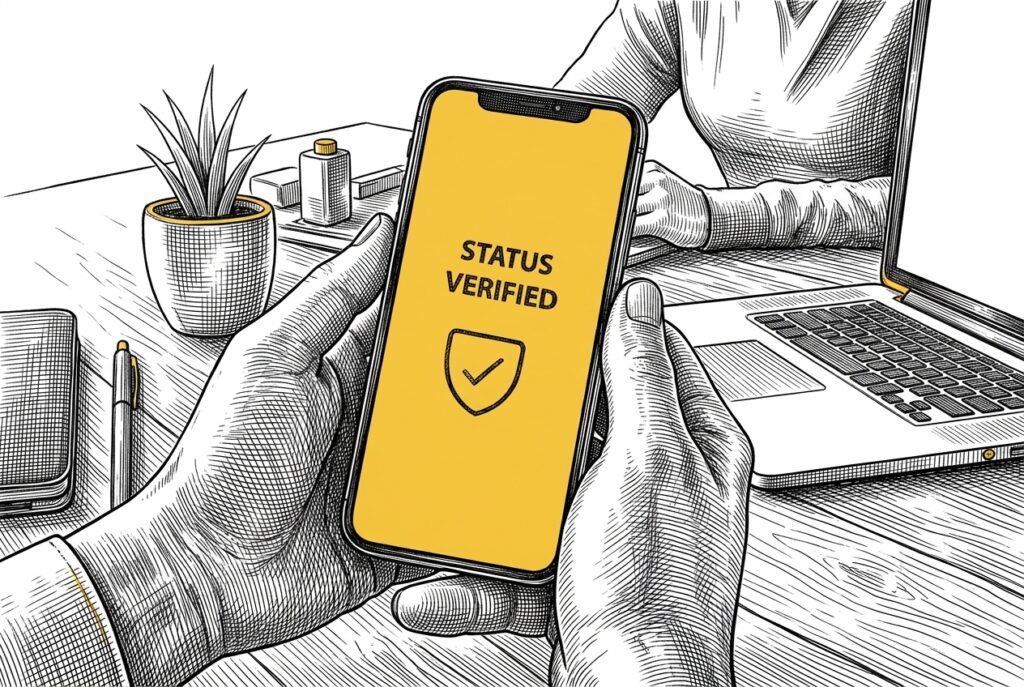
Put the URL of a gambling website into a newly created search box made with the help of regulators’ databases, and it will give the answer on whether the site is licensed. But what should be done if the search results are blank?
This search box is called Check Before You Play. The International Association of Gaming Regulators (IAGR) introduced it on 9 November to give people an opportunity to find out if the gambling website they use is licensed in their country. This happened during Illegal Gambling Awareness Week, which takes place between 9 and 13 November and is described by IAGR as the first internationally coordinated initiative aimed at increasing awareness of unlicensed online gambling.
The platform is provided by Sharp Vision, a company from Paris working in the sphere of regulatory technologies.
Interpretations of an Absent Result on the Checker Tool
IAGR specifies that the checker tool draws on regulatory data and other authenticated public sources. However, it fails to provide information on the jurisdictions of its members included in the tool and the frequency with which this data is updated. Also, IAGR has not provided guidance regarding what a user would see when searching for an unregistered site.
An illustrative case of how a lack of information can be interpreted comes from France’s gambling regulator, ANJ. This agency provides the list of prohibited gambling sites with a notice that the list is not complete. In other words, having a site absent from this list does not mean it is authorised. The same rule applies to the absence of results on the licensing checker.
Similarly, IAGR warns that even if a site is listed as licensed, it does not make it legitimate. The checker should not be seen as a replacement for the work of national gambling regulators.
This point made by IAGR’s chief executive, Kevin Mullally, is easy to grasp: “People often confuse familiarity for trust.” Indeed, there are illegal gambling operators that design their websites in a way to appear trustworthy. Therefore, familiarity and the professional look of a page cannot be taken as signs of licensing.
Mullally’s message that unlicensed sites are unprotected is simple to comprehend. However, the absence of any data from the licensing checker makes it difficult for users to follow this advice. The consumer has to “routinely” check the licensing status of a gambling site before registering or making a deposit.
Ontario’s AGCO notes that dealing with unlicensed gambling operators can result in a lack of protection in case of dispute, the use of personal financial information and non-provision of responsible gambling features. Ontario claims that its regulated market operates according to the standards of responsible gambling, personal information protection, games’ integrity and anti-money laundering rules.
Michigan’s gambling regulator highlights warning signs players should recognise without a need to consult the database. Such warning signs include accepting cryptocurrency and offering guaranteed winnings. Also, this state conducts radio public service announcements about illegal gambling. Michigan’s executive director, Henry Williams, points out that in the case of an unlicensed gambling operator, “there’s no one verifying your age or identity.”
A Licence Belongs to One Country at a Time
An operator of a gambling website can obtain a licence in one country and be unlicensed in another, as the Ontario regulator suggests. Thus, the same operator might be legally allowed to operate in Helsinki but not in Toronto.
For example, in France, online betting on sports and races and online poker are legal according to certain conditions. In turn, online casino games are strictly prohibited there.
Finland demonstrates why the date of obtaining a licence is crucial as well as its location. The licensing process started in Finland on 1 March 2026. However, it is allowed to start operations only on 1 July 2027. Therefore, during this period, the state-owned company Veikkaus Oy has a monopoly and other gambling companies cannot operate and market their gambling games in the country.
If a checker is unable to follow the developments in gambling legislation, then the information that it provides to the users will not be up to date.
Regulators’ powers to enforce laws are limited by national borders, whereas gambling websites can attract customers from multiple countries. There is already a technology developed by Sharp Vision that allows regulators to track down unauthorised websites and register complaints about them.
What Is Actually New Here?
Users can check gambling licences by themselves on the regulatory body of each country. For example, in France, lists of authorised and banned gambling websites are published by ANJ. Also, the Gambling Commission of Britain publishes a public register.
Thus, Check Before You Play intends to consolidate the information from these kinds of registers in one place. Still, it is not clear if the user will see it as one integrated tool or a series of national searches.
It is going to depend on answering three questions: which jurisdictions will provide the information, how often it will be updated, and what is going to happen if the checker is not able to find a website.
Beyond Sites, UK Regulator Hits Payment Systems
Gambling Commission of Britain is pursuing actions that go beyond just identifying illegal gambling sites.
According to a statement made on 9 November, the regulator has referred 7.8 million URLs to search engines. Three million have been deleted from search engine results, but the statement makes no mention of which entities were responsible for that.
In addition, the Commission has referred 2,200 websites to be disrupted. The statistics are made up of separate numbers for URLs and for websites, which means that the two sets of data cannot be taken as identical measures.
From one quarter to the next quarter, the number of URLs to be referred to search engines jumped from 147,721 to 7.7 million. In 2026/27, the regulator issued more than 1,000 stop notices. The regulator continues to freeze funds associated with illegal offline gambling activities in collaboration with law enforcement authorities.
Operations director Sue Young explained that the Commission has broadened its activities beyond taking down websites to “disruption of their payments and their advertising”.
The Commission has also referred more than £40 million worth of funds suspected of being criminal to partner agencies for asset freezing. This refers to the number of referrals and not the amount of funds that were actually frozen. The statement does not indicate that any of the funds have been frozen.
Such actions are aimed at the operators and the services that they need. A licensing checker performs a different function as it provides information to players before they decide to use a gambling site.
Expert Analysis: A Checker Is Only a Beginning, Not a Strategy
We give credit to IAGR for creating easier access to license information from regulators. However, we wonder how many players will use the checker before depositing. This point is related to the checker’s reach rather than its purpose, as the information comes directly from the gambling regulators.
According to the research conducted by the UK Gambling Commission, there are different types of people who use illegal gambling websites. Accidental Tourists are those who happen to reach such websites accidentally. In turn, Skilled Advocates deliberately choose illegal websites and do not trust the regulators.
We think that the checker, run by regulators, will have difficulty reaching both groups. Accidental Tourists will probably not think of checking a license, and Skilled Advocates will not trust information provided by the regulators.
We could not find any usage figures for the tool, therefore our judgment is based only on opinion. The use of the word “routinely” in Mullally’s quote is especially important here. It is hard to develop a routine habit in a one-week awareness campaign. Free access to the checker will make the service accessible but not compulsory.
We believe that there should be a close relationship between consumer awareness and regulatory enforcement. Licensing information can help people make the decision before depositing. At the same time, action against payments, advertising, and search visibility can limit their interaction with illegal gambling operators.
Some people might be concerned about spending money on awareness campaigns. We support the idea of investing in such activities, if the regulators prove the effectiveness of such campaigns.
There are four criteria that should be used to evaluate the checker’s effectiveness: the number of jurisdictions, frequency of updating records, the number of searches with useful results and player behaviour.
IAGR should release those results separately for each country. There is a risk that the overall number of searches will hide the poor coverage of the checker in individual markets.
The announcement was made during the change in the leadership of the organisation. An announcement of Ben Haden being elected president of the IAGR was replaced by the leadership update issued by a new president Brian Krolicki on 10 November.
In his update, he describes priorities for 2027. They include an assessment of the campaign’s results, learning from them and increasing participation in the campaign.
 Share


 4 views