




Key Points
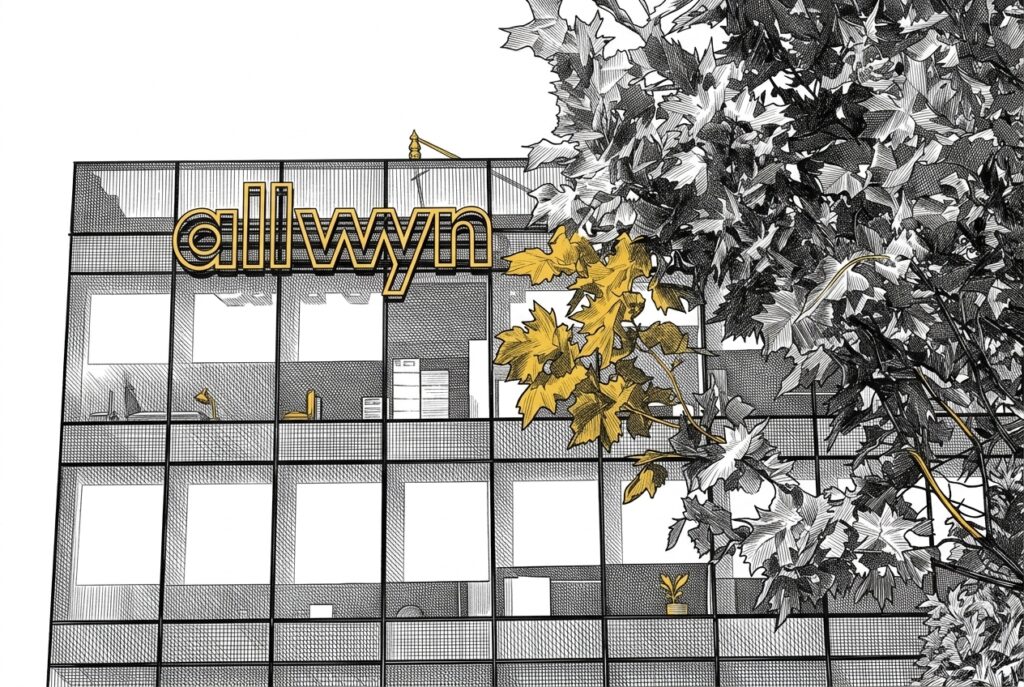
- Allwyn has just handed over €50m to Kambi in the form of a few agreements, which include a licence to use the sportsbook source code ‘forever’.
- Kambi reckon they’ll be pulling in €45m to €50m in profits by 2031, that’s after they’ve taken account of the costs of all the deals.
- Allwyn believes that their own developed solution for trading and risk management would cost the firm tens of millions of euros each year from 2027 onwards.
Allwyn Gets Access to Sportsbook Technology through a Clever Backdoor
Allwyn succeeded in getting the sportsbook technology without being in competition with anybody. In addition, such an approach causes more complications with regard to the actual owners of the technology and its financing.
The agreement with Kambi worth €50 million was signed by Allwyn on the 10th of November. As per the agreement, Allwyn would receive a license to use Kambi’s sportsbook source code indefinitely together with some services and trading. It is impossible to give the exact amounts that companies paid for each component as neither of them disclosed it. Allwyn states that Kambi has never made such an agreement before. The payments will be stretched over the next three years, with half of the entire amount paid in 2027.
We had the opportunity to speak to Kresimir Spajic, Allwyn Digital’s CEO, who claims that this deal would provide the company with the opportunity to build its own product and improve it faster than it could happen if Allwyn used a leased solution. In fact, the latter restricts the pace of development as the company cannot develop it faster than its provider allows. The firm enjoyed a successful 2025 with €800 million earned in sportsbook revenue.
Kambi Retains the Trading Desk and Crunches the Numbers
The longer-term contract means that Kambi can retain its lucrative AI-driven trading and risk management services for Allwyn. Additionally, Kambi claims that it will help the company enhance its network and liquidity pools. Kambi expects that the contract will boost its profits by €45m to €50m by 2031. At the same time, Kambi has to pay an extra sum from 2027 through to 2029 in order to prepare the workforce to transfer to Allwyn. As per Kambi’s CFO David Kenyon, the company’s forecast has already included all the deal-related costs.
Kambi believes that the largest portion of profit, about 40%, will be received in 2027, followed by smaller parts in the following years. For instance, one of the 2027 payments is worth about €18m to €20m and is expected to be made ahead of schedule. The rest of the payments will be contingent on the workload Kambi completes. Kambi expects to reinvest most of the money received into shareholders of the company, but this is not an absolute promise.
What €50m Does Not Cover?
€50m covers only a part of the investment. Apart from it, Allwyn is planning to develop its own central trading, pricing, and risk management facilities. It expects this activity to contribute low tens of millions of euros annually to Allwyn’s central costs starting from 2027.
Splitting the amount of consideration into three equal parts over three years gives an average of about €16.7m annually. However, the actual amounts will differ – about half is expected in 2027. Also, Allwyn is planning to capitalise consideration, yet it has not provided information on how soon it will impact the earnings. Central costs are a distinct item and it is a recurring annual cost with no termination date defined. The information about the gross gaming revenue in sports betting €800m highlights the size of Allwyn’s business but revenue is not equivalent to excess cash.
Novibet Withdrawal Made Kambi A Candidate
Initially, Allwyn was trying to achieve a monopoly over Novibet, a Greek competitor known for its pricing policy. On 2 December 2025, the Hellenic Competition Commission issued a non-binding Statement of Objections and it proposes to prohibit the transaction.
It stated that Novibet obtained a high market share at the expense of competitors from 2021. This has happened due to the combination of aggressive pricing, massive advertising and a modern platform. At the time, Allwyn was holding more than 50% of the market and the regulator claimed that the acquisition would reinforce the monopolistic power.
On 4 March 2026, Allwyn and the parent company of Novibet withdrew the transaction from the regulatory process. Allwyn justified its decision by its commitment to pursue transactions which will create value for shareholders. The ruling on 23 March terminated the investigation as there was no need to assess the proposed acquisition any longer.
Separate $120m Deal for Instant Win Gaming
Also, Allwyn has announced on the same day the acquisition of the remaining 30% of Instant Win Gaming for about $120m. IWG provides digital instant-win games to lotteries in the United States, Europe, and other markets. The minority shareholders exercised their put option and initiated the transaction. The deal is expected to be completed in the first quarter of 2027. Adjusted EBITDA of IWG has grown by 30% in 2025 in US dollars.
Allwyn Brands Which Have to Be Transferred
The transfer of all its brands to one platform will be a long process. Allwyn operates national lotteries in Austria, Cyprus, the Czech Republic, Greece, and the UK. According to Kambi’s Werner Becher, Allwyn uses in-house sportsbook technology, OpenBet in some markets, and Kaizen in Stoiximan. It should be noted that he emphasised that this is his view based on publicly available data.
All these brands have to be transferred to one platform; however, no company has mentioned which brand will be transferred first. During the transfer, Kambi will render development and deployment services. Then, a separate team will be transferred to Allwyn. The first milestone will be a payment at the start of 2027, while the transfer will go on till 2029. All the numbers are predictions, and the two companies announced forward-looking statements.
Expert Analysis: Whose Advantage Is That?
When it comes to Allwyn’s “in-house” platform by Kambi we believe that it provides Allwyn with slightly inflated credits in terms of the amount of control over that. In reality, the actual process of developing the platform, training the team and providing the trading services is going to remain the prerogative of Kambi at least for now. In turn, control is gradually going to pass to Allwyn, first through the source code and later through the trading capabilities.
As for Kambi’s CEO, he has clearly stated that providing managed sportsbook services is going to remain their primary activity and also that their own special team is going to manage the needs of Allwyn. On top of that, according to Becher, customers of Kambi can expect no disruption from this move at all, yet it is nothing more than a claim that remains unproven until verified by the customers.
Certainly enough, there are some risks that exist for both parties. The appearance of other large-scale operators, who are going to follow in Allwyn’s steps, could result in decreased demand for managed sportsbook services and operators would simply pay Kambi for using their platform, milestone payments and trading services.
There is one thing that gives some sort of advantage to Kambi – the company receives their payment upfront, while Allwyn becomes responsible for the development of the platform and covering the recurring costs. Yet, Kambi also faces certain risks, which consist of delivering what has been promised in order to receive further payments. Moreover, neither of the two announcements revealed the duration of the trading contract, which is described by both of the parties as long-term agreement. It can become a crucial factor, because once the trading team gets transferred to Allwyn, this detail can give one of the companies some leverage.
The costs of Allwyn are easy to estimate, while potential savings or gains cannot be estimated in any way whatsoever. According to Spajic, Allwyn can get into the market faster, but there is no mention of the migration schedule in the announcement.
Explore more:
 Share


 10 views