Key Points
- Fifty iGaming licence applications have been submitted to Finland’s National Police Board since the window opened on 1 March 2026, roughly doubling the 24 recorded at the end of March.
- The application total has already hit the upper ceiling industry observers predicted for the entire live market, with 13 months still to go before launch.
- Significant regulatory gaps on bonusing, advertising, and player protection remain unresolved, and licence decisions are taking approximately six months to process.
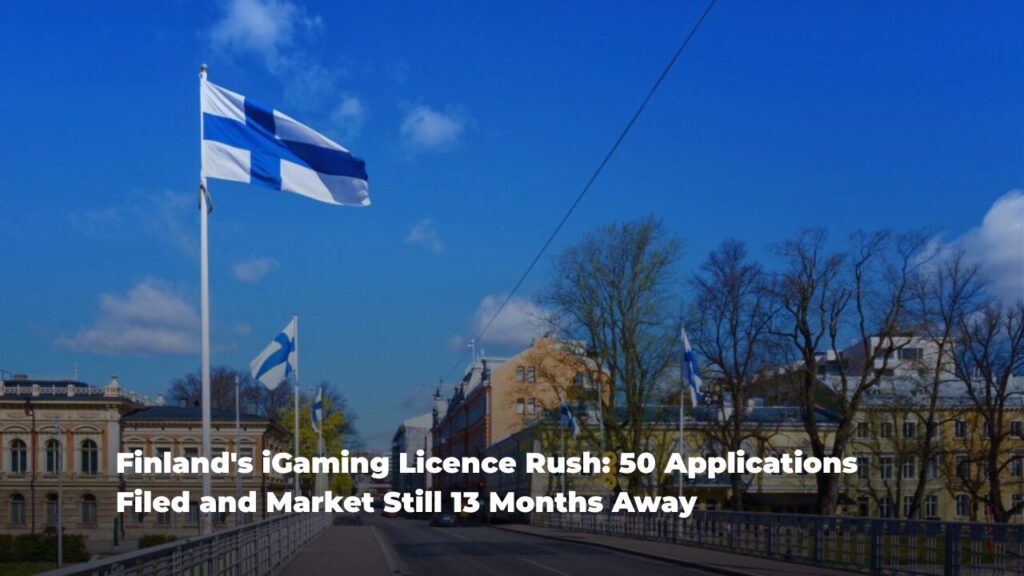
Finland’s gambling regulator had a number ready when it opened the licensing window in March. Industry observers, when iGB asked them earlier this year, put the final licence count somewhere between 40 and 50 operators once the market went live. That ceiling has already been reached. The National Police Board confirmed this week that it has received 50 iGaming licence applications, and the country’s regulated market does not open until 1 July 2027
Panellists at the Global Markets Hub session during NEXT Summit Valletta 2026 had put the number at roughly 30 applications at that point. The Police Board’s latest update has gone past that figure by a margin that has caught many off guard.
Foreign Operators Are Leading the Queue
Finland’s gambling regulator had a clear number in mind when it opened its licensing window in March. The National Police Board confirmed this week that it has received 50 iGaming licence applications. The country’s regulated market does not open until 1 July 2027.
Panellists at the Global Markets Hub session during NEXT Summit Valletta 2026 had put the figure at around 30 applications at that point. The latest update from the Police Board has gone far past that.
Who is applying matters as much as how many. Juha Katainen, senior adviser at the National Police Board, was open about this problem. “The complexity of processing and evaluating applications is affected by the fact that the majority of applicants are foreign,” he said. Each applicant must pay a non-refundable fee of €29,000 before the review begins. The Police Board targets a six-month turnaround, though incomplete documents can push that longer.
Katainen asked applicants to stop checking in repeatedly. “We hope that applicants will avoid constantly contacting us about the processing status of their application, as answering enquiries takes time away from processing applications,” he said. For operators who want to be live from day one, the numbers are already difficult. Applications submitted late in the year may not clear the process before 1 July 2027.
LeoVegas Confirms It Is In
The Police Board has not published a full list of applicants. Some operators have spoken publicly, though. At the Summit Valletta 2026 panel, LeoVegas Nordics managing director Fredrik Wastenson confirmed the company had applied for two licences. That makes it one of the few named operators on record right now. Wastenson had earlier told operators unsure about technical requirements to wait before committing. LeoVegas went ahead regardless.
A Market Built on Strong Fundamentals
The rush to apply reflects how much operators want a share of this market. Finland’s parliament adopted the new Gambling Act on 16 December 2025. Presidential approval followed on 16 January 2026. The bill passed by 158 votes to nine, ending Veikkaus’ monopoly and replacing it with a competitive multi-licence model. Finland is the last major online gambling monopoly to be dismantled inside the European Union, after Sweden in 2019 and Denmark in 2012.
Licensed operators will be able to offer online casino games, sports betting, slots, and online money bingo from 1 July 2027. A 22% tax on gross gaming revenue applies, up from the current 12%. Veikkaus keeps exclusive rights over lotteries, scratch cards, and physical gaming products.
Around 70% of Finnish adults take part in some form of gambling, one of the highest rates in Europe. Analysts at iGaming Future have put Finland’s total gambling market at around €2.4 billion. Online accounts for close to 65% of that and grow at around 5% each year. About half of all online gambling currently goes to offshore platforms. That was the main reason lawmakers gave for opening the market.
The Saturation Question Nobody Has Answered
How many operators can one small country hold? Antti Koivula, chief compliance officer at Hippos ATG, put it plainly. “It’s a rather small country to add a lot of operators into the mix,” he said. Finland’s population sits at around 5.6 million, placing it in the middle range of European markets by size. The expected licence ceiling has already been passed more than a year before launch. How many operators will actually be present when the market opens remains a question with no answer yet.
Veikkaus Faces a Transition Full of Open Questions
For Veikkaus, new competition is arriving while many operational questions remain without answers. Jarkko Nordlund, head of iCasino and sportsbook at Veikkaus, made it clear that the law alone is not enough. “The law is fine. Now everyone is begging a bit, like, what are the definitions of the law? We still don’t know how we’re able to use bonusing, what advertising is allowed, what media is allowed, the duty of care, or player protection. Everyone is pro-licensed, but we would love to have the nitty-gritty details,” he said. Guidance from regulators on these matters is not expected before the first quarter of 2027.
Veikkaus has already begun splitting itself into two separate parts to prepare for this new environment. One part will hold the monopoly over retail products, and another will compete in the open online market. This split is happening while a major debate about the company’s value continues. Industry consultant Jari Vähänen told Finnish national broadcaster Yle that Veikkaus holds a total value of around €4.5 billion, based on a 10x multiple of its annual gaming surplus of €450 million, with digital operations worth between €1 billion and €1.5 billion on their own. He also warned that Veikkaus’ returns have dropped by nearly half over five years, and that continued uncertainty could reduce that value once licensing begins.
No formal sale process has been announced yet. Political opinion stays divided, with the Social Democratic Party and Centre Party open to a sale, while the Left Alliance has pushed back against any divestment. The debate within Finland’s political class shows little sign of ending before the market opens.
What Happens Next?
The National Police Board remains the licensing and supervisory authority until the end of June 2027. After that, oversight moves to the new Finnish Supervisory Agency when the market opens. The Board has confirmed there is no fixed deadline for applications and that the process runs on a continuous basis, but it has asked operators to apply early to make sure decisions come before the launch date.
With 50 applications already received, more coming throughout 2026, and the most important regulatory details still unpublished, Finland is now in the most critical part of its transition. Operators who applied early are waiting on a process that takes six months and gives no updates in between.
Expert Analysis
Finland’s application numbers are telling a story the regulator did not plan for. The licensing window was built to grow at a steady pace toward a settled market of around 40 to 50 operators by the time of launch. Instead, that number was reached more than a year early, with no cap on new submissions. The result is a market that could open with far more licensed operators than any pre-launch estimate predicted, in a country with a population of 5.6 million.
The unresolved legislative details make this harder. Operators are putting in €29,000 and months of compliance work for a framework that has not yet set its rules on advertising, bonusing, or player protection. That is not unusual in early regulatory cycles, but time is running short. With guidance not expected until Q1 2027 and licences needing processing before the July launch, the window for operators to build compliant structures before going live is closing faster than it looks on the calendar.
The Veikkaus question remains the largest structural unknown. A state-owned operator is restructuring while more than 50 international companies line up for the same market, against a background of sale speculation and a valuation that depends on outcomes nobody knows yet. This level of commercial uncertainty will shape how hard the new entrants compete on price and positioning from the very first day.
 Share
Share


 216 views