

Key Points
- Evolution now moves to include Playtech and named individuals as defendants in a U.S. defamation case that carries major weight.
- Claims point toward a planned smear effort using altered evidence, hidden recordings, and paid media distribution.
- Playtech rejects all claims and maintains that the report reflects real regulatory concerns.
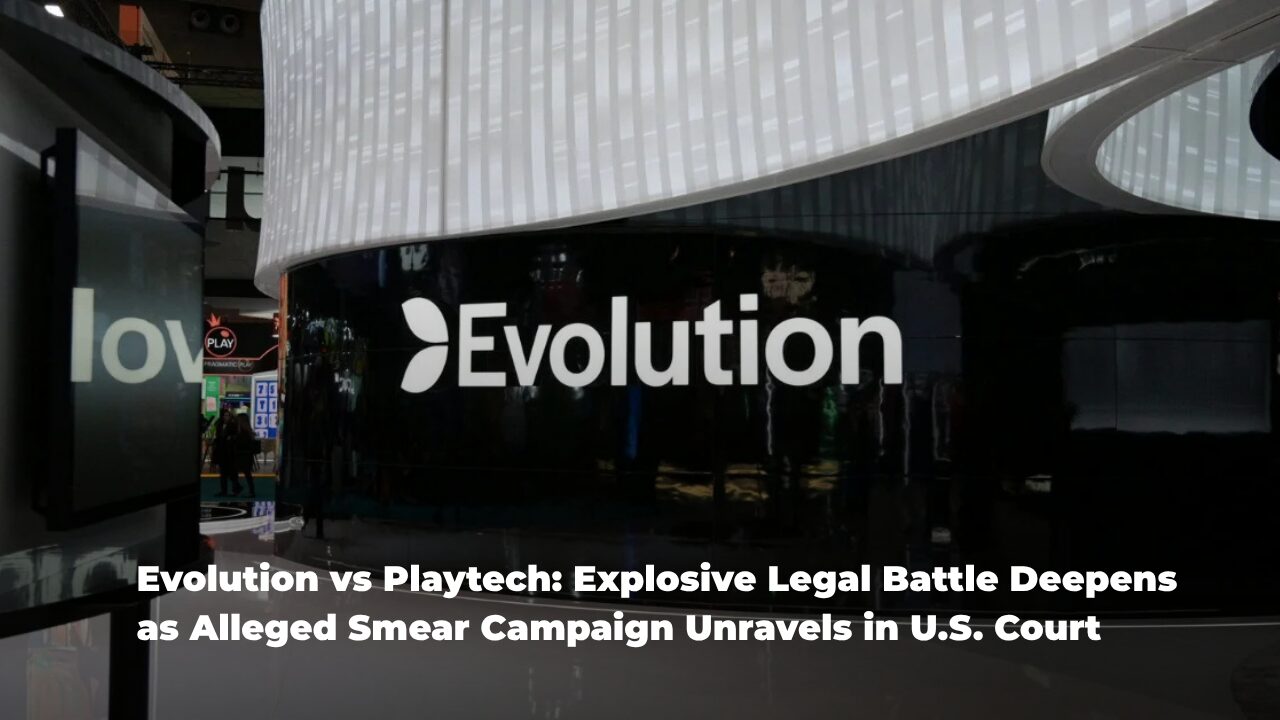
Business competition tends to play out in product development and market share battles. This case, however, points toward a much darker possibility one that may have played out well away from public view. Evolution, a global leader in online casino software, now pushes a New Jersey court to expand an ongoing defamation lawsuit. It seeks to formally add rival Playtech, crisis communications figure Juda Engelmayer, and several others as defendants. The central allegation carries serious implications: that a competitor did not simply compete but allegedly ran a long-term operation to destroy reputation, invite regulatory action, and strip away market position. Should this allegation hold up, the story moves from competitive rivalry to something resembling coordinated corporate sabotage.
What Evolution Is Alleging, and Why It Matters?
The dispute centres on a 2021 report by private intelligence firm Black Cube. It accused Evolution of conducting business in prohibited and sanctioned markets Iran, Syria, Sudan, China, Hong Kong, and Singapore and raised concerns about possible involvement in illegal gaming distribution. Allegations of this nature tend to draw regulatory attention. They did. The report went to U.S. regulators the New Jersey Division of Gaming Enforcement and the Pennsylvania Gaming Control Board accompanied by a request to strip Evolution of its licences. Evolution takes the position that the report was never designed to surface the truth. The argument is that the investigation had a predetermined outcome from day one. The amended complaint states that Playtech allegedly contracted Black Cube in December 2020 with a defined mission to build and distribute a damaging report capable of triggering regulatory investigations and pushing Evolution out of North American markets.
Evolution does not treat this as accidental. The filing frames it as a deliberate plan, with allegations that:
- Evidence was selectively edited and “cherry-picked”.
- Findings that cut against the narrative were withheld.
- Employees were recorded in secret through false identities.
- Media placement was paid for to drive maximum impact.
The significance of this is not abstract. When a flawed or manufactured report shapes what regulators believe, the fallout goes beyond reputation licences, market access, and investor confidence.
The Timeline Reveals a Multi-Year Strategy
The timeline that court proceedings have surfaced gives this case unusual weight not because of any single accusation, but because of how the pieces fit together across several years. Playtech’s alleged engagement of Black Cube began in 2020. Through 2021, the firm ran covert interviews using disguises and constructed identities, reportedly capturing at least five current or former Evolution employees and board members on recording without their knowledge. The report reached regulators in November 2021 and moved into the public domain almost immediately. Bloomberg published an article on 16 November that gave the allegations wide circulation. Simultaneously, Black Cube transferred £10,000 to HeraldPR a firm with links to Juda Engelmayer to support further distribution of the narrative. Financial markets reacted. Evolution’s share price had sat near SEK 1,440 it later fell to around SEK 613.90. That movement reflects more than investor nerves; it captures the market pricing in regulatory risk. Evolution commenced its lawsuit on 14 December 2021. In the years that followed, efforts to prevent disclosure of key identities shaped much of the legal process.
Courts eventually stripped those protections away:
- February 2024 regulatory bodies concluded their inquiries without corrective action, noting “no evidence” of illegal bets or improper payments.
- In February 2025 the court found Evolution’s defamation claim credible and mandated disclosure of anonymous parties.
- April 2025 Black Cube’s role as the author of the report was confirmed.
- October 2025 Playtech’s identity as the party that commissioned the report became known.
The timeline also explains why Evolution moves only now to name Playtech. This was not a strategic delay it took this long to establish who sat behind the original report.
Evidence, Incentives, and the Question of Intent
Among the most contested dimensions of this case are the financial incentives woven into the investigation itself. Court disclosures reveal that Playtech’s contract with Black Cube contained several six-figure success fees, one of which reached £1.5 million. The payments corresponded to defined outcomes:
- Producing evidence of wrongdoing.
- Achieving coverage in prominent media outlets.
- Generating regulatory investigations.
The structure invites a hard question. When a fee is tied to a result rather than a process, does the financial arrangement distort how investigators approach the evidence? Evolution answers clearly: yes. It argues that this model pushed the work toward constructing a narrative rather than conducting a neutral enquiry. Testimony from Black Cube director Avi Yanus pointed in the same direction confirming that material in the report came via deception and underwent selective editing. Evolution cites this as evidence that the allegations were “false, misleading, and cherry-picked.”
Regulatory Findings Shift the Ground
Regulators completing their work in February 2024 produced what may be the pivotal development of the entire case. Both New Jersey and Pennsylvania found no substantive support for any of the core claims. The findings confirmed:
- No proof of Evolution accepting bets from prohibited jurisdictions illegally.
- No evidence of improper payments.
- No indication Evolution enabled unlicensed access to its platform.
These findings do not close the lawsuit. But they change what the lawsuit is about. They damage the report’s standing and lend force to Evolution’s claim that the allegations had no verified foundation. For observers of the case, this moment offers the clearest view of what is actually at stake. The question is no longer simply one of competing claims it is whether the claims in the original report held any grounding in verifiable reality.
Playtech Pushes Back, Firmly
Playtech has made no move toward retreat. Its response to Evolution’s narrative is direct and unapologetic. The company maintains its position on both the decision to commission the investigation and the validity of what it produced. In its view, the report responded to “credible and repeated concerns” surfaced by operators, suppliers, and regulators across the industry. This reframes everything. Where Evolution sees a smear campaign, Playtech sees a compliance examination of genuine concern. Its formal response stated: “Evolution continues to seek to avoid legitimate scrutiny rather than addressing longstanding questions about its own conduct, including its decision to supply operators in both illegal and sanctioned markets and to support unlicensed operators in regulated markets.” On the question of what proceedings will ultimately confirm, it added: “The Company is very confident based on evidence it has, including recent additional evidence, that these proceedings will confirm the credibility and legitimacy of the report and the importance of the issues it seeks to address.” The divide is not purely factual it is a conflict of interpretation at its core. One party alleges fabrication. The other defends verification.
Market Impact and Competitive Stakes
The courtroom dispute reflects a much larger commercial contest. Both Evolution and Playtech occupy the same growth-stage industry online casino solutions and North America represents a defining strategic opportunity for each. Regulatory loss in New Jersey or Pennsylvania does not merely impose costs it rewrites the competitive picture. Evolution states directly that Playtech’s actions targeted the elimination of competition in this part of the world. It has also put Playtech’s own regulatory record under scrutiny specifically a 2025 sanction for compliance failures in Sweden. The implication is that the company filing regulatory concerns about a rival faced its own compliance shortcomings. The day’s market data captures where things stood:
- Evolution shares traded between SEK 604 and SEK 614.
- Playtech shares moved between 380.40p and 392.00p.
These figures do not point to resolution. They point to continued unease on both sides of the dispute.
What Does This Case Actually Change?
Surface-level, this can read as one more corporate legal clash of allegations, denials, and courtroom procedure. That reading misses the larger implications. A question runs through this case that has consequences beyond these two companies: at what point does competitive investigation gathering intelligence, and commissioning reports cross into something that can no longer be called legitimate due diligence? If Evolution’s position is validated, a troubling template comes into view one where intelligence operations, paid media placement, and regulatory pressure function together as a deliberate competitive instrument. If Playtech’s defence succeeds, it reinforces something quite different that investigating potential misconduct in an industry is not only acceptable but arguably a responsibility, regardless of the controversy that follows.
Where Things Stand Now?
No ruling yet exists on whether Playtech formally joins the case as a defendant. But the direction of the proceedings is clear. What began as an anonymous document has become a multi-party legal dispute touching defamation, fraud, racketeering, and anti-competitive conduct. Neither party has moved from its position. Evolution is unambiguous: “We are confident in our rigorous compliance policies and practices, and that the facts in this case are on our side.” Playtech signals no softening either it commits to defending its position with force while expressing confidence that further scrutiny will vindicate the report.
The Shift in Understanding
One contested report started this. What it has grown into is a much broader test of how information is produced, controlled, and used as a tool in corporate competition. The court’s eventual ruling will matter. But the deeper question it raises will outlast the verdict: how much confidence can realistically be placed in investigations that carry the power to move regulators, shift markets, and reshape what the public believes? When that confidence is placed in question, every claim whether solid or constructed is given a different weight entirely.
Explore more:
 Share
Share


 34 views






 Analysis
  Business
  Companies
  Crime
Crime  Finance
  M&A
M&A  Prediction Markets
  Regulation
  Reports