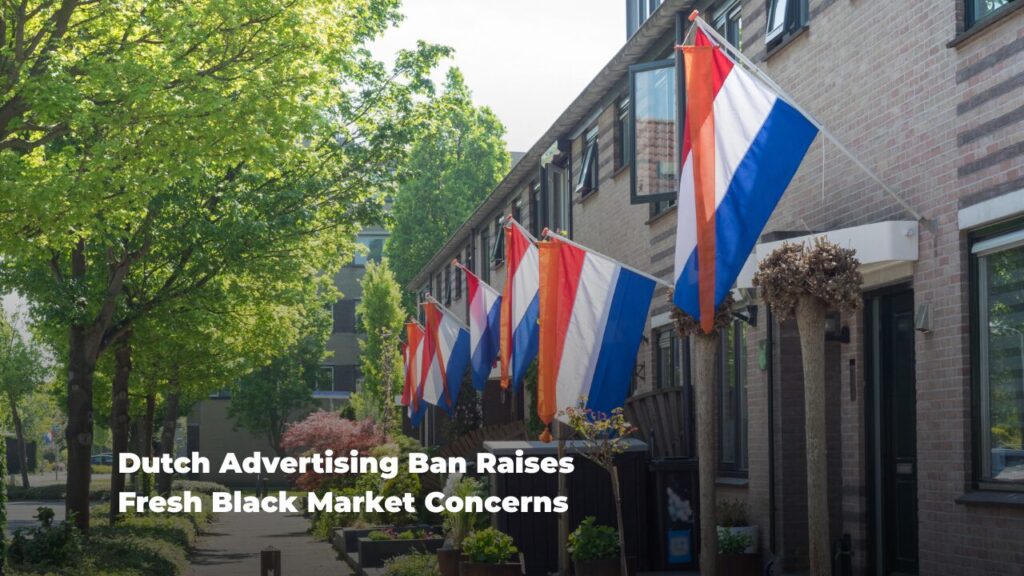
The Netherlands is preparing a near-total ban on gambling advertising, but observers warn the policy could strengthen illegal operators rather than reduce gambling activity. Its cabinet announced the proposal in June.
This package introduced by Claudia van Bruggen also includes a ban on sign-up incentives, a cross-operator deposit limit, CRUKS self-exclusion controls and action against illegal gambling.
“I find it particularly concerning that more and more people, and especially young people, have started gambling online and are getting into trouble as a result,” Van Bruggen said announcing the measures in June. “It is high time to reverse this trend.”
The proposal continues the country’s trend of tightening advertising rules. Authorities previously banned adverts featuring role models, prohibited untargeted advertising from July 2023 and ended sports sponsorship from July 2025.
Channelisation weakens as the regulated market loses ground
When the regulated online market launched in 2021, the objective was channelisation, directing players towards licensed operators. Justin Franssen, partner at Franssen Tolboom, believes that priority has been replaced by a focus on preventing gambling harm.
“Yes, I think it has – and actually, not even that quietly,” he says, noting that the former state secretary, Teun Struycken, had already alluded to the change. “The new mantra is the prevention of gambling harm.”
The shift comes as the legal market loses ground. The Kansspelautoriteit said licensed operators represented 49% of gross gaming revenue in early 2025. Trade groups estimated that illegal operators accounted for around one-quarter of Dutch gambling activity. Licensed companies blame a gambling tax set at 37.8% of gross gaming revenue and advertising restrictions.
Denmark and Italy highlight the risk of stronger prohibition
Critics argue that the Netherlands should examine Denmark and Italy, where restrictions have reduced licensed operators’ visibility. Franssen said there is no evidence that a complete ban will produce better results than the measures in place.
“It’s a very simple answer, there is no evidence,” says Franssen. “There is no evidence that it will succeed.” He added that the KSA has raised concerns and advised against total prohibition.
The central risk is that illegal operators will keep advertising while licensed brands lose visibility. Franssen estimates that most gambling adverts on Dutch social media already come from unlicensed businesses.
“I would estimate that around 95% of those advertisements come from the black market,” Franssen says. Without stronger enforcement, the ban could weaken channelisation and leave consumers exposed to operators outside safeguards.
Illegal advertising dominates Dutch social media platforms
VNLOK sued Meta and filed a complaint with the European Commission after identifying more than 70,000 gambling adverts on Meta platforms during the final quarter of 2025. More than 95% came from unlicensed operators, while fewer than 5% were removed.
The KSA submits thousands of complaints to Meta each month, but offending adverts are often visible for around a day and a half before returning under altered names. VNLOK estimates that the illegal Dutch market exceeds €1 billion annually, placing it on the same scale as the regulated sector.
Franssen argues that banning licensed advertising would leave illegal brands with an easier route to consumers while preventing promotion of safer alternatives by regulated operators.
Denmark and Italy show how restrictions can weaken channelisation
Denmark rejected a blanket advertising ban but introduced tighter restrictions, including limits around live sport, public transport, schools, younger audiences and free-bet promotions.
Despite stopping short of prohibition, its channelisation rate fell from 90% to 70% in 2025 as the unlicensed market expanded. Italy offers a harsher example. Its Dignity Decree has imposed a near-total ban on gambling advertising and sponsorship since 2018, yet illegal gambling is estimated at €22 billion.
Industry observers argue that both markets show the same structural problem of advertising rules binding licensed companies while offshore competitors reach consumers through search engines, social platforms and loopholes. Reduced legal visibility can therefore weaken channelisation without suppressing demand or protecting players within the wider online market.
Expert Opinion
The Dutch authorities are considering a total ban on leagl advertising of gambling within the country. This move has drawn criticism from industry experts because it will create more room for illegal brands who already dominate the space. Other European countries have tried the approach with repercussions for licensed operators.
Explore more:
 Share
Share


 192 views