





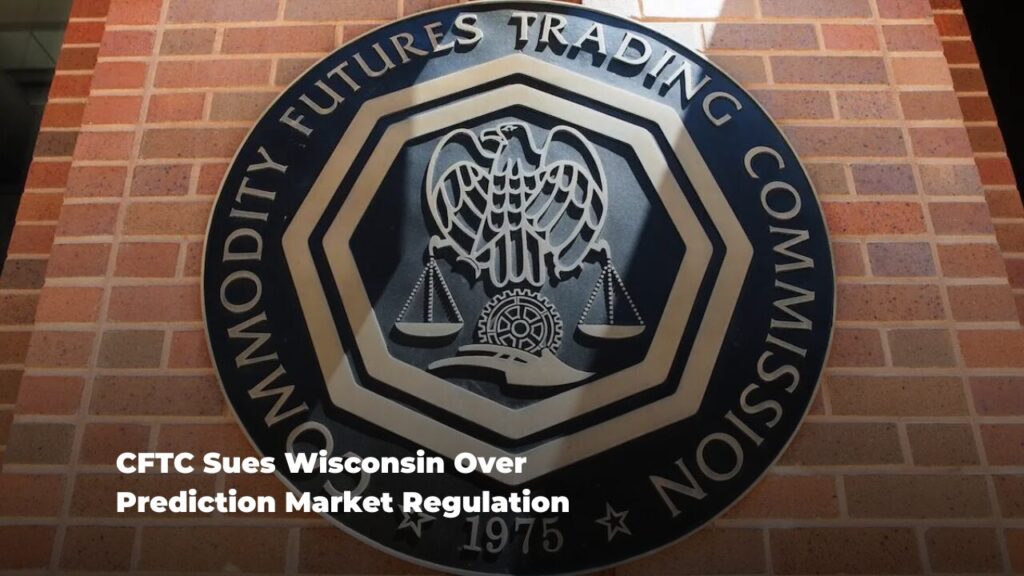
The Commodity Futures Trading Commission has filed a lawsuit against Wisconsin, escalating the legal conflict between federal regulators and state authorities over prediction markets.
The case focuses on platforms including Kalshi, Polymarket, Robinhood, Crypto.com and Coinbase, which offer contracts about real-world outcomes such as elections and economic events.
Wisconsin action prompts federal response
Wisconsin initiated this latest case last week, suing several prediction market operators for running unlicensed gambling operations within the state. The move follows similar enforcement actions taken by states including New York, Arizona, Illinois and Connecticut.
In response, CFTC Chairman Michael Selig filed a counteraction in the US District Court for the Eastern District of Wisconsin. This reiterates the agency’s position that it holds “exclusive jurisdiction” over event contracts under federal law.
Multi-state legal conflict intensifies
Wisconsin is part of a growing number of states kicking against these platforms nationwide. In recent weeks, Letitia James filed actions against Coinbase Financial Markets and Gemini Titan, alleging violations of gambling laws tied to prediction markets.
The CFTC has responded with its own legal actions. It filed a lawsuit in the US District Court of the Southern District of New York to prevent the enforcement of state gambling laws against CFTC-registered platforms. Arizona also pursued criminal charges against Kalshi, although a court has temporarily paused the case, stating likely federal involvement.
The federal agency has also intervened in cases across Massachusetts, Connecticut and Illinois to protect its jurisdiction. In its latest filing, the CFTC emphasised a “clear and longstanding exclusive jurisdiction” over event contracts due to the Commodity Exchange Act. Hence, state level litigation risks interfering with the national regulatory framework.
Debate over classification remains unresolved
The major talking point of this dispute borders on if prediction markets should be classified as gambling or financial trading. State regulators and industry groups such as the American Gaming Association argue that these platforms resemble traditional betting products.
On the other hand, the CFTC states that event contracts fall under the Commodity Exchange Act and should be treated as financial instruments within the derivatives market. Selig has criticised state enforcement efforts, describing them as “overzealous” and warning that they could create conflicting regulatory obligations. He argued that similar approaches in the past resulted in “inconsistent and contrary obligations,” which Congress sought to avoid.
The regulator has also issued an Advanced Notice of Proposed Rulemaking aimed at clarifying how existing laws apply to prediction markets. This move will define regulatory boundaries more clearly as the sector grows and cover emerging use cases.
Wisconsin is the latest state in the US to seek legal action against prediction markets. However, they have been countersued by the CFTC, which holds federal authority over these platforms. The regulator hopes to quell the rising tide of litigation against event contracts and establish a national framework.
 Share
Share


 272 views