

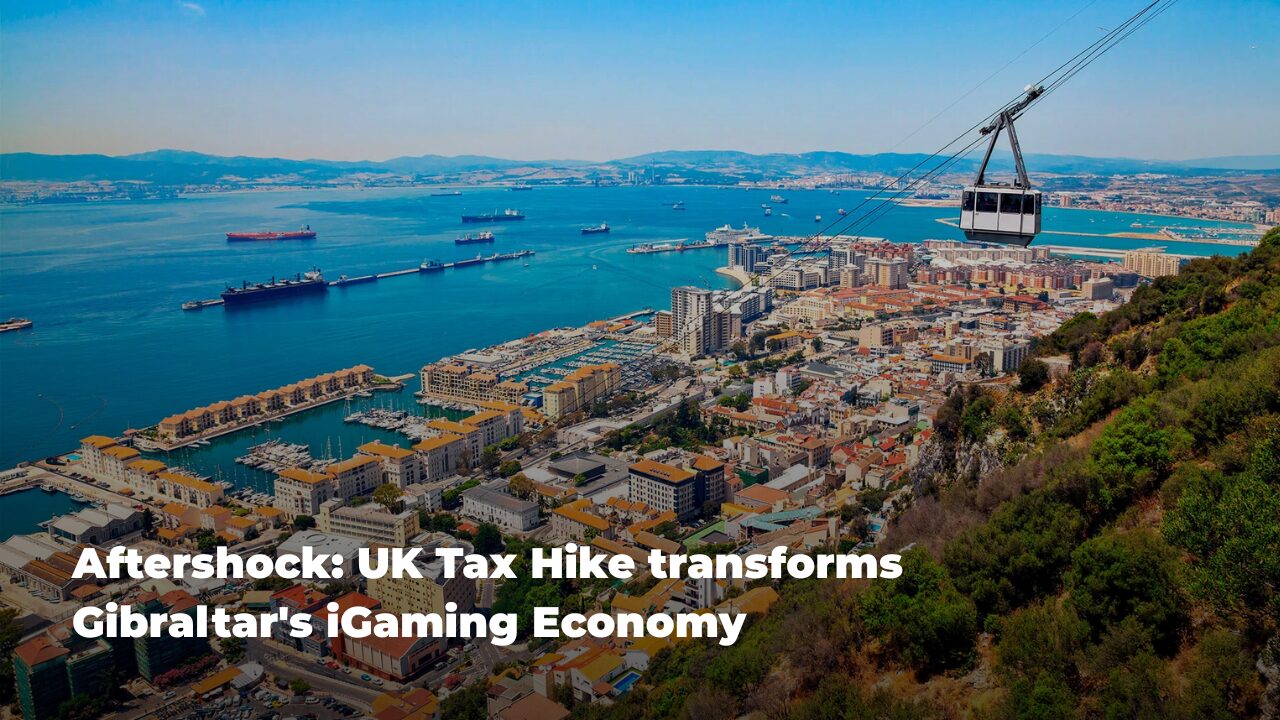
Gaming powerhouse prepares for layoffs, consolidation and diversification after UK gambling tax hike announcement. The UK chancellor announced a gambling tax hike in late November. Remote Gaming Duty rises from 21% to 40% by April 2026. Online betting increases from 15% to 25% by 2027. Gibraltar felt the impact immediately. The online gaming sector generates roughly 30% of Gibraltar’s GDP. The industry employs more than 3,400 people directly. Gibraltar’s total population stands at around 34,000. The territory produces approximately one-third of total UK gambling tax receipts. Gibraltar Minister for Justice, Trade and Industry Nigel Feetham provided these figures.
Feetham issued a statement on 1 December. He called this “an issue of vital importance to Gibraltar.” The matter “may directly and indirectly affect our public revenues.” UK gambling tax rises represent “a tax on revenue, not profit.” Modelling indicates the effective tax rate “will increase to between 80% and 100%.” The rise shocked everyone. Chief Minister Fabian Picardo contacted the UK Treasury personally. He wanted them to consider implications for Gibraltar’s “gold standard” regulatory regime. The Gibraltar Chronicle reported this development. Operators, regulators and policymakers now face a critical question. They must decide how to adjust, not whether to adjust.
Market Strategies Undergo Transformation
The sector has started recalibrating already. Ravi Viroomal works as business development director at Ramparts legal firm. He reports “approximately 25% non-UK focus, which will likely increase.” Andrew Tait, his colleague, expects operators to “push most of the tax onto the consumer.” They might reduce return-to-player percentages. These changes could make regulated products less competitive against black market offerings. Gibraltar Gambling Commissioner Andrew Lyman anticipates stronger structural effects from the tax hike. Effective UK tax rates approach confiscatory levels for some verticals. Operators will “take significant costs out of their businesses or look at other options.” These options include “orderly market exit or putting themselves up for sale.” He shared this perspective with iGB. He predicts a smaller, UK-facing sector. Automation and AI will replace jobs increasingly.
GBC aired “Viewpoint” on 4 December. Industry stakeholders appeared on this current affairs show. Companies have started revisiting risk appetites and investment plans. UK-only operators face the toughest position. Diversified groups cannot escape the impact either. Nicholas Macias serves as secretary general of the Gibraltar Betting and Gaming Association (GBGA). He told iGB that operators are adjusting. “The duty increase has fundamentally changed the economics of the UK market.” He expects no wholesale retreat. Companies are “leaning more heavily into markets that support long-term sustainability.” Peter Montegriffo works as a veteran legal consultant at Hassan’s International law firm. He called the change “a shock” on GBC’s “Viewpoint” programme. Operators planned for changes, but “perhaps not of this magnitude.”
Employment Faces a Severe Impact from the Gambling Tax Hike
Andrew Lyman expects significant redundancies in the New Year. The employment outlook appears troubling. “We hope these people will be accommodated in the non-UK marketing sector.” Gibraltar pursues a policy to bring marketing within regulatory scope. All marketing companies must have substance in Gibraltar. “Traditionally, the sector has absorbed redundancies.” This time will be difficult. The near doubling of the RGD rate causes a severe economic impact. Salaries represent a major cost centre. Restructuring will affect marketing, customer operations and risk teams inevitably.
Macias believes employment pressure is inevitable “in the short term.” Medium-term outcomes depend on companies reconfiguring their global footprints. Hiring will slow as companies reassess cost bases. Cross-border mobility should remain unaffected. Ramparts’ Viroomal warns some firms may shift functions to EU hubs. Malta becomes attractive if companies hold licences there already. Some might consider “shutting down Gibraltar operations.” Cross-border labour mobility remains vital. Thousands of workers commute daily from Spain. Lyman says “certainty over border flow” exists. A cross-border agreement will become legislation in January. Gibraltar stays well-positioned to recruit. Macias agrees mobility should continue normally. Hiring will decelerate as companies examine costs.
Gibraltar Gambling Tax Impact Creates a Different Landscape
The UK Chancellor’s measures forced operators to reconsider profit and loss statements. Macias observes companies cutting marketing, bonuses and operational costs. Downsizing, consolidation and UK exits represent realistic possibilities. UK-dependent brands face particular challenges. Lyman speaks directly about 2026. The sector “will look very different.” Mergers, market exits and heavy restructuring appear inevitable. Gibraltar will survive as a hub under certain conditions. It must emphasise dot.com operators, crypto-adjacent models and global products. These must operate outside the UK’s geographic reach. Stephen Hodgson chairs the UK Betting & Gaming Council’s Tax Committee. He appeared on GBC for an interview. The sector will adapt and continue operating in the medium term. It will take a different shape. Some brands might collapse under the new fiscal landscape. This situation creates a genuine stress test of commercial resilience.
Gibraltar Seeks New Business Opportunities
Andrew Tait and Ravi Viroomal from Ramparts highlight Gibraltar’s evolving regulatory architecture. The new Gambling Bill 2025 allows the jurisdiction to “regulate the full value chain.” This development enhances Gibraltar’s status as a comprehensive regulatory hub. Lyman expresses cautious optimism. The EU treaty remains under negotiation. It will not restore freedom to provide gambling services across the bloc. It will secure “a positive impact on business confidence.” Frictionless cross-border movement reinforces Gibraltar’s multilingual service hub position. Macias identifies the immediate priority. The existing industry needs stabilisation. “If consolidation occurs in the wider market, Gibraltar will be in a stronger position.” The territory must maintain regulatory clarity and protect the licensing perimeter. New burdens should be avoided while operators absorb major external change.
Black Market Risk Increases
UK gambling tax increase could trigger offshore, unregulated gambling surge. Experts emphasise this prominent danger. Lyman states: “The black market is alive and kicking.” Raising the RGD rate by this amount “is bordering on reckless.” UK politicians adopted “the bad habits of many of their European counterparts.” They confuse revenue with profit and ignore channelisation data. Viroomal confirms black-market leakage “is already happening.” It will intensify if regulated operators cut bonuses and RTP. Macias observes the same pattern developing. “The competitive pull of the black market naturally grows.” Regulated firms absorb higher compliance and tax burdens.
Feetham spoke candidly about the tax measure in parliament. “It is bad news. We did not ask for these measures. We lobbied strongly against them.” He admitted “there was very little more that we could have done.” Gibraltar requested differentiated treatment within the UK family. This was rejected. Gibraltar pushed for phasing. This was refused too. The UK Treasury acknowledged social-harm concerns drove Labour MPs centrally. They described measures as proportionate. The government promises mitigation now. Options remain limited when tax comes externally. Gibraltar argues the UK has a “moral obligation” to help. This applies once the full impact becomes clear.
Diversification Debate Gains Momentum
Feetham emphasises Gibraltar cannot replace gaming overnight. Diversification into fintech, digital services and AI-driven sectors continues. Government accelerates work on technology-friendly regulation. Applications for international financial services licences increase. Tait identifies growth potential in crypto gaming. Regulation must evolve to support it. “Crypto gaming diversification may be an option.” This requires new guidance and codes of conduct from gambling regulators. Proper regulation could attract new generation operators. These include gambling, free/social or skill gaming sectors. Sweepstakes represent another possibility.
The UK Gambling Commission acknowledged the potential for crypto gambling regulation this year. UK implementation will not emerge in the short term. Together, Gibraltar released a sharply worded statement. This progressive political party criticised the government’s actions against the UK gambling tax hike. “Equally troubling is the lack of proactive support from our own government.” They want a comprehensive diversification strategy. This should span fintech, AI, green finance, maritime services and tourism.
Progress moves in that direction. Gibraltar hosts the AI Futures and Foresight conference on 21 January 2026. Senior leaders from gaming, finance, insurance, law and technology sectors will attend. The conference aims to create the right mix of skills, innovation and regulation. AI must be leveraged fully by the industry. Lyman says, “Business survival and sustainability can only be facilitated by innovation.”
The Next Phase Begins
Gibraltar’s industry demonstrates resilience despite anxiety. UK gambling tax rise will shrink the UK-facing sector. It accelerates Gibraltar’s evolution simultaneously. The territory transforms from a dominantly UK supply base to an internationally oriented digital services hub. Transition brings pain. Jobs will likely disappear. Investment will decrease. The black market could expand before regulators respond. Gibraltar must ensure the emerging industry becomes sharper, not just smaller.
Explore more:
 Share
Share


 300 views





 Analysis
  Blog
Blog  Business
  Companies
  Crime
Crime  Finance
  M&A
M&A  Regulation
  Reports